Summary
After a workout, a puffy knee is very common and probably not serious, but it’s a message that your body is giving you. In this article, you’ll learn what causes knee swelling after exercise, what you can do to treat a swollen knee at home, and when to seek medical attention. You will also get some tips on how to care for and treat it in everyday language.
Introduction
You’ve just finished a terrific workout, feel good and accomplished, and then you see it. Bending the knee feels tight and stiffer than usual, and your knee appears bulging, possibly a bit warm. If you can relate, you’re not the only one. Running, gym class, and weekend sports enthusiasts alike have a swollen knee after a workout as one of the most common complaints. It may be a minor overuse reaction, or your body is alerting you to more serious conditions, such as a ligament strain. The great news is that most cases can be treated at home with proper treatment. Let’s take a look at the reasons, its upkeep, and treatments that actually work.
What Is a Swollen Knee After Exercise?
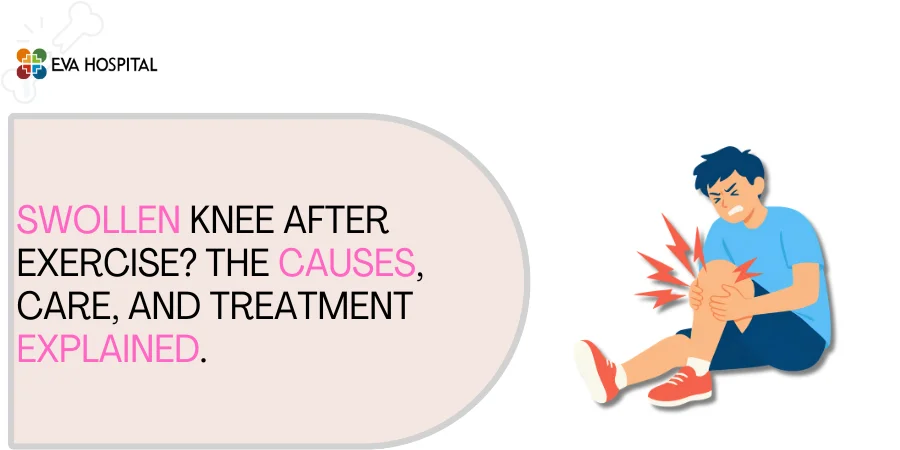
A swollen knee occurs when there is an excessive amount of fluid or inflammation in the knee joint, typically caused by an injury, irritation, or inflammation. The fluid will build up and cause your knee to look bigger than it should, feel tight, and it may reduce range of motion. It’s the body’s normal defence mechanism to cushion and protect the joint during healing. The swelling may develop right after exercise or gradually over the next few hours. It is usually linked to overuse and not a severe structural issue, although if it continues or is quite severe, it needs to be addressed.
Common Signs to Watch For
In addition to swelling that is obvious to you and your health care provider, you may experience warmth around the joint, a mild ache, or tightness when you attempt to straighten or bend your leg fully. Others also have a small ache that gets worse when they keep on using it. These symptoms typically indicate inflammation, not a fracture or significant tear, but it’s best to observe over the next 24 to 48 hours.
How Long Swelling Typically Lasts
The swelling may be mild and increase with exercise and usually reaches its peak within one day and begins to improve by 48-72 hours following simple treatment. If the swelling has not decreased after three or four days, or it’s increased and is not decreasing, it’s time to seek medical attention instead of waiting it out.
What Causes a Swollen Knee After Exercise?
There are various causes of a swollen knee after exercise, ranging from overuse to more localized and specific injuries to ligaments or cartilage. Running, jumping, or squatting repeatedly can cause continuous stress on the knee joint, which can lead to inflammation over time. It’s also often the case that exercise intensities are too high too quickly, form is not up to standard, or warm-ups are not sufficient. Sometimes, an old injury that was not fully resolved can reappear after an intensive training period, leading to the reformation of fluid.
Overuse and Repetitive Strain
One of the most common causes of swelling of the knee is repetitive strain. Hectic activities that include a lot of bending, twisting, or impact, such as running, cycling, and high-intensity interval training (HIIT), can slowly damage the tissues that surround the joint. When you don’t allow adequate rest periods between sessions, the inflammation increases faster than your body can handle it, and you will see swelling.
Ligament or Meniscus Injuries
You may have a ligament sprain or meniscus tear if you experienced a sharp pain, a pop, or a twist when exercising. These injuries will typically result in more apparent swelling, often within minutes, and instability or a decreased ability to weight-bear on the leg. This type of swelling typically requires more careful investigation as it may be a sign of more serious joint damage.
What to Do for a Swollen Knee Right After a Workout
The first few hours are crucial in determining the duration of recovery from a swollen knee, and knowing what to do can make all the difference. Traditionally, these are the steps to take: rest, ice, compression, and elevation (RICE). Don’t strain the joint with extra weight, use a cold pack wrapped in a cloth for 15-20 minutes at a time, and keep your leg raised above the level of your heart if possible. An over-the-counter anti-inflammatory medication can also help to relieve discomfort, but should only be used for short periods or as recommended by a doctor.
Immediate First Aid Steps
Start by stopping any activity that aggravates the knee. Ice the area as soon as possible, cover with a compression bandage (not too tight), and elevate with a pillow or cushion. These simple steps will decrease blood flow to the area and will help slow down the fluid accumulation process, which will help the knee calm down quickly.
When to Rest vs When to Move
It is considered natural to rest; however, over-resting can sometimes cause an over-stiffening of the joint. While swelling is first treated with rest, gentle activity such as light walking when swelling has subsided can actually help circulation and healing. The secret is to listen to your body; do not push through pain, or you may make this worse.
How to Care for a Swollen Knee at Home?
There is really no secret to caring for a swollen knee at home, except to be consistent and patient. In addition to the RICE treatment, you can give your knee the rest it needs by keeping your daily routine as light as possible, stretching and avoiding high-impact activities, and keeping the knee well hydrated. Positioning the leg up several times during the day, particularly at night, can help to prevent fluid buildup in the joint at night.
Home Remedies That Help
Post-48-hour warm wraps promote circulation and reduce stiffness, and low-impact exercises that strengthen the knee will help restore stability (if swelling has subsided). A supportive knee brace during light activity can also help minimize strain while healing.
Mistakes to Avoid While Healing
Common recovery time killers include: not taking rest days, returning to rigorous exercise too early, and failing to address chronic pain. Don’t use too much heat immediately after an injury, or it may make swelling worse.
What Is the Best Swollen Knee Treatment?
Treatment of the swollen knee will depend on the cause of the swelling and its severity. In cases of mild overuse-related swelling, rest at home may be sufficient. In more chronic or severe cases, a physician may order physical therapy or anti-inflammatory medications, or, in certain instances, imaging (MRI) to confirm damage to the ligaments or cartilage. If there is a lot of swelling and it is bothering him, he may need to drain some fluid from the joint.
Medical Treatments and Therapies
Physical therapy is the “next step” to restoring motion and strength without overloading the joint. For more complex cases, a corticosteroid injection may be recommended to decrease inflammation, and occasionally, a minor surgical procedure is used to repair the torn tissue.
Long-Term Prevention Tips
Gradually increasing the amount of exercise, wearing the right shoes, and strengthening the muscles around the knee will dramatically decrease your likelihood of future swelling problems. It’s also important to warm up before exercising and cool down afterwards, which helps keep your joints happy.
More Like this: What Not to Do After Knee Replacement?
FAQ
Does my knee swell up after each workout?
If it is a recurrent problem, it’s possible to review your training program or have yourself assessed.
Is it OK to continue exercising if my knee is swollen?
Generally, low-impact or light activity is OK, but high-impact or high-intensity exercise should be postponed until there is a definite improvement in swelling.
When to see a doctor if your knee is swollen?
When swelling persists beyond a few days, increases in severity, or occurs when there is severe pain, instability, or inability to put weight on it, it’s time for a medical evaluation.
Does icing actually help to decrease swelling?
Yes – icing within the first 24 to 48 hours will help to reduce fluid buildup and constrict the blood vessels, which is one of the best early actions.
Will an enlarged knee get better without surgical intervention?
While many are mild and will heal on their own with adequate rest and care at home, injuries to ligaments or cartilage might require professional treatment to heal.