Multi-Ligament Knee Reconstruction in Ludhiana

Evaluation and individualised treatment of complex knee ligament injuries by Dr. Tanveer Bhutani

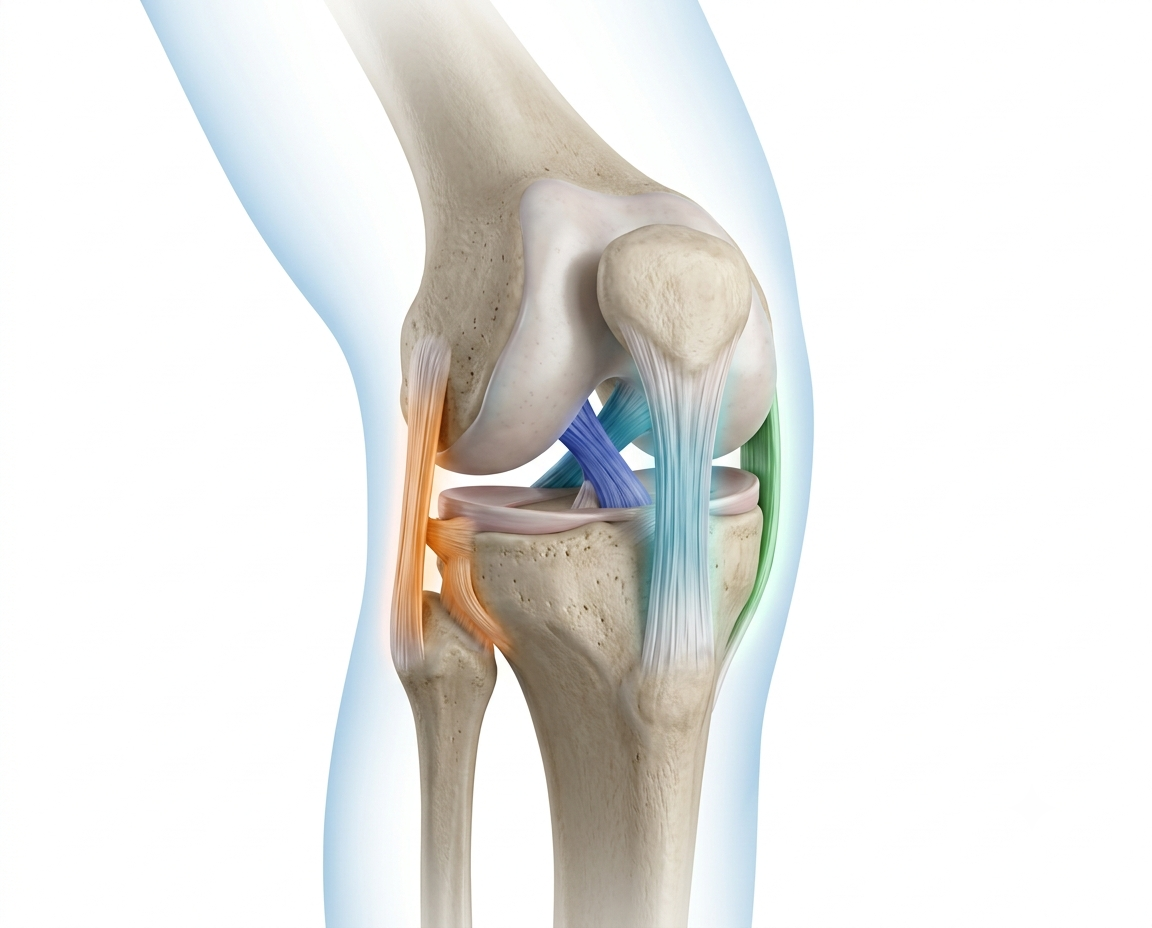
A multi-ligament knee injury occurs when two or more of the knee’s major stabilising ligaments are seriously injured. These uncommon injuries may follow road traffic accidents, sports trauma, falls or knee dislocation, and can be associated with damage to the meniscus, cartilage, nerves or blood vessels.Treatment requires careful assessment of the complete injury rather than isolated treatment of one ligament. At Eva Hospital, Dr. Tanveer Bhutani evaluates the ligament pattern, knee stability, associated injuries, soft-tissue condition and the patient’s functional requirements before recommending conservative care, ligament repair, reconstruction, staged treatment, or referral for additional specialist support where required.
Dr. Tanveer Bhutani - Best Orthopedic Doctor in Ludhiana, punjab

What Is a Multi-Ligament Knee Injury?

A multi-ligament knee injury generally involves significant injury to at least two major ligament structures:

Common Injury Combinations

ACL + MCL Injury

ACL + PCL Injury

PCL + Posterolateral Corner

ACL + PCL + Collateral Ligament

Knee Dislocation With Multiple Ligaments

Multi-Ligament Injury With Meniscus / Cartilage Damage

How Do These Injuries Occur?

Road Traffic Accidents

Contact Sports

Football, Kabaddi & Wrestling

High-Energy Twisting Injury

Fall From Height

Industrial Trauma

Knee Dislocation

Symptoms

Severe pain and swelling

Feeling that the knee is unstable

Difficulty standing or walking

Repeated giving way

Restricted movement

Bruising

Numbness or weakness in the leg or foot

Loss of confidence during turning or changing direction

Persistent instability after the acute swelling settles

Diagnosis

Emergency & Circulation Assessment

Clinical Examination

X-rays

MRI

CT / Vascular Imaging (When Indicated)

Individual Treatment Plan

Clinical Examination

Ligament stability, limb alignment, skin and soft tissues, pulses and circulation, nerve function, range of movement, associated fractures.

X-rays

Identify fractures, joint alignment, avulsion injuries and evidence of dislocation.

MRI

Assesses the ACL, PCL, MCL, LCL/posterolateral corner, menisci, cartilage and other soft-tissue injuries.

Vascular Assessment

Where the injury mechanism or examination raises concern, additional vascular testing may be necessary.

Does Every Multi-Ligament Injury Require Surgery?

No
Treatment depends on the ligaments involved, complete versus partial injury, knee stability, associated fracture, meniscus or cartilage injury, neurovascular status, age and activity, medical fitness, soft-tissue condition and functional requirements.

Nonsurgical Treatment May Be Considered For

Nonsurgical Care May Include

When May Surgery Be Recommended?

Persistent significant instability
Complete injury to multiple stabilising ligaments
Knee dislocation with ligament disruption
Combined cruciate-ligament injury
Posterolateral-corner instability
Repairable ligament avulsion
Associated meniscus or cartilage injury
Young or active patients wishing to return to demanding activities
Failed appropriate conservative treatment

Repair vs Reconstruction

Ligament repair reattaches or sutures the damaged ligament. It may be considered for selected bony avulsions, ligament avulsions from an attachment, acute injuries with suitable tissue, and specific collateral or corner injuries.

Ligament reconstruction uses a graft — commonly hamstring, quadriceps or patellar tendon, or another autograft/allograft option — to recreate the function of a ligament when the original tissue cannot be repaired reliably.
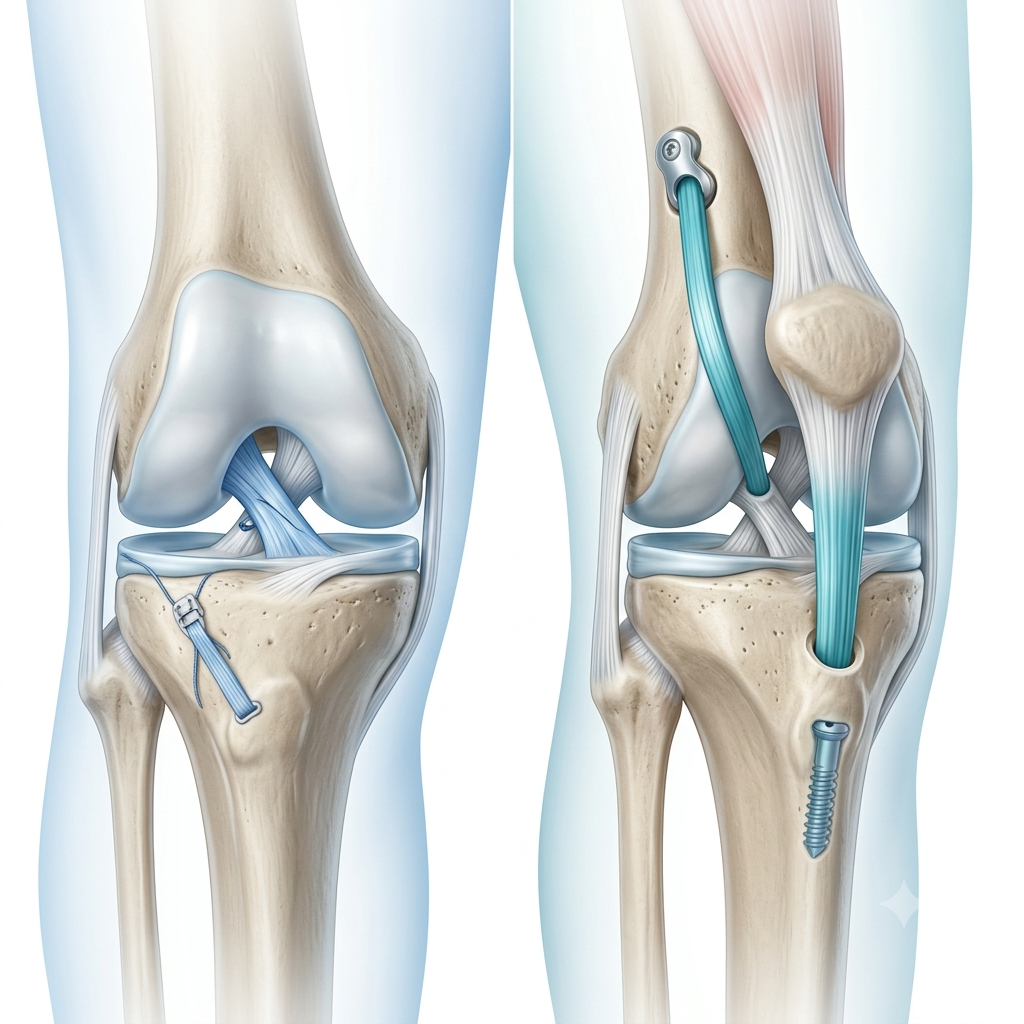
The decision between repair and reconstruction is based on the injured structure, tear location, tissue quality, time since injury and overall surgical plan. Eva Hospital does not apply one standard technique to every multi-ligament injury.

What Happens During Reconstruction?

Confirm Injured Structures

Assess Meniscus & Cartilage

Repair Where Possible

Reconstruct With Grafts

Fixation & Stability Check

Protective Rehab Plan

Rehabilitation

Rehabilitation PhaseGoals & Focus
Early Phase Protect repaired or reconstructed structures, control swelling and pain, use a brace where prescribed, follow weight-bearing restrictions, begin safe muscle activation, and restore movement within permitted limits.
Intermediate Phase Gradually improve range of movement, progress weight bearing, restore a normal walking pattern, strengthen the quadriceps, hamstrings, hip and core muscles, and develop balance and neuromuscular control.
Later Phase Focus on advanced strengthening, single-leg control, running progression where appropriate, agility and sport-specific training, functional assessment, and a gradual return to work or sporting activities.

Recovery and Expected Outcomes

Recovery usually takes several months
Return to unrestricted pivoting sport may take considerably longer
Some patients may not return to their exact pre-injury sporting level
Residual stiffness, weakness or instability can occur despite appropriate treatment
Long-term cartilage degeneration or arthritis remains possible after severe knee trauma
Rehabilitation compliance strongly affects functional recovery

Risks

Why Eva Hospital?

Multi-ligament injuries require assessment of the entire knee, including its cruciate ligaments, collateral structures, menisci, cartilage, circulation and nerve function. Dr. Tanveer Bhutani provides detailed clinical evaluation and individualised treatment planning, supported by arthroscopic knee surgery, ligament-reconstruction experience, imaging, physiotherapy and follow-up at Eva Hospital. When an injury requires vascular, neurological, plastic-surgical or other specialist intervention beyond the hospital’s scope, appropriate multidisciplinary referral is arranged.

Related Pages

ACL Reconstruction

Our complete guide to the anterior cruciate ligament.

PCL Reconstruction

Understanding posterior cruciate ligament injuries.

Meniscus Surgery

Preservation-first meniscus treatment.

Knee Arthroscopy

How minimally invasive knee surgery works.

Sports Injuries

Our full sports medicine service.

Fracture & Trauma Care

Management of associated fractures and acute trauma.

Physiotherapy & Rehabilitation

Structured, procedure-specific recovery programmes.

About Dr. Tanveer Bhutani

Qualifications, experience and approach to care.

Frequently Asked Questions

It is a significant injury involving at least two of the knee’s major ligament structures.
Not always. Many knee dislocations cause multi-ligament injury, but multiple ligaments can also be injured without a documented dislocation.
Yes. A knee may spontaneously reduce before medical assessment while still having serious ligament, nerve or blood-vessel damage.
It can be, particularly when circulation, nerve function, an open wound or an unreduced dislocation is involved.
No. Treatment depends on the injury pattern, instability, associated damage and patient requirements.
Sometimes. Other injuries may be treated in stages. The decision is individualised.
Repair preserves and reattaches suitable original tissue. Reconstruction uses a graft to recreate ligament function.
Graft selection depends on the ligaments involved, tissue availability, patient factors and the overall reconstruction plan.
Recovery generally extends over several months and may be longer than after isolated ACL reconstruction.
Many patients return to activity, but the level and timing vary according to injury severity, surgery and rehabilitation.
Possible complications include stiffness, persistent instability, nerve or vascular injury, infection, blood clots, graft failure and post-traumatic arthritis.
Associated meniscus injuries may be repaired or otherwise treated during reconstruction when clinically appropriate.

Recovering From a Complex Knee Injury?

Book an orthopaedic evaluation with Dr. Tanveer Bhutani at Eva Hospital, Ludhiana.
Hip Replacement

Send Message

Consult our specialists for accurate diagnosis and effective treatment solutions.

pop up