Orthopedics · Eva Hospital, Ludhiana

Ankle Replacement Surgery in Ludhiana

Persistent ankle pain can make every step uncomfortable. For selected patients with advanced ankle arthritis, ankle replacement surgery offers an alternative to ankle fusion by relieving pain while preserving joint movement.

At Eva Hospital, Dr. Tanveer Bhutani provides comprehensive evaluation for patients with end-stage ankle arthritis to determine whether ankle replacement or ankle fusion is the more appropriate treatment.

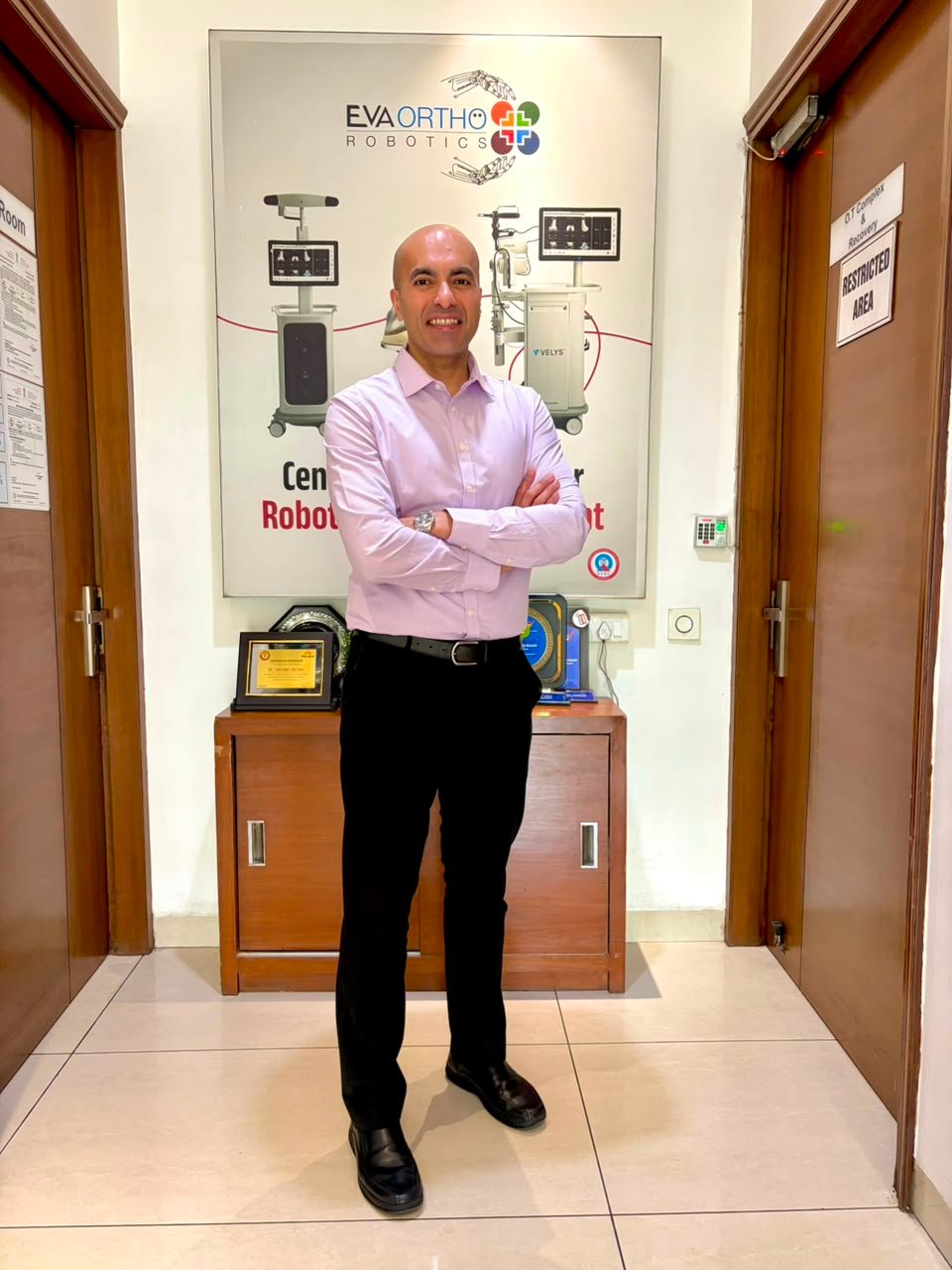
Dr Tanveer bhutani
NABH Accredited
ECHS Empanelled
Surgeon-Led Care
24/7 Emergency Support
NABH Accredited
ECHS Empanelled
Surgeon-Led Care
24/7 Emergency Support

Who Will Evaluate You

Ankle Replacement Evaluation by Dr. Tanveer Bhutani

Dr. Tanveer Bhutani is an orthopaedic surgeon at Eva Hospital with experience in joint replacement and complex lower-limb reconstruction, including the evaluation and surgical treatment of advanced ankle arthritis.

Ankle replacement is appropriate for only a subset of patients with ankle arthritis. Careful patient selection — based on bone quality, alignment, ligament stability, activity level and the pattern of joint damage — is central to a good outcome, and is weighed against ankle fusion as an alternative in every case.

Dr. Bhutani’s approach relies on evidence-based decision making: a clear diagnosis, an honest comparison of replacement versus fusion for that specific patient, and a structured rehabilitation plan once a treatment path is chosen.

Patient Selection

Is Ankle Replacement Right for Me?

Not every patient with ankle arthritis is a good candidate for replacement. Suitability depends on several clinical factors assessed during consultation.

Suitable Candidates Generally Have

Less Suitable Candidates May Have

These lists guide the discussion — they do not replace individual clinical assessment. Some patients judged unsuitable for replacement may still be good candidates for ankle fusion or other treatment.

Comparison

Ankle Replacement vs Ankle Fusion

This comparison is general. Dr. Bhutani reviews each patient’s imaging, activity level, deformity and bone quality before recommending one option over the other.

FactorAnkle ReplacementAnkle Fusion
Pain reliefGenerally good in appropriately selected patientsGenerally good in appropriately selected patients
Ankle movementPreserves some up-and-down ankle motionAnkle joint motion is eliminated by design
Walking patternOften closer to a natural gaitAdapted gait; may feel different on uneven ground
Climbing stairs / slopesMay feel more natural due to retained motionManageable for most, with some adaptation
RecoveryStructured protected weight-bearing and rehabilitationStructured protected weight-bearing until fusion is solid
Implant longevityDepends on patient factors and activity; may need revision over timeNo implant to wear out; fusion is generally durable
Future surgeryRevision or conversion to fusion is possible if neededFurther surgery is less commonly required for the fused joint itself
Adjacent joint arthritisLower stress on neighbouring foot joints, as motion is preservedHigher long-term stress on adjacent hindfoot joints over many years
These lists guide the discussion — they do not replace individual clinical assessment. Some patients judged unsuitable for replacement may still be good candidates for ankle fusion or other treatment.

A Different Joint

Why Total Ankle Replacement Is Less Common Than Knee or Hip Replacement

Ankle arthritis itself is less common than knee or hip arthritis, and its causes are different. Unlike the knee and hip — where wear-and-tear osteoarthritis predominates — most ankle arthritis in Ludhiana and elsewhere follows a previous fracture or significant ankle injury, often years earlier.

Because the ankle is a smaller, more constrained joint that bears high loads with each step, patient selection for replacement is critical. Bone quality, alignment, ligament stability and activity level all weigh heavily on the outcome, more so than for hip or knee replacement.

For this reason, ankle replacement is appropriate only for carefully selected patients — and ankle fusion remains a well-established alternative that is right for many others. Our aim is to help each patient reach the option that suits their specific ankle, not to promote one procedure over the other.
Understanding the Joint

Ankle Anatomy — What Is Being Replaced?

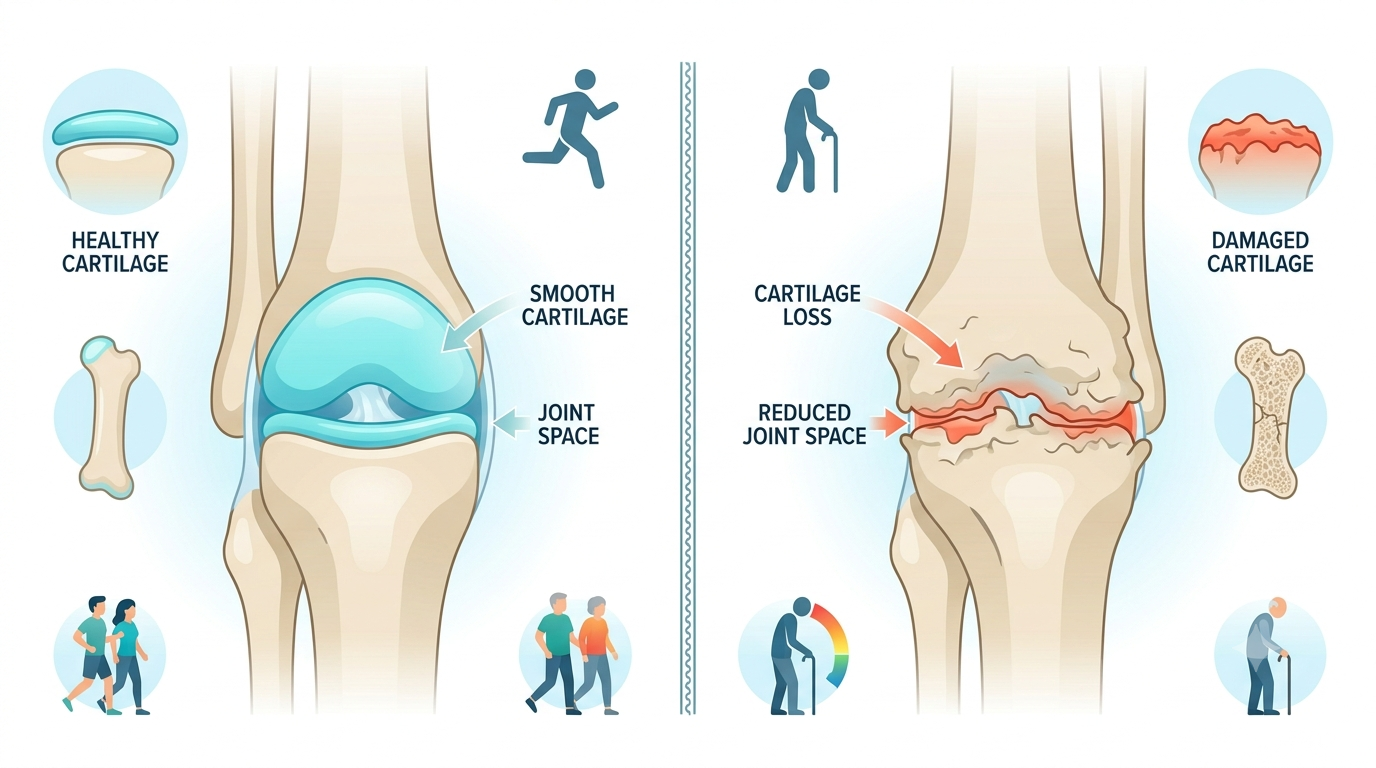
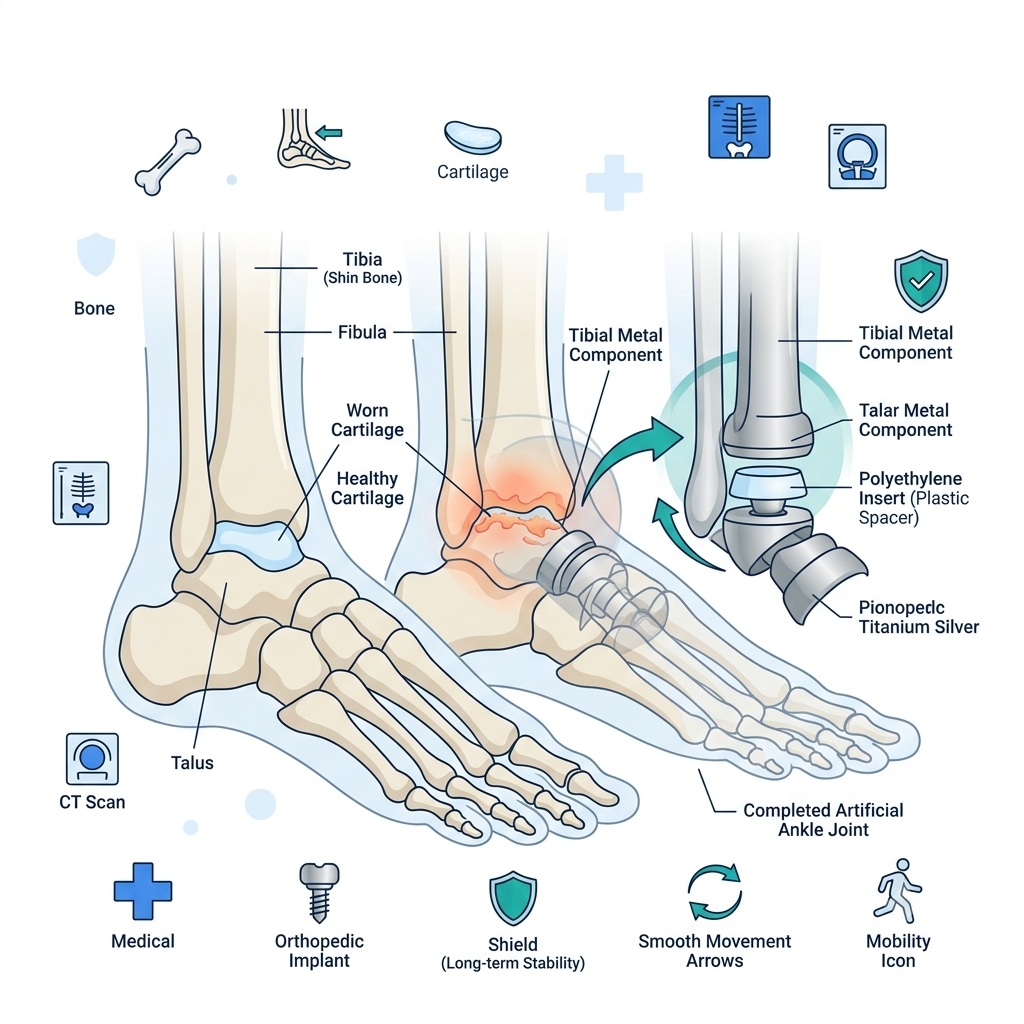
The ankle joint is formed where three bones meet: the tibia (shin bone) and fibula (outer leg bone) above, and the talus, a bone in the foot, below. A layer of smooth cartilage covers the ends of these bones, allowing pain-free gliding movement.

In ankle arthritis, this cartilage wears away and the bones begin to rub directly against each other, causing pain, stiffness and swelling. Ankle replacement resurfaces the damaged ends of the tibia and talus with metal components and a plastic insert between them, recreating a smooth gliding surface.

Causes

Causes of Ankle Arthritis

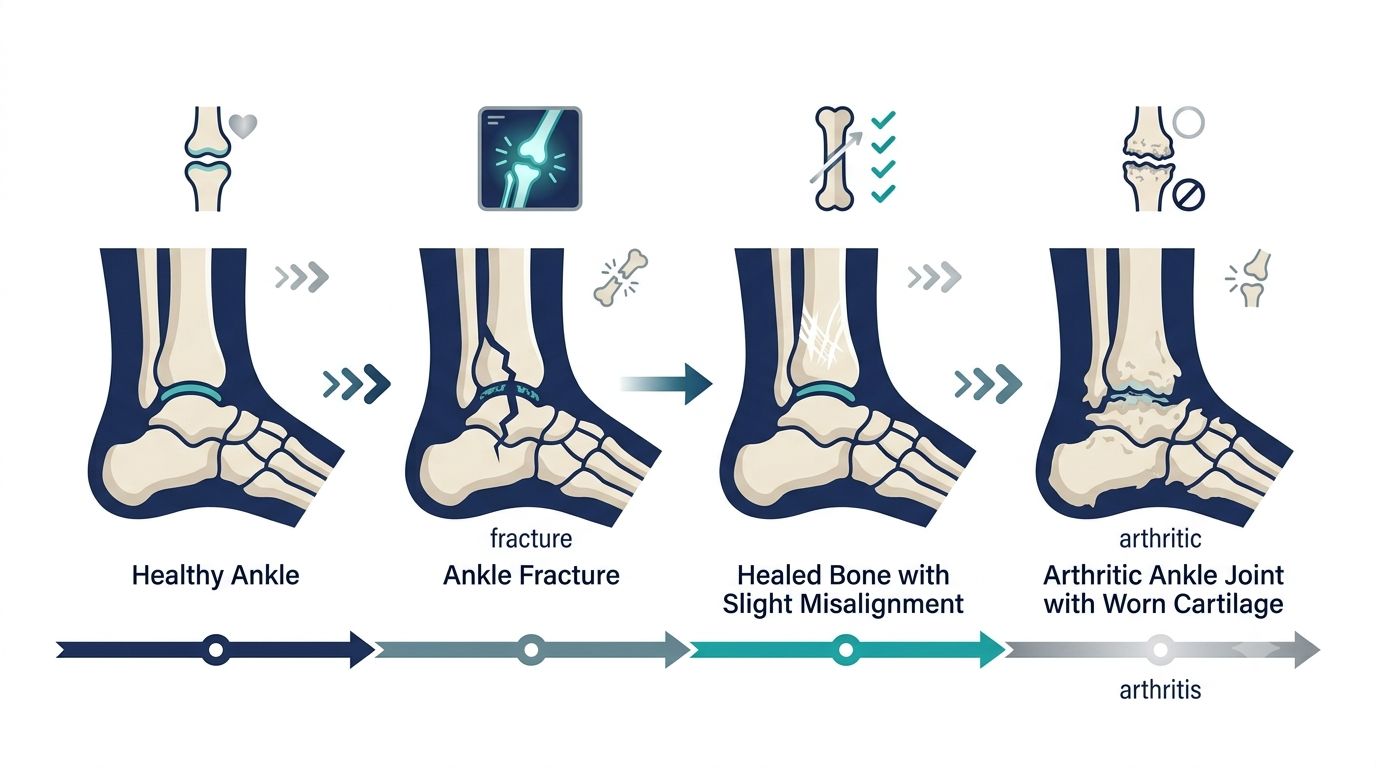
Most ankle arthritis is post-traumatic — a pattern that differs from the knee and hip, where age-related wear-and-tear osteoarthritis is more common.

Previous Fractures

The largest group. A prior ankle fracture, even if it healed well, can alter joint mechanics and lead to arthritis years later.

Sports Injuries

Repeated sprains, ligament tears and cartilage injury from sport can predispose to later ankle arthritis.

Rheumatoid Arthritis

An inflammatory condition that can damage cartilage and bone in the ankle, as in other joints.

Osteoarthritis

Age-related wear-and-tear arthritis, though less common in the ankle than in the knee or hip.

Infection

A past joint infection can damage cartilage permanently and lead to secondary arthritis.

Avascular Necrosis (AVN)

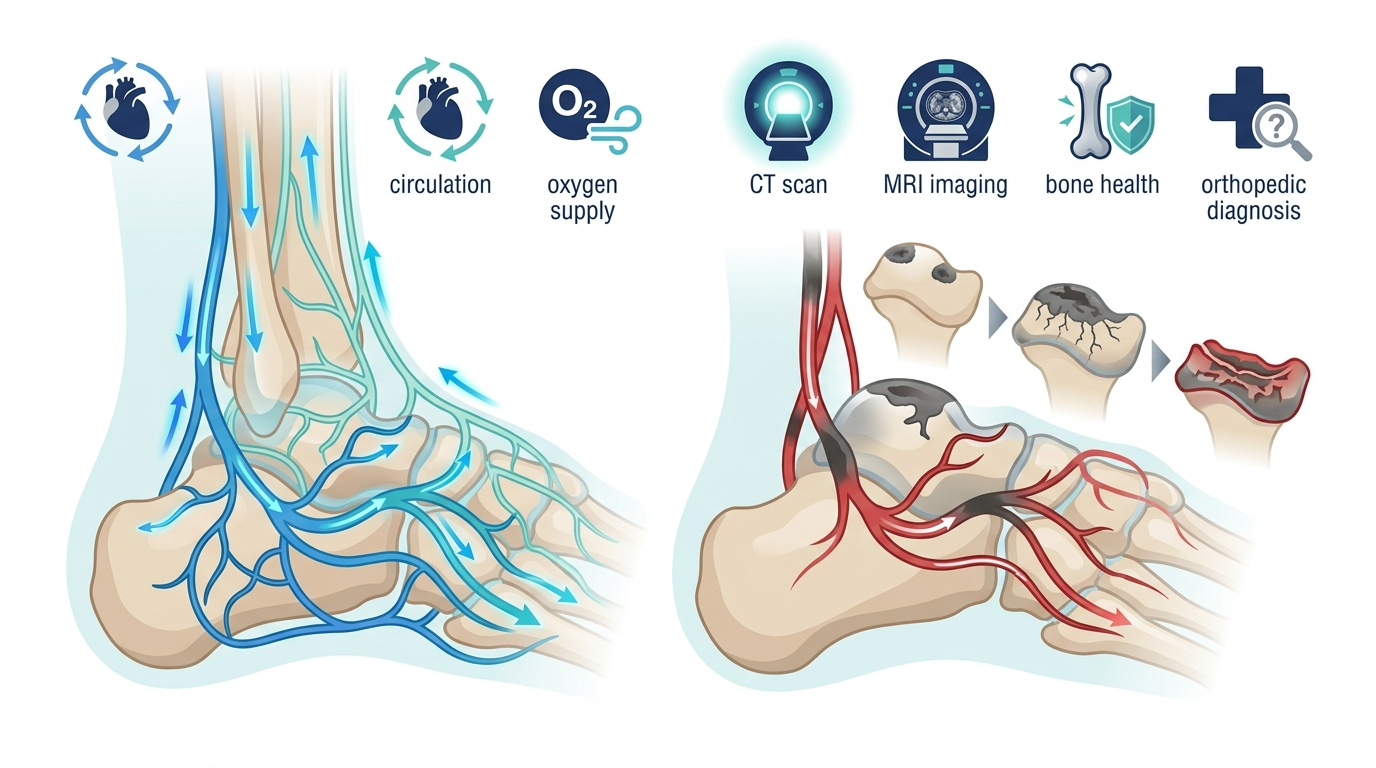
Loss of blood supply to part of the talus can cause bone collapse and joint destruction.

What to Expect

The Diagnosis Pathway

History

Clinical Examination

Standing X-rays

CT (When Required)

MRI (Selected Cases)

Treatment Planning

Before Surgery Is Considered

Non-Operative Treatment for Ankle Arthritis

Surgery is not the first step for most patients. Initial treatment commonly includes:
Surgery becomes appropriate when these measures no longer control pain adequately, imaging confirms advanced joint damage, and the impact on daily life and mobility is significant.

The Operation

What Happens During Ankle Replacement Surgery?

Associated procedures — such as correcting deformity or balancing ligaments — may be performed at the same time if required for a stable, well-aligned ankle.

Planning

Preoperative Planning

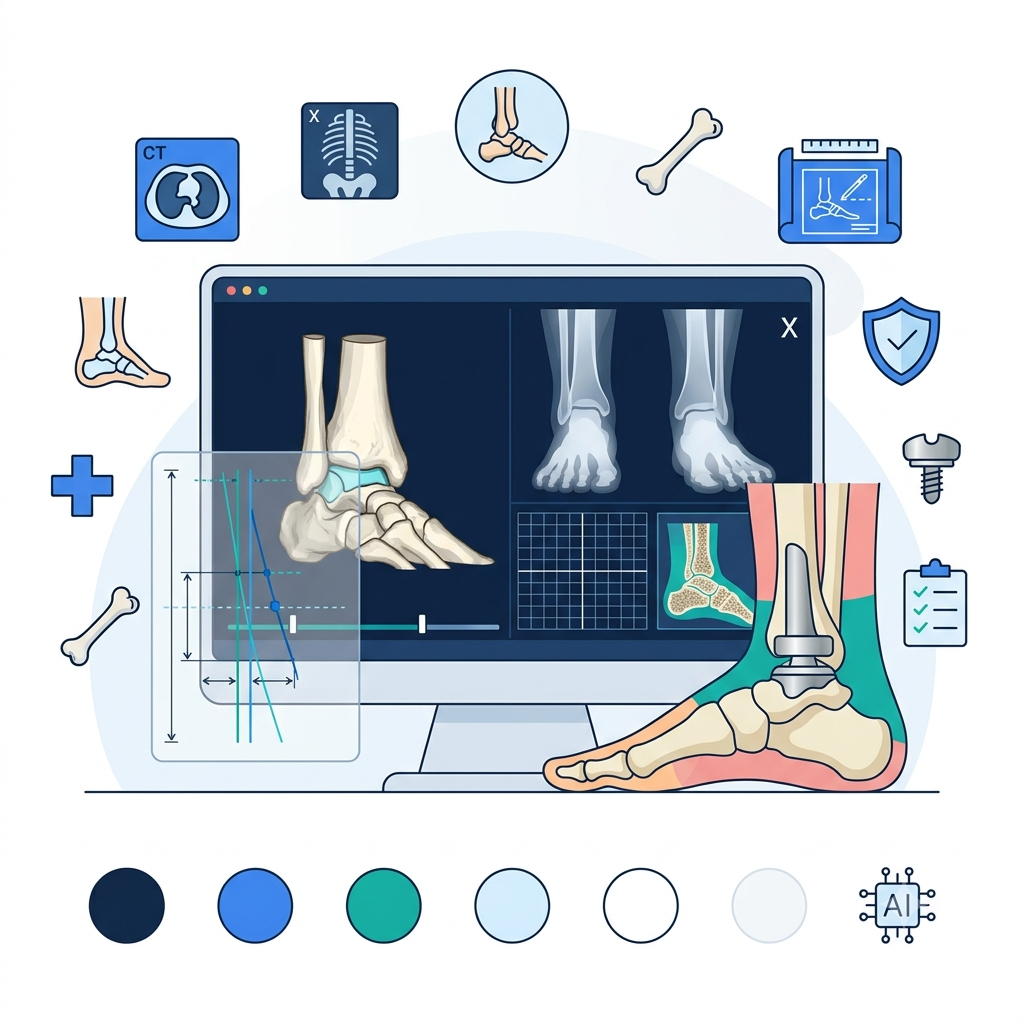
Weight-bearing X-rays, and CT scanning where indicated, help Dr. Bhutani assess bone quality, deformity and joint alignment before surgery. This informs implant sizing and positioning for that specific patient’s anatomy.

Ankle replacement is a standard implant procedure — it does not involve robotic assistance. Technology used here should not be compared to unrelated procedures such as robotic knee replacement.
After Surgery


Recovery Timeline

Day 1

Hospital stay, pain control and initial wound care.

Weeks 0–2

Wound care, swelling control and elevation, limited weight-bearing per protocol.

Weeks 2–6

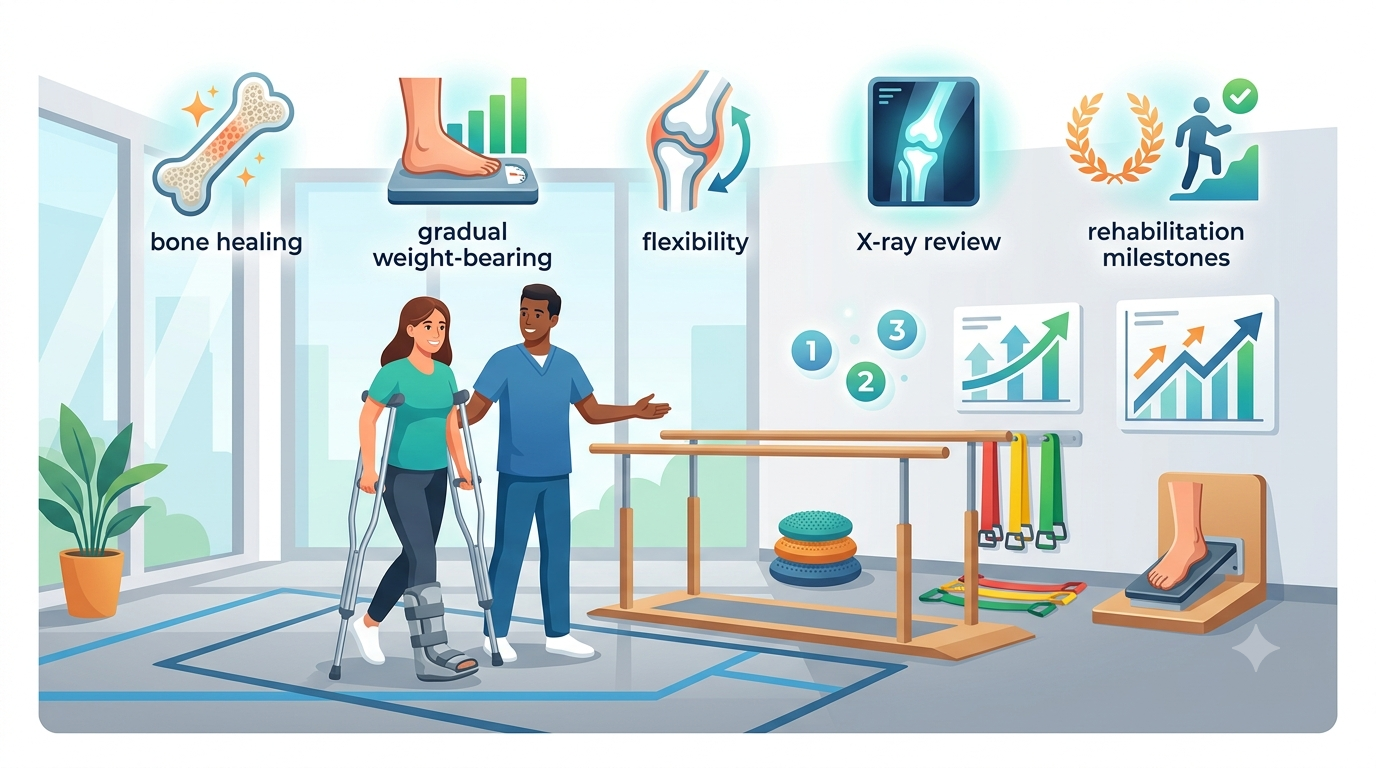
Protected weight-bearing in a boot or cast, wound and X-ray review.

Weeks 6–12

Progressive rehabilitation, increasing weight-bearing and ankle motion exercises.

3–6 Months

Return to routine activity, continued strengthening; timelines vary by patient.
These are broad milestones, not fixed deadlines. Recovery pace depends on the patient’s bone healing, swelling, adherence to protected weight-bearing, and rehabilitation.

Rehabilitation

Rehabilitation and Long-Term Expectations

Patients often underestimate how much time full recovery takes. Swelling around the ankle and foot is common for several months after surgery and is managed with elevation, compression and activity pacing.

Structured physiotherapy — focusing on ankle motion, strength and gait — is central to regaining function. Supportive, well-fitted footwear is recommended long-term, and high-impact activities are generally best avoided to protect the implant.

Most patients can expect meaningful pain relief and improved walking ability, but a completely “normal” ankle is not a realistic expectation after replacement.

Being Honest

Risks and Possible Complications

As with any joint replacement, ankle replacement carries risks. These are discussed openly with every patient before surgery, and include:
Individual risk depends on bone quality, alignment, general health, diabetes, circulation and activity level. Transparent discussion of these risks is part of informed decision-making before surgery.
Our Approach

Why Choose Dr. Tanveer Bhutani for Ankle Replacement?

Detailed Evaluation

Weight-bearing imaging and clinical assessment before any treatment recommendation.

Appropriate Patient Selection

Replacement is recommended only for patients who genuinely fit the criteria.

Individualised Planning

Implant sizing and positioning guided by each patient's own anatomy and imaging.

Evidence-Based Care

Treatment decisions grounded in diagnosis and established clinical evidence.

Structured Rehabilitation

A planned recovery pathway from protected weight-bearing through physiotherapy.

Honest Replacement vs Fusion Discussion

A clear comparison of both options for each patient's specific ankle.

Frequently Asked Questions

Ankle replacement is surgery that resurfaces the damaged ends of the tibia and talus with metal components and a plastic insert, relieving arthritic pain while preserving some ankle motion.

Neither is universally better. Replacement preserves ankle motion; fusion eliminates it but is generally very durable. The right choice depends on the patient’s bone quality, alignment, activity level and preferences.
Longevity varies with age, activity level, bone quality and implant type. Some patients may eventually need revision surgery, including possible conversion to fusion.
This is possible in selected patients but is evaluated individually, considering overall health, rehabilitation demands and the condition of each ankle.
Most patients regain the ability to climb stairs during rehabilitation, though comfort and confidence improve gradually over weeks to months.
Driving is generally resumed only after adequate healing, when the patient can control the pedals safely and perform an emergency stop, and after clearance from the treating team.
Kneeling is usually possible once healing is complete, though comfort can vary between patients.
Metal implants may trigger airport security scanners. Carrying a note of your surgery or an implant card can be helpful when travelling.
Low-impact activities such as walking, cycling and swimming are generally encouraged. High-impact sports and repetitive jumping are usually discouraged to protect the implant.
Fusion may be preferred in patients with poor bone stock, significant deformity, instability, very high activity demands, or other factors that make them less suitable for a replacement implant.
Only the damaged cartilage and a thin layer of underlying bone from the tibia and talus are removed to fit the implant components.
Modern total ankle systems use a metal tibial component, a metal talar component and a polyethylene insert between them. The specific system used is selected by the surgeon based on the patient’s anatomy.
Postoperative pain is expected but is managed with pain control protocols and generally improves progressively over the following weeks.
Hospital stay varies with the complexity of surgery and the patient’s recovery, and is decided based on wound status, pain control and mobility.
Return to work depends on the nature of the job. Sedentary work may be resumed earlier than standing or physically demanding roles, which typically require a longer recovery period.

Consult Dr. Tanveer Bhutani About Your Ankle

A clinical evaluation and weight-bearing X-rays can determine whether ankle replacement, ankle fusion, or non-operative treatment is the right path for your ankle arthritis.
Hip Replacement

Send Message

Consult our specialists for accurate diagnosis and effective treatment solutions.

pop up