Foot & ankle care by Dr. Tanveer Bhutani

Foot & Ankle Arthritis Treatment in Ludhiana

Expert Care for Pain, Stiffness & Walking Difficulty

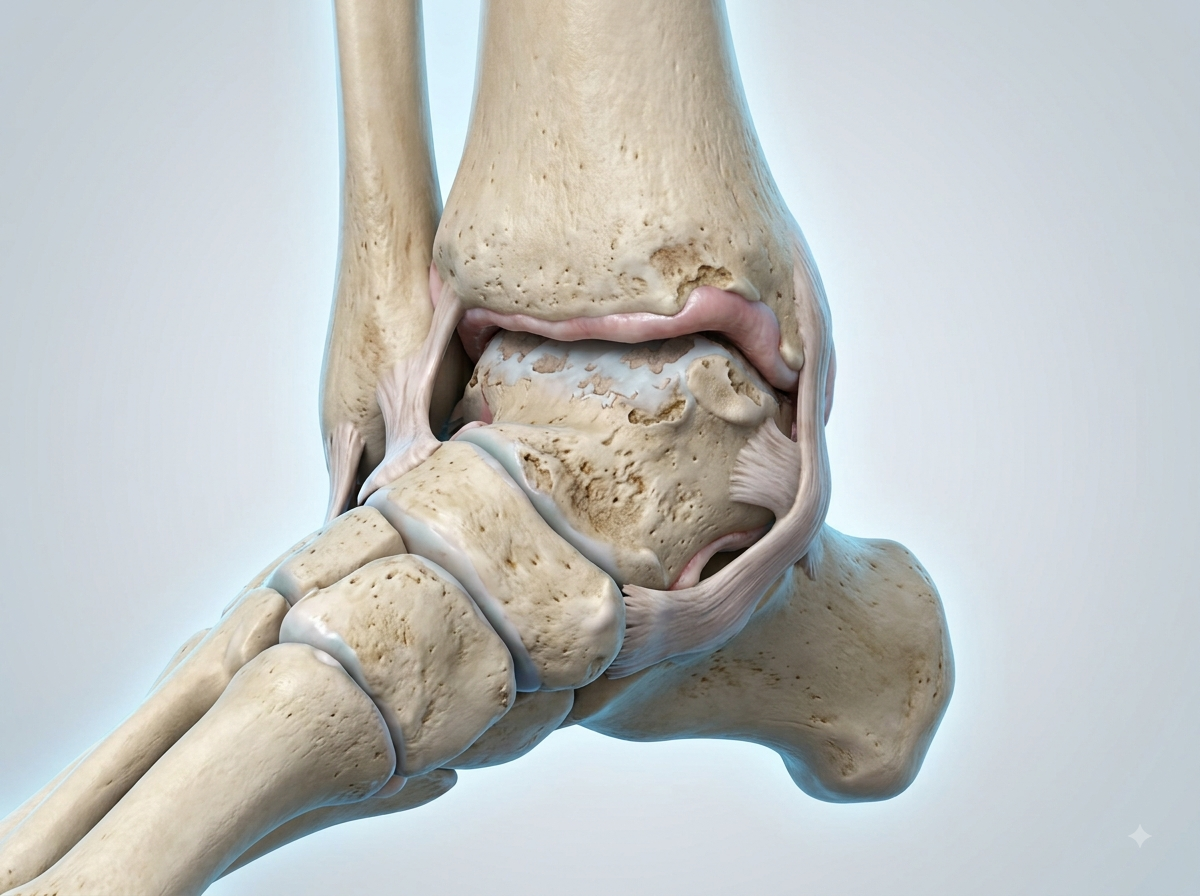
Is ankle pain making it difficult to walk, climb stairs, stand for long hours, or enjoy everyday activities? Foot and ankle arthritis can gradually destroy the smooth cartilage inside your joints, leading to pain, swelling, stiffness, and loss of mobility.

At Eva Hospital, Dr. Tanveer Bhutani offers comprehensive treatment for foot and ankle arthritis, ranging from medications and injections to advanced surgical procedures including ankle replacement and ankle arthrodesis whenever necessary.

Every patient undergoes a detailed clinical examination, weight-bearing X-rays, and treatment planning to determine whether joint-preserving treatment or surgery offers the best long-term outcome.

Dr Tanveer bhutani Ortho surgeon

Common Symptoms

Pain while walking

Morning stiffness

Swelling

Deformity

Limping

Reduced walking distance

Difficulty standing for long periods

Shoe fitting problems

Difficulty climbing stairs

Understanding the condition

What Is Foot & Ankle Arthritis?

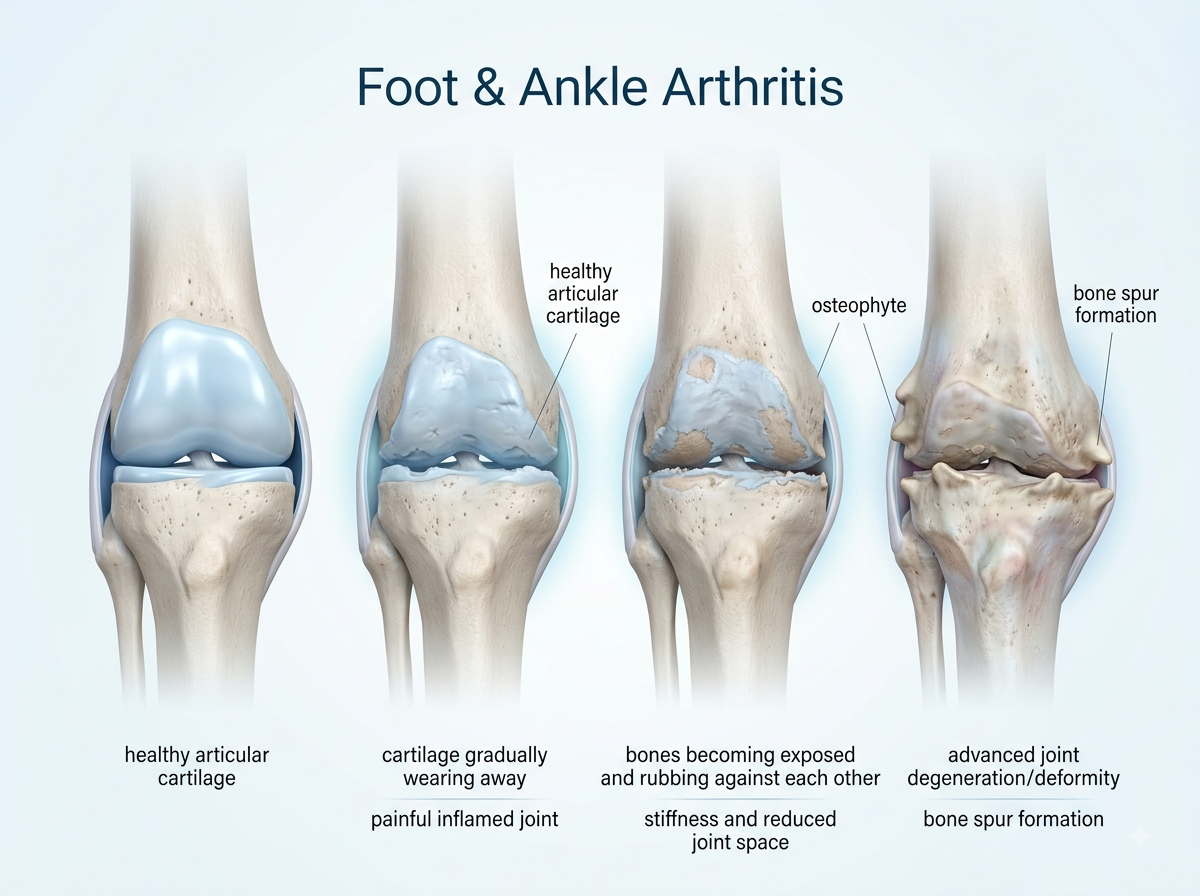
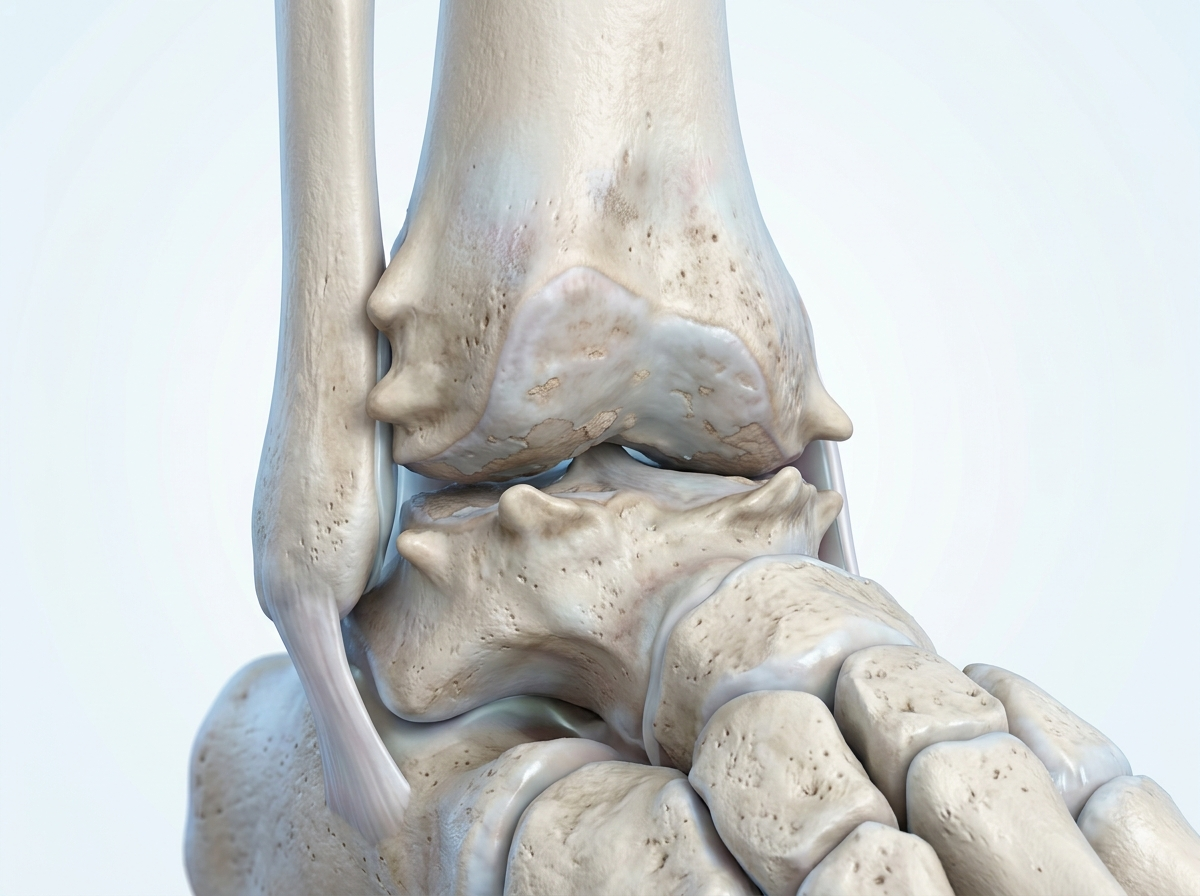
Foot and ankle arthritis develops through a fairly predictable process: healthy cartilage that normally cushions the joint gradually wears away, leaving the underlying bones to rub directly against each other. This friction causes pain and progressive stiffness. Over time, the body may respond by forming bone spurs around the joint margins, and in advanced cases, the joint can become visibly deformed.
Types of Foot & Ankle Arthritis
Osteoarthritis
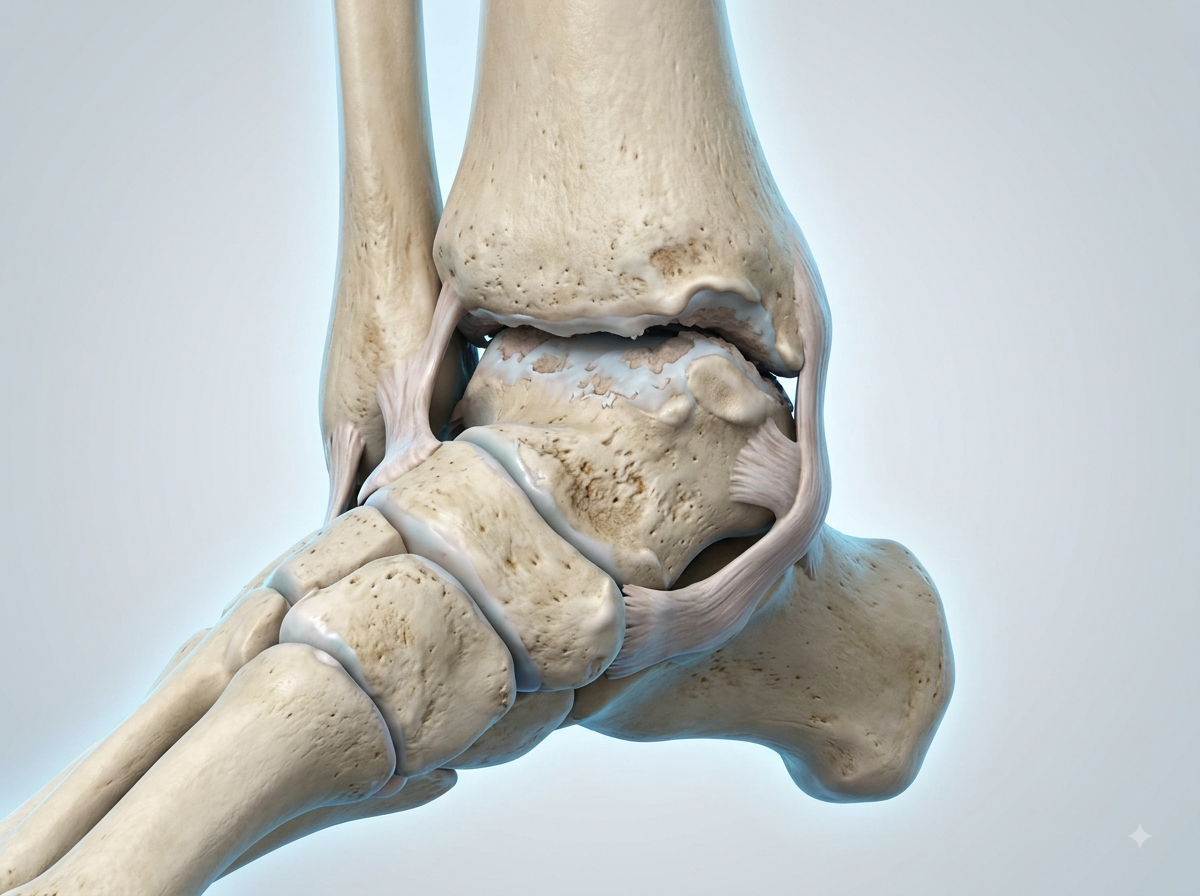
Wear and tear, age-related, driven by gradual cartilage loss over time.

Post-Traumatic Arthritis

Very important around the ankle. Follows an old fracture, an ankle fracture, repeated sprains, sports injuries, or untreated ligament injuries.

Rheumatoid Arthritis

An inflammatory disease affecting multiple joints, often with pronounced morning stiffness.

Gout

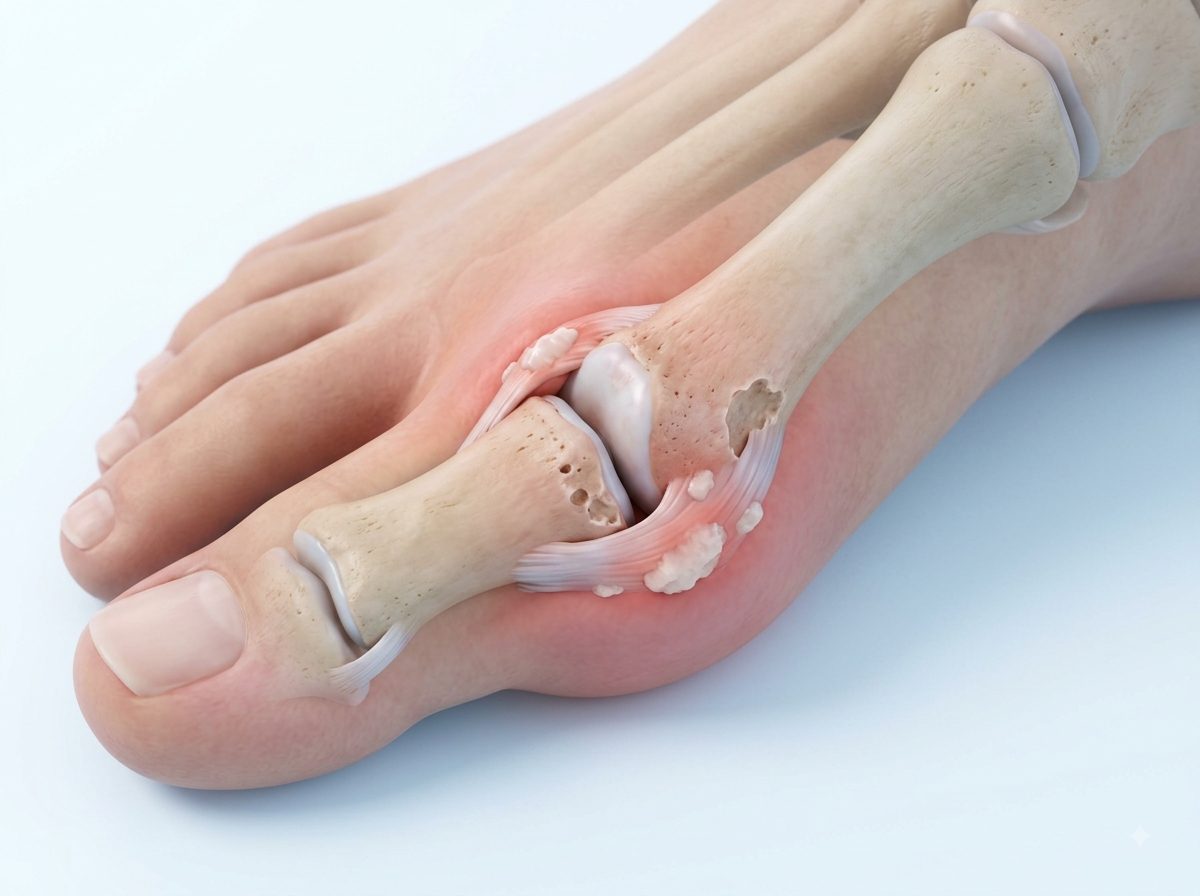
Sudden attacks, classically affecting the great toe, with red, hot swelling during flares.

Which Joints Can Develop Arthritis?

Ankle Joint

Frequently affected after trauma; bears the full load of body weight with each step.

Subtalar Joint

Sits just below the ankle and controls side-to-side foot motion; often affected after ankle fractures.

Midfoot

A cluster of small joints that can develop arthritis after injury or with flat-foot deformity.

Big Toe (First MTP Joint)

Commonly affected by osteoarthritis (hallux rigidus) and gout.

Forefoot

Can be affected by inflammatory arthritis such as rheumatoid disease, often across multiple small joints.

Causes

Age

Old injury

Fracture

Repeated sprains

Obesity

Inflammatory arthritis

Previous infection

Abnormal alignment

Flat feet

High arches

Diagnosis

Clinical Examination

Walking Assessment

Range of Motion

Tenderness

Weight-Bearing X-rays

CT Scan (If Required)

MRI (Selected Patients)

Non-Surgical Treatment

Physiotherapy

Weight loss

Pain relief

Ankle braces

Custom orthotics

Activity modification

Anti-inflammatory medication

Footwear modification

Steroid injections

Image-guided injections

TreatmentBest For
PhysiotherapyEarly arthritis
OrthoticsMidfoot arthritis
Ankle BraceMild–moderate arthritis
InjectionsTemporary relief
SurgeryAdvanced arthritis

Surgical Treatment

Joint-Preserving Procedures

Considered first where the cartilage is only partly affected: removing bone spurs, correcting alignment, or treating an unstable ligament that is driving the wear.with each step.

Ankle Arthroscopy

A keyhole procedure for selected patients with impingement, loose fragments or early changes. It is not a treatment for end-stage arthritis.

Ankle Replacement

Resurfaces the worn joint and preserves ankle movement. Suitable for well-aligned ankles with adequate bone stock, usually in lower-demand patients.

Ankle Arthrodesis (Fusion)

The long-standing benchmark for severe arthritis: reliable pain relief and excellent long-term results, at the cost of ankle movement.

Treatment Decision Pathway

Mild Arthritis

Conservative Care

Persistent Symptoms

Injections

Advanced Arthritis

Replacement or Fusion

Is Ankle Replacement Better Than Fusion?

FactorAnkle ReplacementAnkle Arthrodesis (Fusion)
Pain ReliefVery good in suitable patientsExcellent and highly reliable
WalkingOften a more natural gait due to preserved motionGenerally good, with adjacent joints compensating for the fused ankle
LongevityImplant survival is finite and may need revision over timeOnce fused, the result is generally permanent
MotionPreserves ankle joint motionEliminates motion at the fused joint
RevisionHigher revision rates than fusion in many seriesLower revision rates in suitable patients
RecoveryStructured, protected rehabilitation with a focus on regaining motionFocused on protecting the fusion until the bones heal together
Ideal PatientOlder, lower-demand patients with good bone quality and alignmentYounger, active, or heavy-labour patients, significant deformity, or prior infection

Treatment Decision Pathway

Mild Arthritis

Conservative Care

Persistent Symptoms

Injections

Advanced Arthritis

Replacement or Fusion

Patient Education: How Arthritis Progresses

Healthy Joint

Early Arthritis

Moderate Arthritis

Advanced Arthritis

Dr. Tanveer Bhutani

Dr. Tanveer Bhutani provides comprehensive care for foot and ankle arthritis at Eva Hospital, Ludhiana — from activity modification, orthotics and injections through to joint-preserving arthroscopy, ankle replacement and ankle arthrodesis. Treatment is planned around each patient’s arthritis pattern, functional demands and long-term goals, rather than a fixed surgical pathway.

Dr. Tanveer Bhutani - Best Orthopedic Doctor in Ludhiana, punjab

Related Pages

Ankle Replacement Surgery

Motion-preserving surgery for suitable patients.

Ankle Arthrodesis

The gold-standard fusion procedure for severe arthritis.

General Orthopedics

Our full range of orthopaedic services.

Sports Injuries

Our full sports medicine service.

Fracture & Trauma

Management of acute fractures before they progress to arthritis.

Robotic Knee Replacement

For patients with arthritis in multiple joints.

Frequently Asked Questions

Cartilage damage from arthritis does not regrow or reverse on its own, but symptoms can be effectively managed, and progression can sometimes be slowed with appropriate treatment.
Not necessarily. Many patients manage well long-term with activity modification, orthotics, physiotherapy, medication and injections. Surgery is considered when conservative treatment no longer controls symptoms.
After ankle fusion, arthritis cannot return in the fused joint itself, though adjacent joints can develop arthritis over many years. After ankle replacement, the joint remains mobile and can theoretically wear over time.
Most patients walk with a near-normal or significantly improved pattern after appropriate treatment, whether conservative or surgical.
This depends heavily on the treatment — recovery from injections or physiotherapy is measured in weeks, while recovery from ankle replacement or fusion surgery typically takes several months.
Many patients successfully avoid or delay surgery for years with consistent conservative treatment, particularly with early or mild arthritis.
Ankle replacement implants have a finite lifespan and may eventually require revision, though modern implants can last well for many years in appropriately selected patients.
Yes, each ankle is assessed and treated on its own merits; both can be treated, though usually not simultaneously.
Low-impact range-of-motion and strengthening exercises, guided by a physiotherapist, are generally most helpful; high-impact activity is usually best modified.
Yes. Post-traumatic arthritis is one of the most common causes of ankle arthritis and can develop years after a fracture, even one that healed well at the time.
Postoperative discomfort is expected and managed with pain medication; most patients experience substantial pain relief once the fusion has healed, compared with their pre-surgery arthritic pain.
Yes, most patients climb stairs comfortably once healing and rehabilitation are complete, whether after replacement or fusion.
Supportive, well-fitted footwear is generally recommended; some patients benefit from a rocker-sole shoe or custom orthotic insert, particularly after ankle fusion.
Arthritis that develops as a consequence of a previous injury to the ankle — commonly a fracture, repeated sprains, or an untreated ligament injury — rather than simple age-related wear.

Weight-bearing X-rays are usually the most important first study, since they show the joint under the load it experiences during standing and walking, and reveal joint space loss and deformity clearly.

 
Weight-bearing X-rays are usually the most important first study, since they show the joint under the load it experiences during standing and walking, and reveal joint space loss and deformity clearly.
Not always. MRI is reserved for selected patients where additional information about cartilage, ligaments or bone is needed beyond what X-rays and CT provide.
Replacement preserves ankle joint motion using an implant, while fusion permanently joins the bones together, eliminating motion at that joint but generally offering more durable, reliable pain relief.

Living With Foot or Ankle Arthritis?

Book a consultation with Dr. Tanveer Bhutani at Eva Hospital, Ludhiana, for a clear, individualised assessment of your treatment options.
Hip Replacement

Send Message

Consult our specialists for accurate diagnosis and effective treatment solutions.

pop up