Foot & Ankle / Sports Injury Care

Achilles Tendon Disorders & Achilles Tendon Treatment in Ludhiana
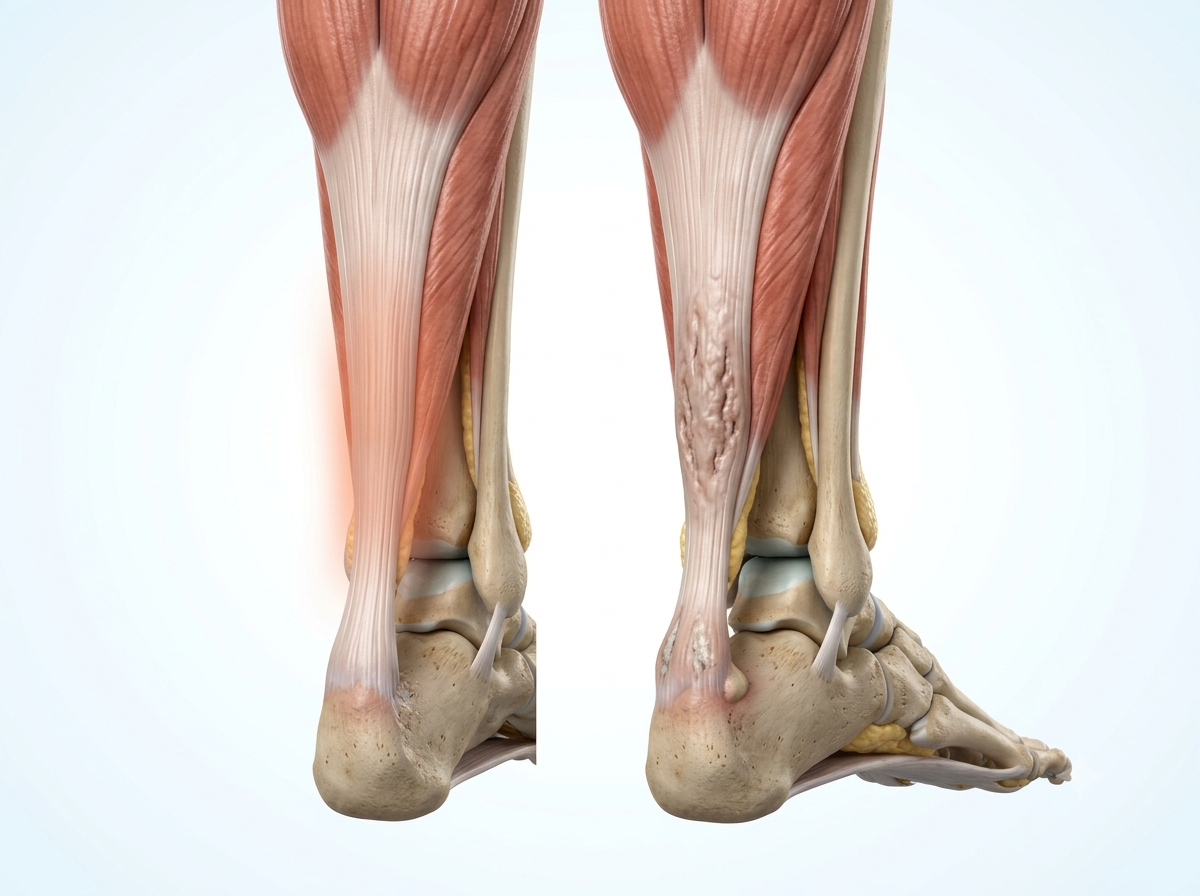
The Achilles tendon is the strongest tendon in the human body, but repetitive overload, degeneration or sudden sporting movements can cause persistent pain or even complete rupture.At Eva Hospital, Ludhiana, Dr. Tanveer Bhutani evaluates and treats Achilles tendon disorders ranging from chronic tendinopathy and insertional heel pain to acute Achilles tendon tears and complex chronic ruptures requiring reconstruction.Treatment is individualised and may include structured rehabilitation, activity modification, physiotherapy or, when necessary, surgical repair or tendon reconstruction.

Understanding Achilles tendon problems

Understanding Achilles Tendon Problems

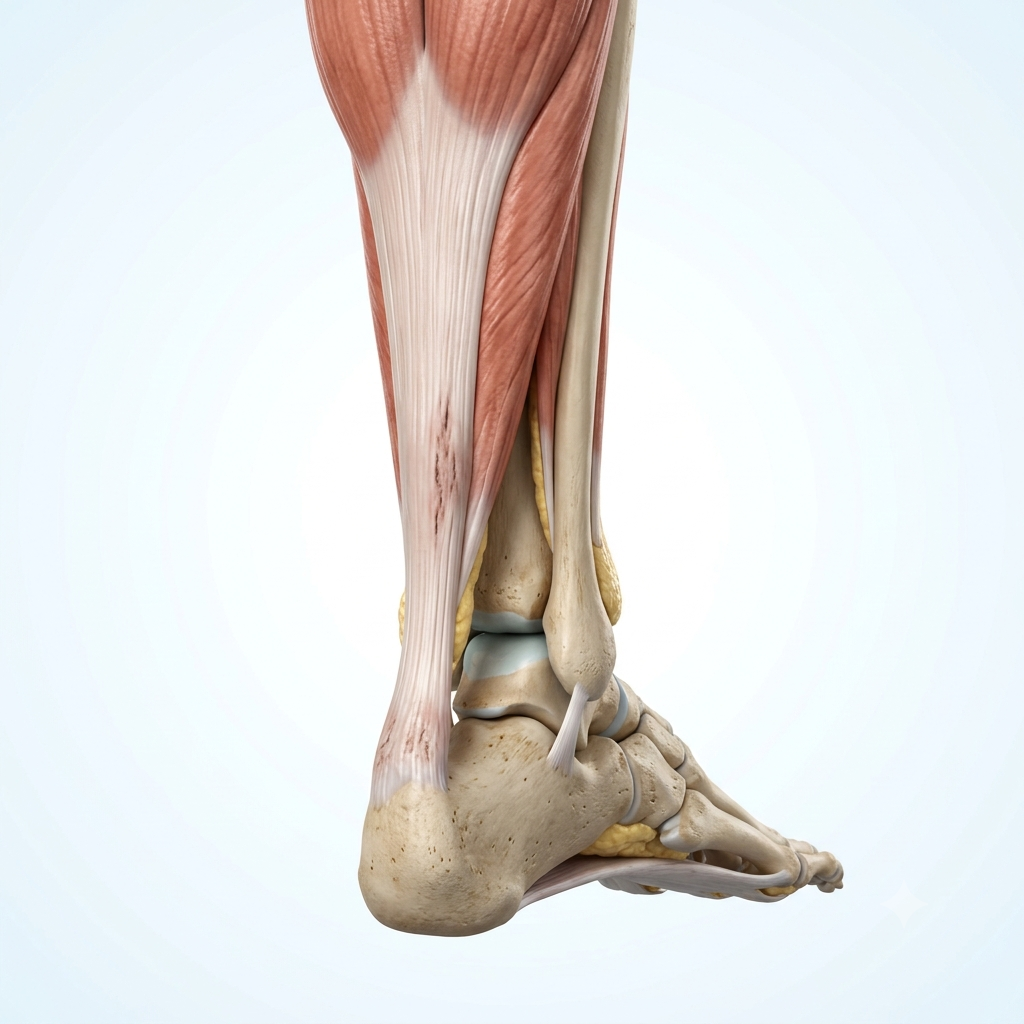
The Achilles tendon connects the calf muscles to the heel bone and plays an essential role every time we walk, run, climb stairs, jump or push off the ground.Achilles problems do not always begin with a dramatic injury. Many patients first notice stiffness when getting out of bed, pain during the first few minutes of walking, or discomfort after running or exercise. Others develop pain exactly where the tendon attaches to the heel.At the other end of the spectrum is an Achilles tendon rupture, which may occur suddenly while running, jumping, playing badminton, tennis, football or other sports.The important distinction is that persistent Achilles pain is frequently related to tendon degeneration and abnormal loading rather than simply inflammation. For this reason, treatment should address tendon strength and loading instead of relying only on painkillers or injections.

Two common patterns of chronic pain

Types of Achilles Tendon Disorders

Mid-Portion Achilles Tendinopathy

Commonly produces pain and thickening approximately a few centimetres above the heel bone. Patients may experience morning stiffness, pain when beginning to walk or run, tenderness or thickening of the tendon, pain after exercise, reduced ability to run or jump, and gradually declining sporting performance. The tendon may feel better once warmed up and become painful again following activity.

Insertional Achilles Tendinopathy

Occurs where the tendon attaches directly to the back of the heel bone. Patients may complain of pain at the back of the heel, tenderness where the shoe touches the heel, swelling, pain while climbing stairs, discomfort during running, and stiffness following rest. Some patients also develop calcification within the tendon, a prominent posterior heel, Haglund-type prominence, or associated retrocalcaneal bursitis. This condition is different from plantar fasciitis, although both can cause heel pain.
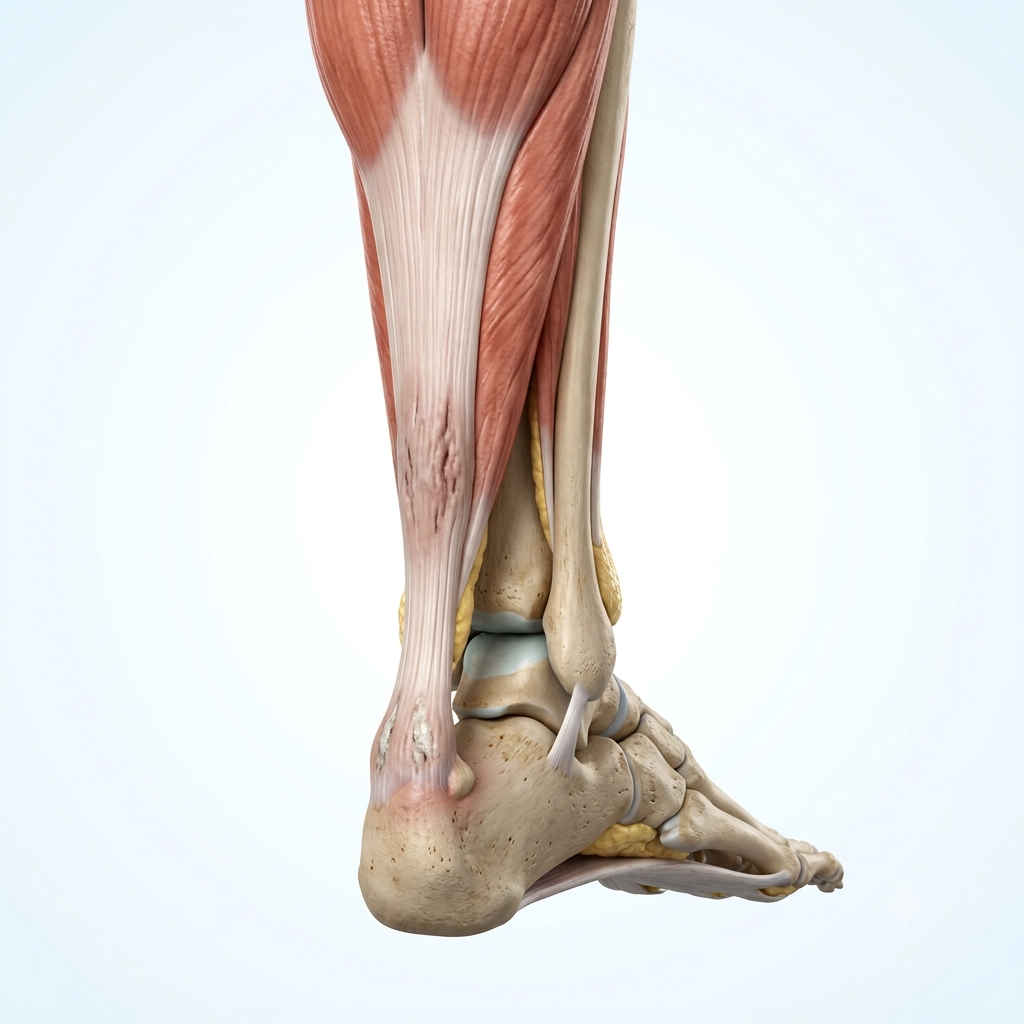
Where Does Your Heel Hurt?

Back of Tendon, Above the Heel

→ Mid-Portion Achilles Tendinopathy

Back of Heel, at Tendon Attachment

→ Insertional Achilles Tendinopathy

Underneath the Heel

→ Plantar Fasciitis

Understanding Achilles tendon problems

Achilles Tendinitis or Achilles Tendinopathy?

Although the term “Achilles tendinitis” is commonly used, many chronic Achilles problems are better described as Achilles tendinopathy. Long-standing symptoms frequently involve degeneration and altered tendon structure rather than a simple inflammatory process.This distinction matters because successful treatment usually requires progressive loading and rehabilitation of the tendon, rather than merely suppressing inflammation. Current clinical guidance places tendon-loading exercise at the centre of treatment for mid-portion Achilles tendinopathy.

Why Does the Achilles Tendon Become Painful?

Sudden increase in running or training

Increasing exercise intensity too rapidly

Inadequate recovery between workouts

Recreational badminton, tennis or football

Repeated jumping

Tight calf musculature

Reduced ankle flexibility

Inappropriate footwear

Altered foot biomechanics

Obesity

Ageing and tendon degeneration

Previous Achilles problems

A Word of Caution About Steroid Injections Around the Achilles Tendon

Steroid injections should not be treated as a routine solution for Achilles tendon pain. Although a corticosteroid injection may temporarily reduce pain, injecting steroid into or immediately around a diseased Achilles tendon can potentially weaken tendon tissue.This is particularly important because an already degenerative tendon may be vulnerable to partial or complete rupture. Clinical guidance from NICE specifically advises against injectable corticosteroids into or around the Achilles tendon, and experimental evidence has linked corticosteroid exposure around tendons with impaired collagen and tendon weakening.At Eva Hospital, steroid injection into the Achilles tendon itself is not used as a routine treatment for Achilles tendinopathy. Treatment should focus primarily on identifying the underlying tendon problem and restoring its ability to tolerate load.

How Is an Achilles Tendon Disorder Diagnosed?

Evaluation begins with a detailed history and examination. Dr. Tanveer Bhutani may assess:

Location of tenderness

Tendon thickening

Ability to perform a single-leg heel raise

Integrity of the Achilles tendon

Calf strength

Walking pattern

Sporting activity

Mechanism of injury

Ankle movement

When Is Imaging Required?

Not every patient with Achilles pain requires an MRI. Depending on the clinical problem, investigations may include:

X-ray

Particularly useful in insertional Achilles problems to identify calcification, heel prominence, Haglund deformity and associated bone abnormalities.

Ultrasound

Can demonstrate tendon thickening, abnormal tendon structure, partial tears, complete rupture and dynamic tendon behaviour.

MRI

Used when the diagnosis is uncertain, a significant partial tear is suspected, chronic rupture is being assessed, previous treatment has failed, or surgery/reconstruction is being planned.

Most Achilles Tendinopathy Does Not Require Surgery

Most patients with tendinopathy should first receive an appropriate rehabilitation programme.

1. Activity Modification

Not necessarily complete rest — the objective is to reduce activities that excessively aggravate the tendon while maintaining safe activity levels.

2. Progressive Tendon Loading

One of the most important components of treatment: isometric calf loading, progressive calf raises, eccentric exercises, concentric-eccentric strengthening, progressive resistance training, and gradual reintroduction of jumping and running.

3. Calf & Ankle Rehabilitation

Addresses calf weakness, ankle mobility, balance, lower-limb mechanics, sporting technique, and a gradual return to running or jumping.

4. Footwear & Heel Modification

Suitable footwear, heel lifts, altered training shoes, and modifying activities that compress the Achilles insertion — supportive measures, not definitive treatment.

5. Medication

Short courses of appropriate analgesic or anti-inflammatory medication may help symptom control in selected patients, but do not cure the underlying tendinopathy.

What About Shockwave Therapy or PRP?

Some patients with persistent Achilles tendinopathy ask about extracorporeal shockwave therapy or platelet-rich plasma injections. These options may be considered selectively, but neither should replace a properly structured tendon-loading programme.

When Is Surgery Considered for Chronic Achilles Tendinopathy?

Surgery is usually considered only when persistent symptoms remain despite an adequate period of supervised non-operative treatment. Depending on the pathology, surgery may include:

Removal of severely diseased tendon

Debridement of degenerative tissue

Removal of calcific deposits

Treatment of insertional disease

Removal of symptomatic posterior heel prominence where appropriate

Tendon reattachment using anchors

Tendon augmentation or reconstruction when substantial tendon is diseased
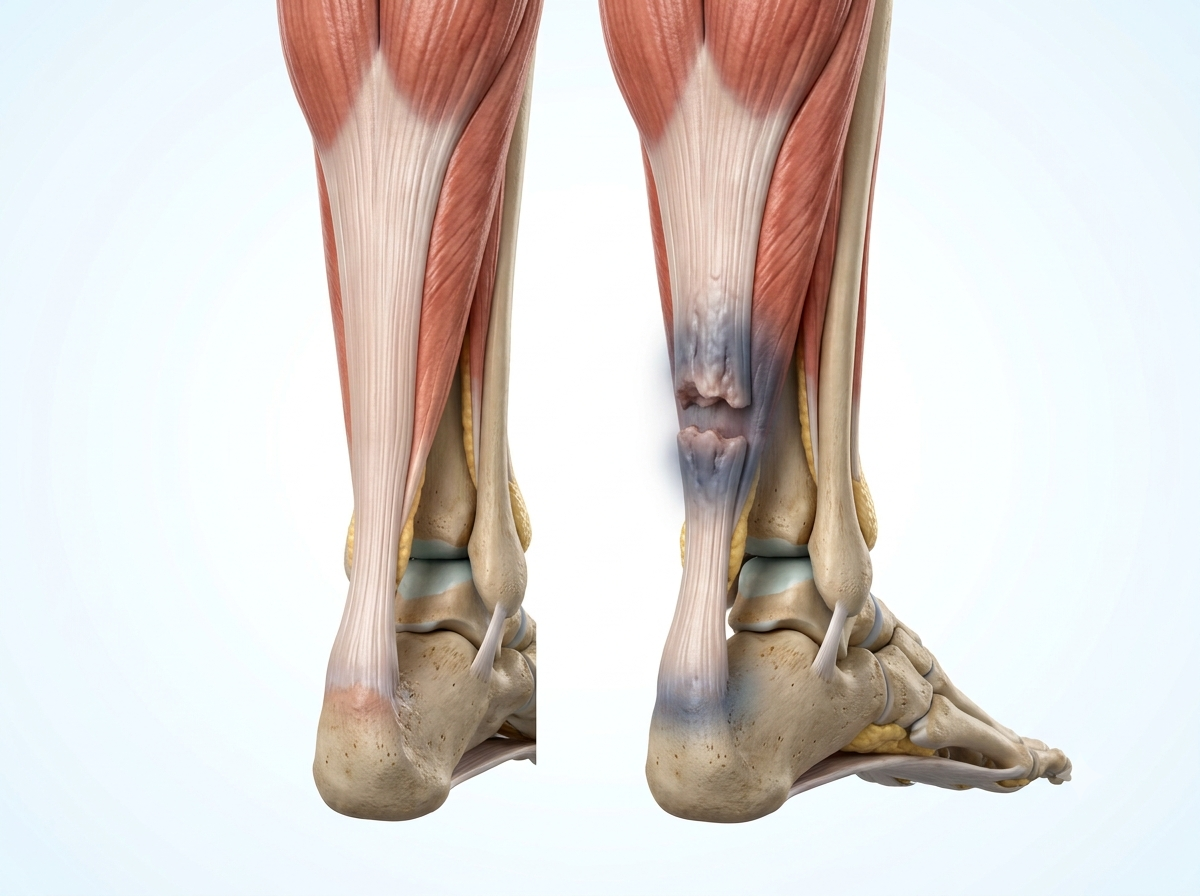
Achilles Tendon Rupture

A complete rupture is quite different from chronic Achilles tendinopathy. The tendon typically tears suddenly, often during acceleration, jumping, landing or an abrupt change of direction. Patients often describe: “It felt as though somebody kicked me from behind.” Some even turn around expecting to see who struck them.

Typical symptoms include:

When Is Surgery Considered for Chronic Achilles Tendinopathy?

Surgery is usually considered only when persistent symptoms remain despite an adequate period of supervised non-operative treatment. Depending on the pathology, surgery may include:

Previous Achilles tendinopathy

Previous tendon injury

Recreational sports involving sudden acceleration or jumping

Increasing activity suddenly after inactivity

Corticosteroid exposure

Diabetes

Middle age

Obesity

Certain systemic illnesses

Some medications

Certain Antibiotics and Achilles Tendon Injury

Fluoroquinolone antibiotics have been associated with tendinopathy and tendon rupture, particularly affecting the Achilles tendon. Examples of this drug family include medications such as ciprofloxacin, levofloxacin and ofloxacin.The risk becomes particularly relevant in susceptible individuals, including older patients and those also receiving corticosteroids. Research has demonstrated an association between fluoroquinolone use and Achilles tendinopathy and rupture.Patients who develop sudden Achilles pain while taking such medication should contact their treating doctor and seek appropriate clinical assessment. Do not stop a prescribed antibiotic on your own.

Partial Achilles Tendon Tear

Partial tears may occur within a previously abnormal or degenerative tendon and can sometimes be difficult to distinguish from severe tendinopathy.

Amount of tendon involved

Location of the tear

Tendon quality

Functional weakness

Sporting requirements

Duration of symptoms

Does Every Complete Achilles Rupture Need Surgery?

No.Both surgical and structured non-surgical functional rehabilitation can produce successful outcomes in appropriately selected patients. The decision should consider:

Risks associated with surgery

Timing since the injury

Sporting requirements

Rehabilitation compliance

Tendon gap and injury characteristics

Medical conditions

Quality of tendon

Occupation

Patient's age

Activity level

Surgical Repair of an Acute Achilles Tendon Rupture
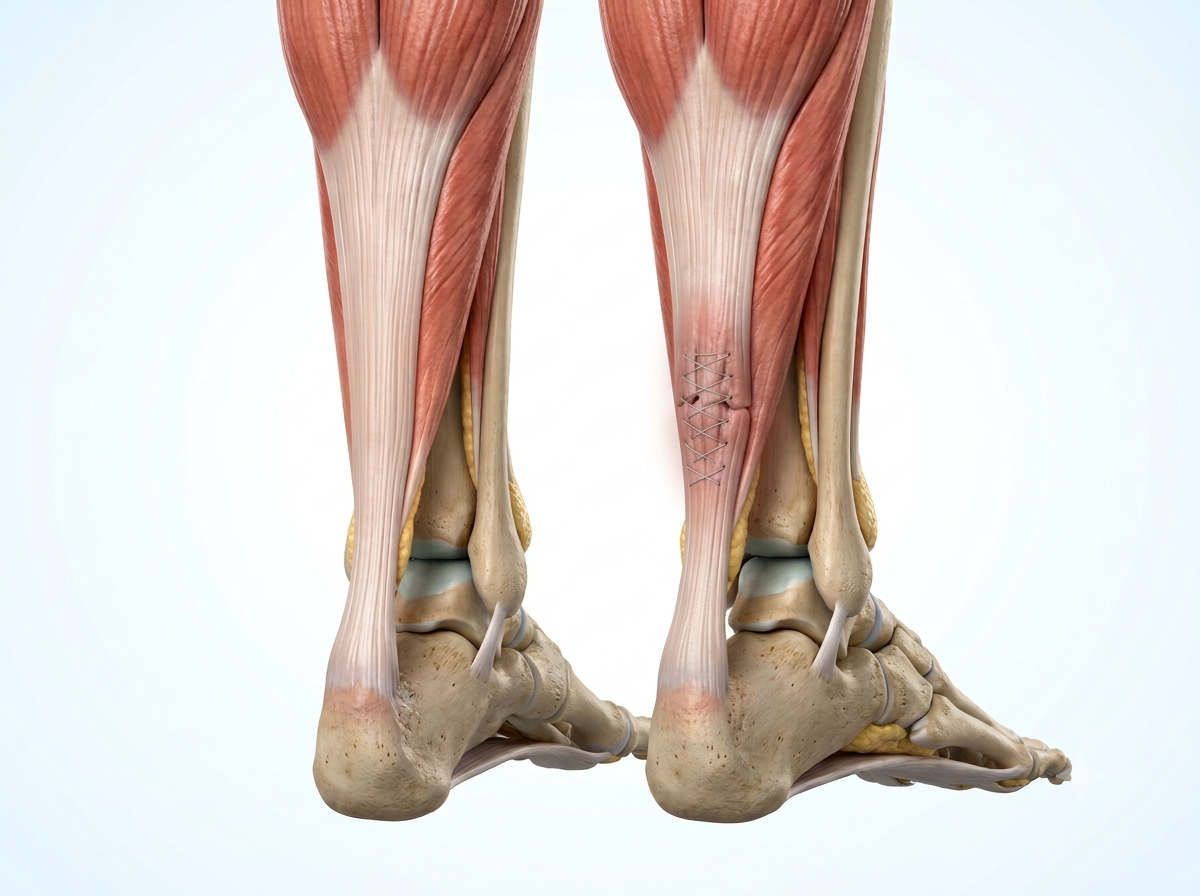
When surgery is selected for a fresh Achilles rupture, the objective is to restore tendon continuity, appropriate tendon length, calf-Achilles tension, and push-off strength.Whenever tendon quality and the injury pattern permit, a primary repair may be performed by bringing the torn tendon ends together securely. Repair techniques vary according to the location and configuration of the tear and may include open or minimally invasive approaches — no single technique is universally superior for every patient.

Chronic or Neglected Achilles Tendon Rupture

Achilles ruptures are occasionally missed during the initial injury, or patients seek treatment several weeks or months later. By then, the torn ends may have retracted, scarred, become degenerative, or developed a substantial gap. A simple end-to-end repair may no longer be sufficient.

Persistent weakness

Abnormal walking

Inability to perform a single-leg heel raise

Difficulty running

Poor push-off

Calf wasting

Achilles Tendon Reconstruction

When the tendon ends cannot be brought together safely, or when substantial tendon tissue is deficient, Achilles tendon reconstruction may be required. Depending on the individual defect, reconstruction may involve one or a combination of:

Advancement of remaining tendon

Tendon transfer

Autologous tendon augmentation

Synthetic augmentation

Biological graft augmentation

Allograft reconstruction in selected major defects

The technique is selected according to the length of the tendon gap, quality of remaining Achilles tissue, chronicity of the rupture, previous operations, patient age, functional requirements, and presence of infection or compromised soft tissue.

Recovery After Achilles Tendon Repair

Initial tendon protection

Controlled ankle positioning

Progressive weight bearing

Calf strengthening

Restoration of ankle movement

Single-leg strength and balance

Progressive jogging

Running and plyometric exercises

Sport-specific rehabilitation

Seek Early Orthopaedic Assessment If You Have
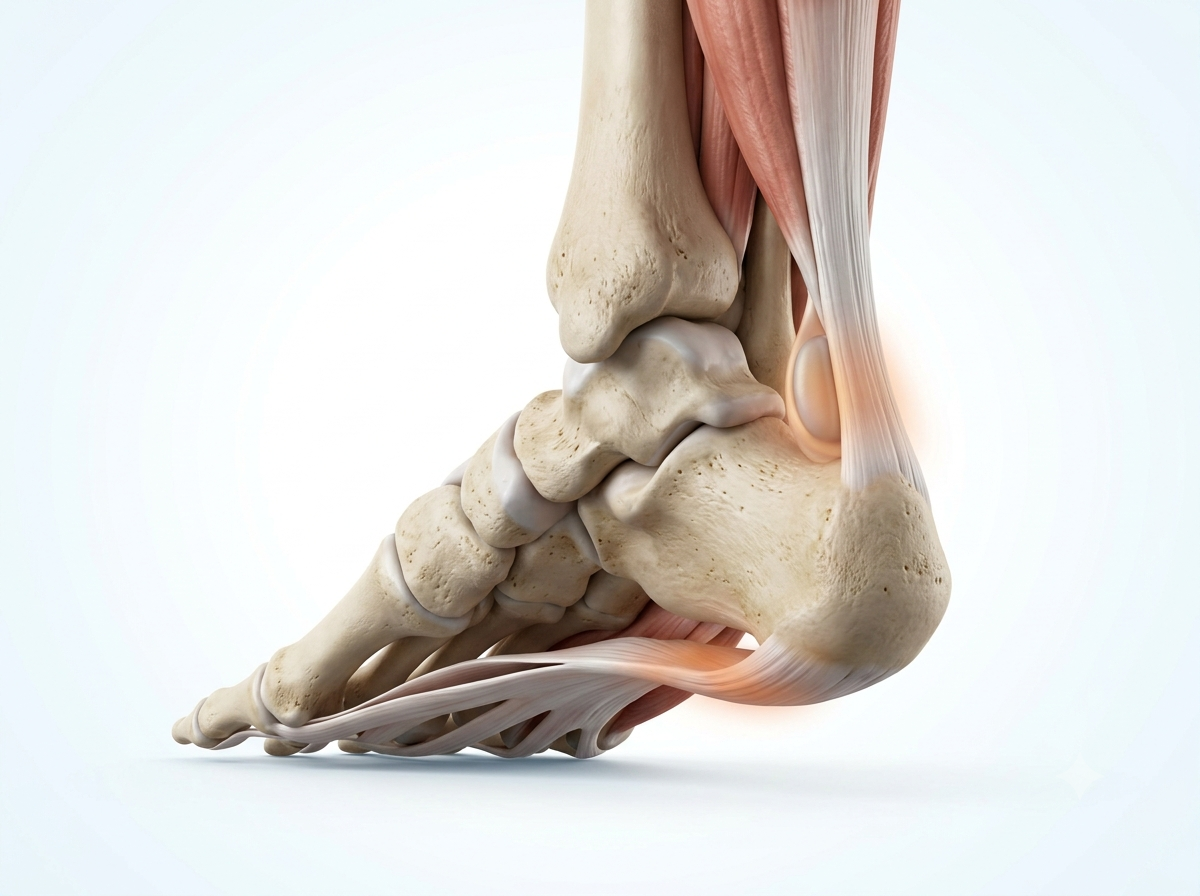
Sudden pain or a “pop” behind the ankle; difficulty pushing off while walking; inability to stand on tiptoe; sudden weakness following sport; a visible or palpable gap in the Achilles tendon; bruising and swelling following an acute injury; sudden Achilles pain following a steroid injection; or sudden Achilles symptoms while taking a fluoroquinolone antibiotic.Early diagnosis is particularly important after a suspected rupture.

Other Causes of Heel Pain

Pain around the heel can have several causes: insertional Achilles tendinopathy, retrocalcaneal bursitis, Haglund deformity, plantar fasciitis, stress injury, nerve-related pain, or other foot and ankle disorders. The location of pain is therefore important.Plantar fasciitis more commonly causes pain underneath the heel, particularly during the first steps after getting out of bed or following prolonged rest. It is a separate condition from Achilles tendinopathy and requires a different treatment strategy.

Your surgeon

Achilles Tendon & Sports Injury Care at Eva Hospital, Ludhiana

Patients with Achilles tendon problems may require anything from carefully supervised rehabilitation to complex reconstruction. At Eva Hospital, treatment is directed by Dr. Tanveer Bhutani, M.S. Ortho (Gold Medalist), M.Ch. Ortho (U.K.).Dr. Bhutani has more than 16 years of experience in orthopaedic surgery, joint reconstruction and sports injuries. His M.S. Orthopaedics Gold Medal was presented by former President of India Dr. A.P.J. Abdul Kalam, and his training includes advanced fellowships and scholarships in Germany.
Dr Tanveer bhutani

What's tried first

Patient Journey

1. Clinical Assessment

2. Imaging When Required

3. Individualised Treatment

4. Structured Recovery

5. Return to Activity

Related Pages

Sports Injuries

Orthopaedics

Foot & Ankle Arthritis

Ankle Arthrodesis

Ankle Replacement

Sports Rehabilitation

Fractures & Trauma

Dr. Tanveer Bhutani

Frequently Asked Questions About Achilles Tendon Problems

Achilles tendinitis is a commonly used term, particularly for early painful symptoms. Persistent Achilles pain, however, frequently reflects structural tendon degeneration rather than pure inflammation and is more accurately termed Achilles tendinopathy.

Yes. Most Achilles tendinopathy is initially treated without surgery. Progressive tendon loading, rehabilitation, modification of aggravating activity and correction of contributing factors form the basis of treatment.
Not necessarily. Complete rest is often unnecessary. Activity may need to be modified so that the tendon is not repeatedly overloaded while a structured rehabilitation programme progressively restores strength.
Steroid injections into or around the Achilles tendon are generally discouraged because corticosteroids can adversely affect tendon tissue and have been associated with tendon rupture. Clinical guidance advises against injectable corticosteroids into or around the Achilles tendon.
Insertional Achilles tendinopathy usually causes pain directly at the back of the heel where the Achilles tendon attaches to the heel bone. It may be associated with swelling, calcification or a prominent heel.
No. Plantar fasciitis generally causes pain underneath the heel, while Achilles problems more commonly cause pain at the back of the heel or in the tendon above it.
Patients often feel a sudden snap or sensation of being kicked behind the ankle followed by weakness, difficulty pushing off and inability to stand normally on tiptoe. A suspected rupture should be assessed promptly by an orthopaedic surgeon.
No. Both operative and structured non-operative treatment can be successful. The best treatment depends on the patient’s age, activity level, injury pattern, tendon characteristics, medical condition and functional goals.
Reconstruction may be needed when a rupture has been neglected for several weeks or months, when a large gap has developed, or when there is insufficient healthy tendon for a straightforward primary repair.
Yes. Chronic Achilles ruptures can often be reconstructed, although surgery may be more complex than repair of a fresh rupture because the tendon ends may have retracted and the remaining tissue may be degenerated.
Fluoroquinolone antibiotics have been associated with Achilles tendinopathy and tendon rupture. Anyone developing new Achilles pain while taking such medication should contact their treating doctor rather than stopping prescribed medication independently.
Achilles tendon disorders are commonly managed by orthopaedic surgeons with experience in sports injuries and foot and ankle conditions. Persistent Achilles pain, a suspected tear, or sudden loss of push-off strength warrants specialist assessment.

Persistent Achilles Pain or a Suspected Tendon Tear?

Heel and Achilles pain should not simply be repeatedly suppressed with medication or injections without establishing its cause. Whether the problem is chronic Achilles tendinopathy, insertional heel pain, a partial tear or a complete rupture, the first step is determining exactly what has happened to the tendon. Consult Dr. Tanveer Bhutani at Eva Hospital, Ludhiana for evaluation of Achilles tendon and sports-related injuries.
Hip Replacement

Send Message

Consult our specialists for accurate diagnosis and effective treatment solutions.

pop up