Fractures and Trauma Treatment in Ludhiana, Punjab - Eva Hospital

A fracture can happen in an instant — a fall at home, a road traffic accident, a sports injury, or a fragility fracture in an older adult — and what happens in the first few hours often shapes the entire recovery. Eva Hospital, Ludhiana provides 24×7 emergency care for fractures and orthopaedic trauma, covering injuries from a simple wrist fracture to complex, open, multi-fragment injuries.

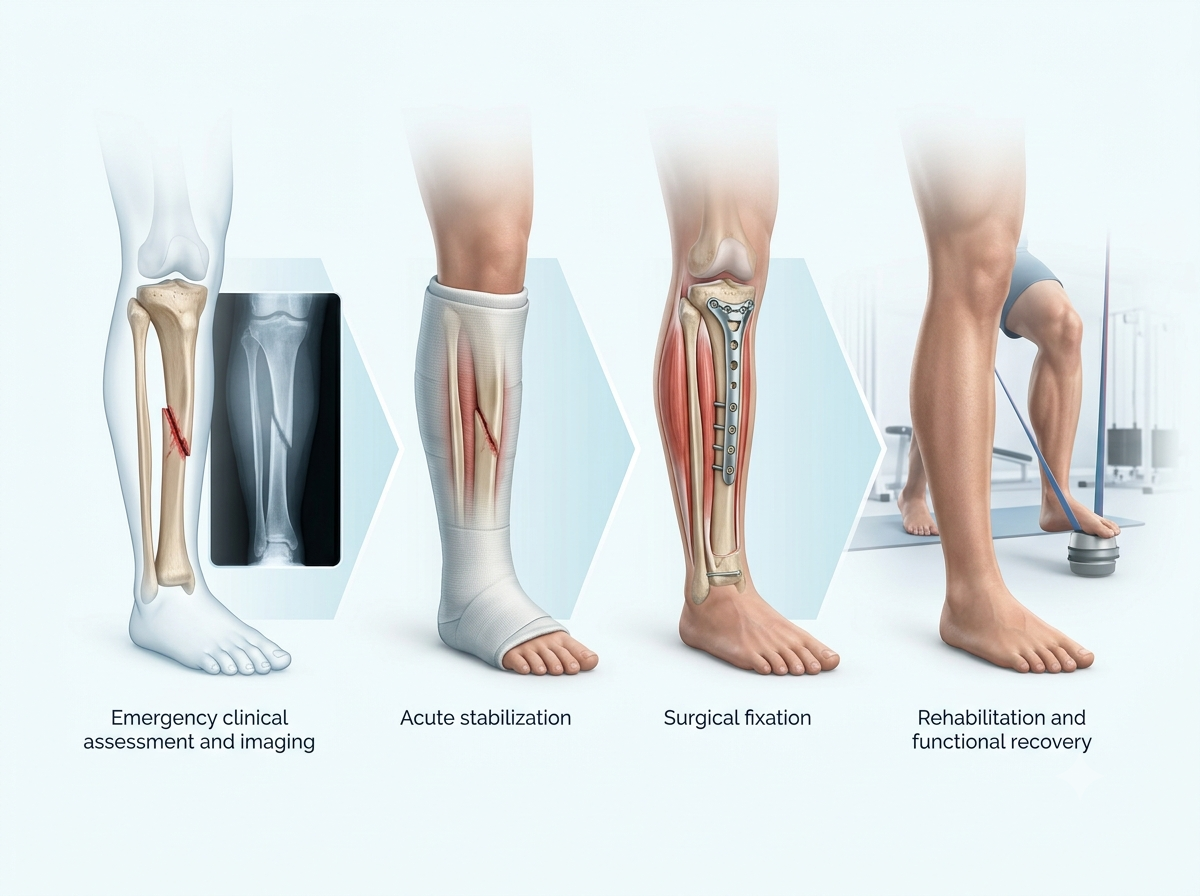
Every patient is assessed rapidly and thoroughly — checking circulation and nerve function, obtaining appropriate imaging, splinting or reducing the injury for comfort and safety, and then deciding, on clinical grounds, whether the fracture can heal with a cast or brace or whether it needs surgical fixation. That decision is never automatic; it is based on the fracture pattern, the joint involved, the patient’s age and health, and the demands they need their limb to meet.

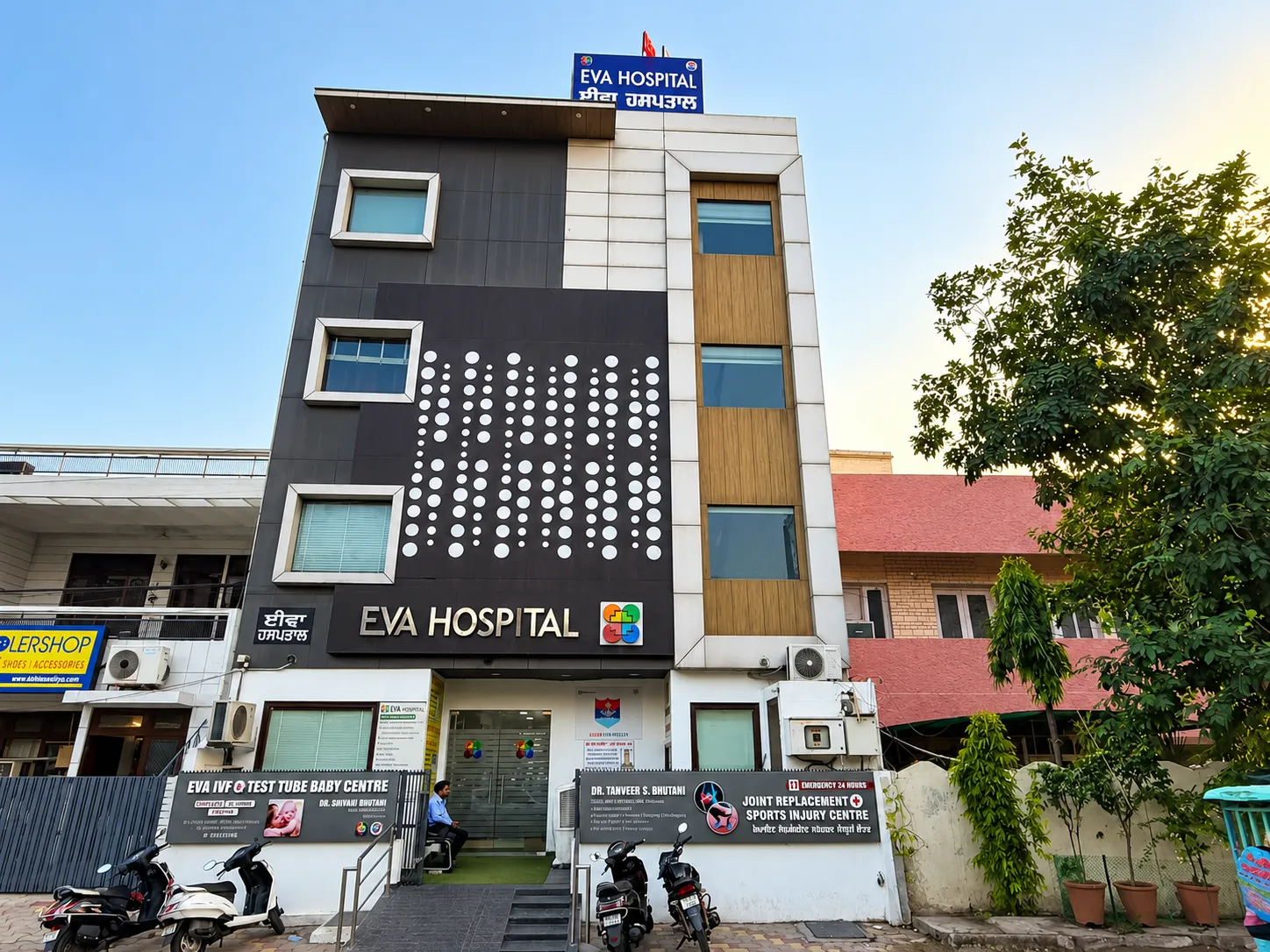
Eva Hospital Original photo
Comprehensive Orthopaedic Trauma Care

Comprehensive Orthopaedic Trauma Care

Trauma care is rarely just about “fixing a broken bone.” It starts the moment a patient arrives — with a rapid assessment of the whole limb, not just the fracture visible on the X-ray — and continues through to the point where a patient has regained functional use of the injured limb.

At Eva Hospital, emergency assessment, the decision between casting and surgery, fixation when required, and structured rehabilitation are managed by the hospital’s orthopaedic team.

This continuity matters most in trauma, where early decisions — how a fracture is reduced, whether soft tissue is given time to settle before fixation, how a joint surface is reconstructed — have a lasting effect on the final result.

Disclaimer: Images are AI-generated for illustrative purposes only.

Fractures We Treat

Rather than an exhaustive list, here is the range of injuries regularly managed at Eva Hospital, grouped by region.

Upper Limb

Lower Limb

Simple to Complex

Sports & Osteoporotic Fractures

When Does a Fracture Need Surgery?

Many fractures heal well with a cast, brace or splint and careful monitoring. Surgery may be considered when one or more of the following apply:

The fracture is significantly displaced or unstable
The break extends into a joint surface
Multiple bone fragments make non-surgical alignment unreliable
The fracture is open (bone through the skin)
There is associated nerve or blood vessel injury
Non-surgical treatment would require prolonged immobilisation with a high risk of stiffness
The patient's activity or occupational demands favour a faster, more reliable return to function
Non-surgical treatment has already failed to maintain acceptable alignment

Our Doctor

Details of registered medical practitioners at Eva Hospital, Ludhiana, provided for patient information.

Dr. Tanveer Singh Bhutani, Consultant Orthopaedic Surgeon

Dr. Tanveer Singh Bhutani

Consultant Orthopaedic Surgeon

Qualifications
MBBS, MS (Orthopaedics), M.Ch (Orthopaedics) (UK)
Department
Orthopaedics
Registration Status
Registered
Registration No. (NMR/SMR)
40132
Registered With
Punjab Medical Council
OPD Availability
10:00 AM to 2:00 PM
4:00 PM to 8:00 PM

Registration can be verified on the NMC website.
Signs That a Fracture May Be Present

Pain that is severe or worsens with movement · swelling and bruising · visible deformity · inability to bear weight or use the limb · tenderness over the bone · numbness or tingling. A diagnosis can only be made after examination and imaging.

Surgery is not advised only on the basis of an X-ray. The decision should match the patient’s pain, function, clinical examination, lifestyle limitation, medical fitness, and expectations.

Fracture Fixation & Trauma Surgery

Plates and Screws (ORIF)

Open reduction and internal fixation directly realigns the fracture and holds it with a plate and screws — commonly used for fractures near joints and in the upper limb.

Intramedullary Nailing

A rod passed through the centre of the bone, well suited to fractures of the shaft of long bones such as the femur and tibia.

Percutaneous Fixation

Screws or wires placed through small incisions under imaging guidance, minimising soft-tissue disruption for suitable fracture patterns.

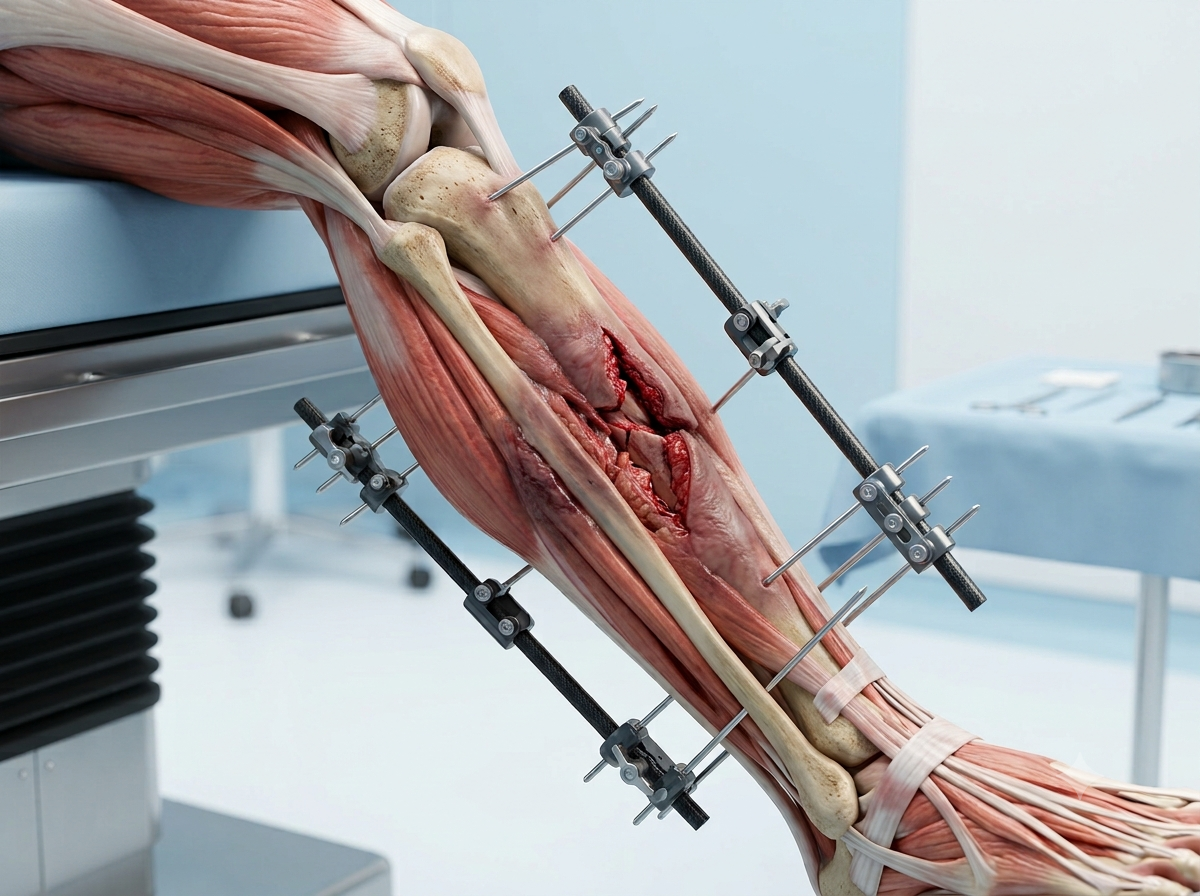
External Fixation

A frame stabilising the bone from outside the skin — used temporarily in severe soft-tissue injury, or definitively in selected complex or infected fractures.

Joint / Intra-Articular Reconstruction

Fractures that extend into a joint surface require particularly precise reduction to restore a smooth, congruent joint and reduce the long-term risk of post-traumatic arthritis.

Open & Complex Fractures

An open fracture — where the bone breaks through the skin, or the injury communicates with the fracture site — carries a materially higher risk of infection and requires urgent, structured management: thorough wound assessment, appropriate antibiotics, surgical debridement of contaminated or non-viable tissue, and stabilisation of the fracture.Complex fractures with significant soft-tissue injury, multiple fragments, or associated damage to nerves or blood vessels often require staged treatment — for example, temporary external fixation to stabilise the limb while swelling settles, followed by definitive fixation once the soft tissues are ready.Coordinated management of both the bone and the surrounding soft tissue is central to a good outcome in these injuries.
Open & Complex Fractures
Disclaimer: Images are AI-generated for illustrative purposes only.
 

Nonunion, Malunion & Failed Previous Fracture Surgery

Nonunion

The fracture has failed to heal within the expected timeframe, sometimes requiring revision fixation, bone grafting, or biological augmentation to stimulate healing.

Malunion

The fracture has healed, but in a deformed or misaligned position, which may require a corrective osteotomy to restore alignment and function.

Implant Failure

Broken, loosened or migrated hardware from previous surgery, requiring assessment and often revision fixation.

Bone Loss

Segmental bone defects, whether from the original injury or subsequent debridement, may require staged reconstruction techniques.

Infection After Fracture Surgery

Requires a coordinated approach — control of infection, appropriate antibiotics, and often staged surgery to achieve both a healed, infection-free bone and a stable, functional limb.

Fractures in Older Adults

Hip fractures, wrist fractures and other osteoporotic (fragility) fractures in older adults are treated as a priority, not routine trauma.

Hip Fractures

Early surgery and early mobilisation are strongly associated with better outcomes and reduced complications in elderly patients, and are prioritised accordingly.

Wrist Fractures

Common after a fall onto an outstretched hand; treatment balances restoring function with the realities of osteoporotic bone quality.

Osteoporotic Bone

Weakened bone affects both the fracture pattern and the choice of fixation, often requiring specific implants or techniques suited to lower bone density.

Medical Optimisation

Coordinated peri-operative care addresses the medical conditions that commonly accompany fragility fractures in older patients.

When a Fracture Is an Emergency

Seek immediate emergency assessment if any of the following are present after an injury:
Compartment syndrome is a surgical emergency — increasing pressure within the muscle compartments of a limb can cut off blood supply if not treated promptly. Do not wait to see if these symptoms improve on their own.

Diagnosis & Imaging

Neurovascular Assessment

X-rays

CT (Where Required)

Temporary Splintage / Reduction

Decision: Cast or Surgery

Recovery & Rehabilitation

Pain and swelling control in the early phase
Protected movement of joints not directly involved in the fracture
Progressive weight-bearing or loading, guided by healing on X-ray
Strengthening of surrounding muscles
Restoration of joint range of motion
Sport- or occupation-specific rehabilitation for a return to prior activity

Facilities and Services

NABH accredited (Certificate No. SHCO-2019-0201, Valid thru : January 12, 2029) · ECHS empanelled · 24×7 emergency services · X-ray and Ultrasound· Rehabilitation and follow-up services

orthopedic department eva hospital

Frequently Asked Questions

No. Many fractures heal well with a cast, brace or splint and monitored X-rays. Surgery is considered when the fracture is significantly displaced, unstable, involves a joint surface, is open, or is unlikely to heal well with non-operative treatment alone.

The decision is based on the fracture pattern, whether it involves a joint, the degree of displacement, associated soft-tissue or neurovascular injury, the patient’s age and health, and their functional demands — not a fixed rule for every fracture.

ORIF (open reduction and internal fixation) uses a plate and screws to hold the fracture, commonly for fractures near joints. Intramedullary nailing passes a rod through the centre of the bone and is typically used for shaft fractures of long bones like the femur and tibia.

An open fracture, where the bone breaks through the skin, carries a significantly higher risk of infection and requires urgent wound assessment, antibiotics, surgical debridement, and fracture stabilisation, often as an emergency.

A surgical emergency where increasing pressure within a muscle compartment cuts off blood supply to the limb. Warning signs include pain that is disproportionate to the injury or worsening despite pain relief, and require immediate assessment.

A fracture that has failed to heal within the expected timeframe. Treatment may involve revision fixation, bone grafting, or other measures to stimulate and support healing.

A malunion is a fracture that has healed in a deformed or misaligned position. It can often be corrected with a planned surgical procedure (osteotomy) to restore alignment and improve function.

Early surgery and early mobilisation in elderly hip fracture patients are strongly associated with better outcomes and fewer complications, which is why these fractures are prioritised rather than treated as routine trauma.

Not always. Weakened, osteoporotic bone can affect both the fracture pattern and the choice of fixation, sometimes requiring specific implants or techniques suited to lower bone density.
Recovery time varies enormously depending on the bone involved, the fracture pattern, the fixation used, and the patient’s age and health — recovery is guided by healing seen on X-ray and functional milestones, not a single fixed timeline.
Go immediately for an open injury, obvious deformity, an absent or weak pulse, numbness, severe or rapidly increasing swelling, disproportionate or worsening pain, or a cold, pale limb below the injury.
No. CT is used selectively, particularly for fractures involving a joint surface or complex, multi-fragment patterns, to help plan surgical fixation precisely.
This is assessed individually — options may include revision fixation, bone grafting, treatment of infection if present, or staged reconstruction, depending on the specific problem (nonunion, malunion, implant failure, or infection).
Many can be assessed and treated promptly, though timing depends on swelling, the fracture pattern, and whether staged treatment is needed to allow soft tissue to settle before definitive fixation.
Yes, for most fractures. Rehabilitation — protected movement, progressive loading, and strengthening — plays a major role in regaining full function, alongside the bone healing itself.
A frame that stabilises the bone from outside the skin using pins. It’s often used temporarily in severe soft-tissue injury before definitive fixation, and occasionally as the definitive treatment in selected complex or infected fractures.

Recently Injured, or Living With an Old Fracture Problem?

Whether this is a fresh injury requiring urgent assessment or a longstanding nonunion or malunion needing reconstruction, Consult the Orthopaedics Department at Eva Hospital, Pakhowal Road, Ludhiana. For emergencies, visit our 24×7 emergency department.

Hip Replacement

Send Message

Consult our specialists for accurate diagnosis and effective treatment solutions.

pop up