Ankle Arthrodesis (Ankle Fusion Surgery) in Ludhiana
Living With Constant Ankle Pain?
- If every step hurts.
- If your ankle remains swollen months or years after an injury.
- If climbing stairs has become difficult
- Preserved bone stockIf previous fracture surgery has left you with persistent pain.
- If medicines, injections and physiotherapy no longer provide relief.
Ankle arthrodesis may be the most reliable long-term solution.

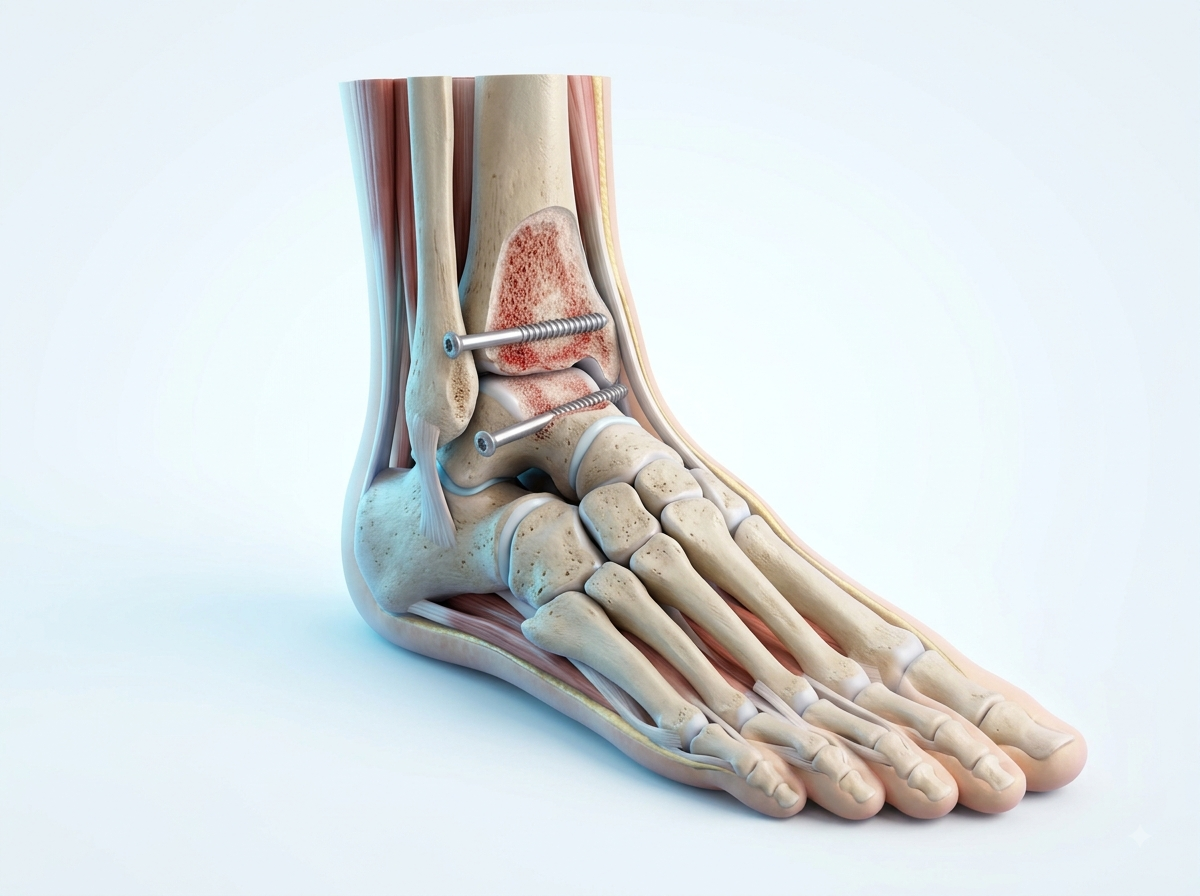
What Is Ankle Arthrodesis?
Ankle arthrodesis, commonly called ankle fusion, is a surgery that permanently joins the shin bone (tibia) to the ankle bone (talus) into a single, solid bone.
During surgery, the remaining damaged cartilage is removed from both sides of the joint, exposing healthy bone. The two bones are then compressed together, usually with screws or a plate, and held in this position while they heal together — much like a fracture heals.
Once fused, the ankle joint itself no longer moves. Pain disappears largely because the painful movement that was causing it no longer exists. The surrounding joints of the foot — the subtalar and midfoot joints — gradually compensate to allow a reasonably natural walking pattern.
Is Ankle Fusion Better Than Ankle Replacement?
| Factor | Favours Fusion | Favours Replacement |
|---|---|---|
| Age | Younger patients | Older, lower-demand patients |
| Activity Level | Heavy labour or very active lifestyle | Lower-demand daily activity |
| Deformity | Severe ankle deformity | Well-aligned, less deformed joint |
| Arthritis Cause | Post-traumatic arthritis | Primary or inflammatory arthritis in a stable joint |
| Infection History | Previous infection | No history of infection |
| Bone Quality | Poor bone quality | Good bone quality |
| Previous Surgery | Failed ankle replacement | No prior ankle surgery |
| Body Weight | Higher BMI | Lower BMI |
Causes of Ankle Arthritis
Shoulder Arthroscopy
Road Traffic Accident
Repeated Sports Injuries
Rheumatoid Arthritis
Severe Instability
AVN of the Talus
Failed Ankle Surgery
Infection
Symptoms
Pain while walking
Night pain
Swelling
Difficulty standing
Reduced walking distance
Limp
Difficulty climbing stairs
Deformity
Conservative Treatment
Physiotherapy
Weight reduction
Footwear modification
Braces
NSAIDs
Activity modification
PRP (limited role)
Steroid injection
Who Is an Ideal Candidate?
Failed ligament reconstruction
Post-traumatic arthritis
Pain affecting daily life
Failed ankle replacement
End-stage arthritis
Nonunion
Chronic instability
Severe deformity
Malunion
Surgical Technique
Imaging and deformity assessment help the surgical team plan the appropriate approach and fixation strategy.
Regional anaesthesia may be selected by the anaesthesia team based on the individual patient's needs and surgical plan.
A carefully planned incision is made according to the selected surgical approach to access the ankle joint.
Damaged cartilage is removed from the joint surfaces to expose healthy bone and prepare the joint for fusion.
Angular or rotational deformity is corrected to restore appropriate alignment before the joint is fixed.
Bone graft may be used when required to fill bone defects and support the fusion process.
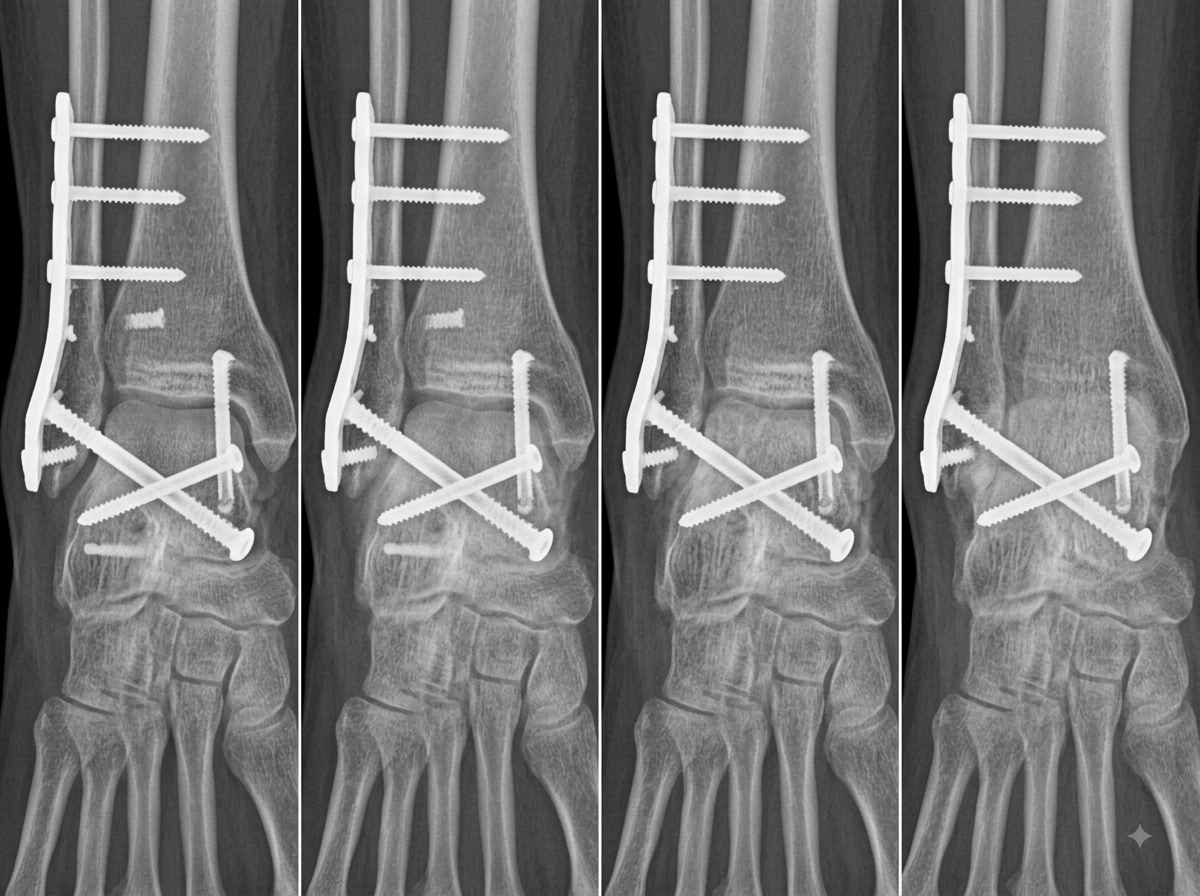
Compression screws bring the prepared joint surfaces together and help maintain stability during healing.
A plate may be added when additional fixation and stability are required for the individual patient.
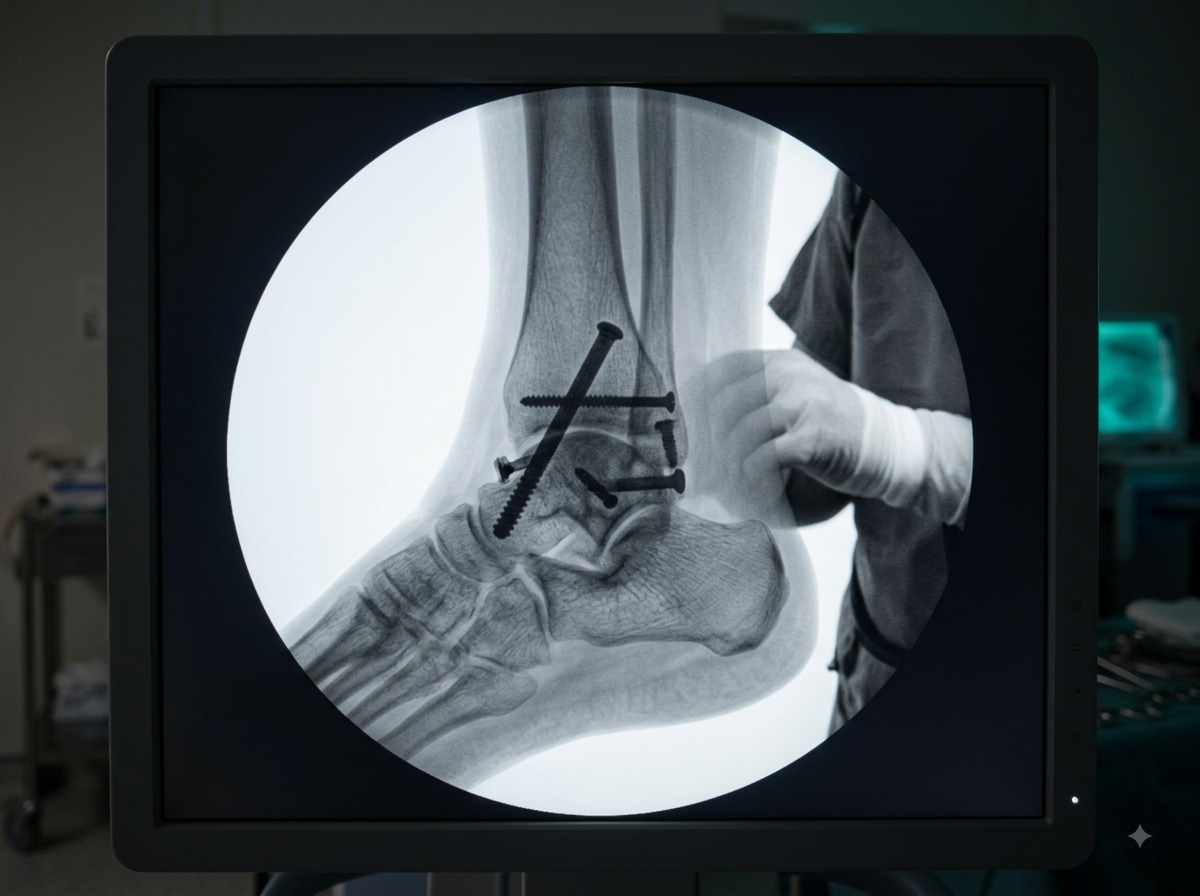
Live X-ray imaging is used during surgery to confirm joint alignment and accurate placement of the fixation.
Once alignment and fixation are confirmed, the incision is carefully closed in layers.
A protective cast is applied to support the ankle and protect the fusion during the early healing period.
Open vs Arthroscopic Ankle Fusion
Open Ankle Fusion
- Direct visualisation of the whole joint
- Allows correction of significant deformity
- Suited to complex bone loss or revision cases
Disadvantages
- Larger incision
- More soft-tissue disruption
- Potentially longer wound healing
Arthroscopic Ankle Fusion
- Smaller incisions
- Less soft-tissue disruption
- Potentially faster union in suitable cases
Disadvantages
- Technically demanding
- Not suitable for significant deformity or major bone loss
- Limited ability to correct complex malalignment
Bone Grafts
Autograft
Allograft
Bone Substitutes
Recovery Timeline
| Time | Recovery Milestone |
|---|---|
| Day 1 | Hospital stay, pain control and initial mobilisation with protection. |
| 2 Weeks | Suture removal and wound check. |
| 6 Weeks | X-rays to assess early healing progress. |
| 8–10 Weeks | Partial weight bearing begins, guided by healing on imaging. |
| 10–12 Weeks | Progressive walking as fusion continues to consolidate. |
| 4–6 Months | Fusion is typically complete on imaging in most patients. |
| 6–12 Months | Maximum functional improvement. |
Rehabilitation
Range of Nearby Joints
Calf Strengthening
Balance Training
Walking Pattern
Footwear
Driving, Office & Labour Work
Life After Ankle Fusion
Can I walk normally?
Can I drive?
Can I travel?
Can I climb stairs?
Can I squat?
Can I exercise?
Can I play golf?
Can I cycle?
Can I trek?
Can I wear normal shoes?
Advantages
Excellent pain relief
Reliable long-term result
Lower revision rates than ankle replacement in suitable patients
Correction of deformity
Improved stability
Long implant survival
High union rates
Risks
- Delayed union
- Nonunion
- Infection
- Nerve irritation
- Blood clot
- Hardware irritation
- Need for future surgery
- Adjacent joint arthritis over years
Imaging Gallery
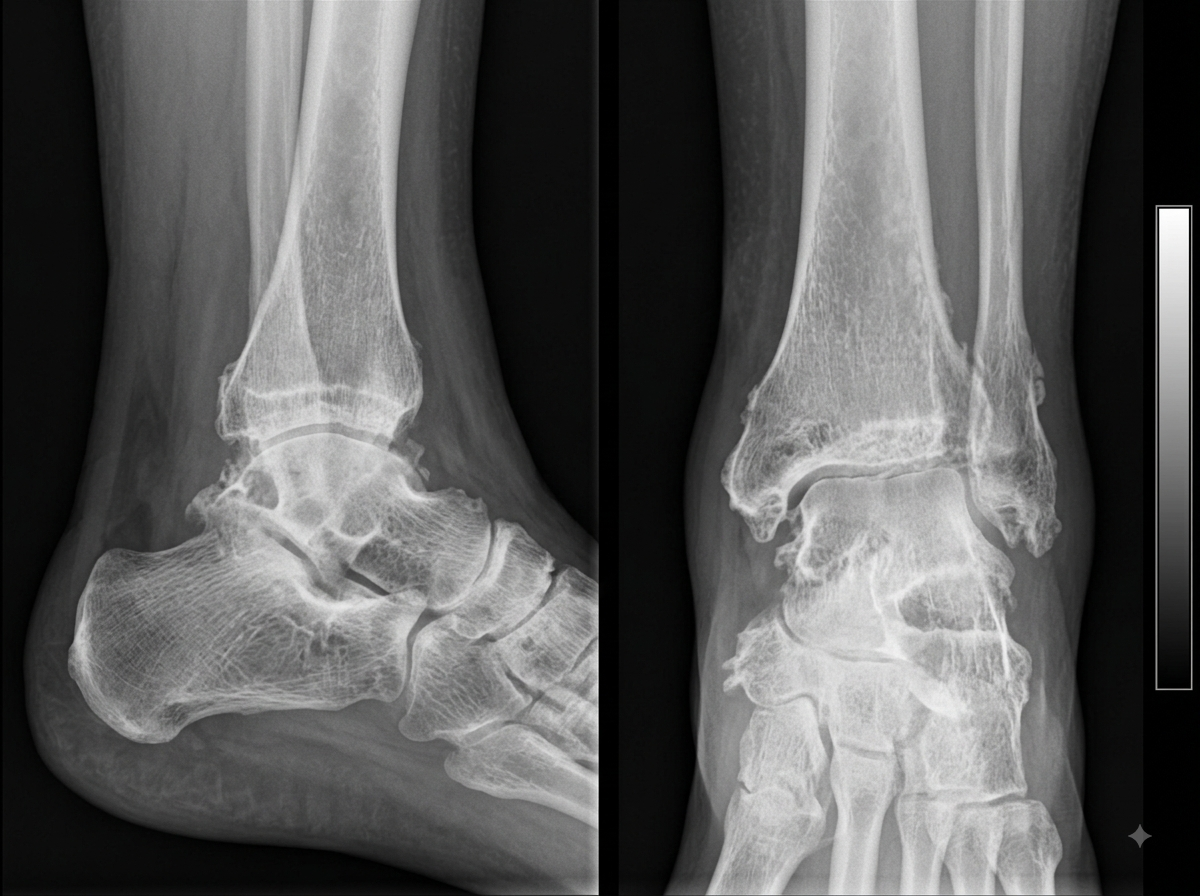
Pre-op Arthritis X-ray
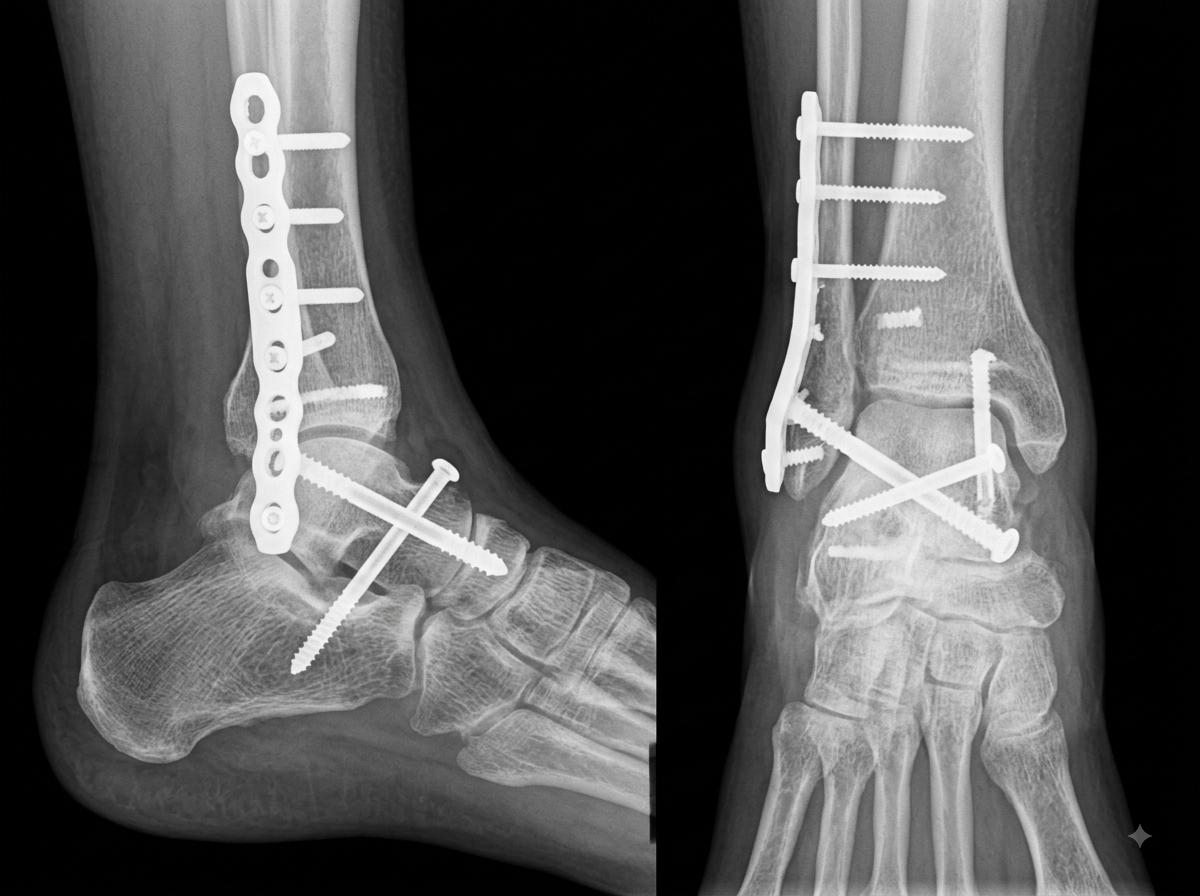
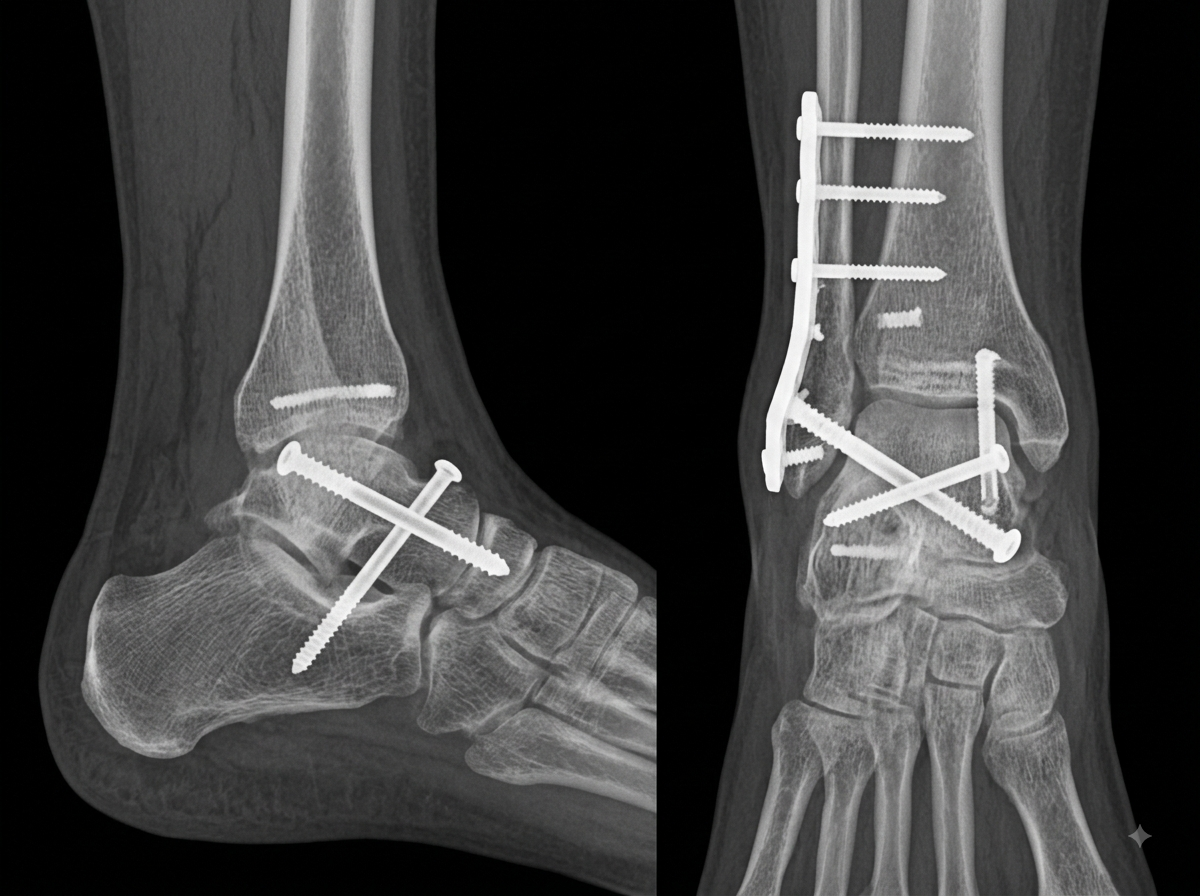
Why Choose Dr. Tanveer Bhutani?
Dr. Tanveer Bhutani evaluates ankle arthritis in the context of the whole limb — alignment, bone quality, prior surgery and functional demands — before recommending fusion, replacement, or continued conservative care.
- MS Orthopedics Gold Medal
- Awarded by Late President Dr APJ Abdul Kalam
- MCh Orthopedics (UK)
- International Fellowships
- 16+ Years Experience
- NABH Accredited Eva Hospital
- ECHS Empanelled
- Advanced Imaging
- Modern OT
- Dedicated Rehabilitation
- Evidence-Based Treatment