
Have you ever noticed your mother or sister getting upset or tired during the week leading up to her period? It’s extremely common for girls and women to feel different before their periods begin. While some only feel slightly off, others can become quite depressed or angry. In this article, I will explain the differences between PMDD and PMS so that you can better determine whether your feelings are typical and if they require medical attention. This blog post is solely for educational purposes.
First, What Is a Period?
Every month, a woman’s body prepares itself for a potential child. The soft tissue that forms inside her uterus grows. If she does not become pregnant, this soft tissue sheds from her body as blood. This process is referred to as having a period. Typically, periods occur monthly.
Before a woman has her monthly cycle (period), she experiences many physical changes due to variations in small chemical messengers within her body called hormones. Hormones control how your body functions and can vary dramatically in levels from day-to-day. As these hormonal levels change, many women experience emotional and behavioral changes.
What Is PMS?
Premenstrual syndrome (PMS) is a series of minor changes to the way you feel physically and emotionally. These changes occur during the last few days leading up to your period. Once your period begins, most of these symptoms will fade.
PMS is very common. Some people feel it a lot. Some feel it only a little.
Here are some signs of PMS:
- A puffy or bloated tummy
- Sore breasts
- A headache
- Feeling tired
- Wanting more snacks or sweets
- Feeling a bit grumpy or sad
- Trouble paying attention
PMS can feel annoying, however, that doesn’t mean a woman who experiences PMS can’t attend work/school, hang out/socialize with her peers, etc. Her emotions may be high, but they won’t completely consume her day.
What Is PMDD?
PMDD (Premenstrual Dysphoric Disorder) is a long and scary sounding term for a condition which causes severe emotional symptoms prior to your menstrual cycle, and these symptoms are significantly more difficult to deal with than the average premenstrual symptom.
PMDD is rare, and only a tiny percentage of women experience this disorder. However, those who do often describe feeling as though their body is weighted down.
Here are some signs of PMDD:
- Very big mood swings
- Crying a lot for no clear reason
- Feeling very angry
- Feeling very sad or hopeless
- Feeling very scared or tense
- Not enjoying things they once loved
- Feeling out of control
- Body pain or sleep trouble or big changes in hunger
A woman with Premenstrual Dysphoric Disorder (PMDD) may be absent from school/work. She may argue with loved ones. She may have low self-esteem. As soon as her menstrual cycle begins, she will gradually recover.
People who have pmdd might want to hurt themselves. This is very serious. When people feel that way they should inform an adult that they trust, or a doctor, immediately.
The Big Differences
Let us put them side by side.
- How strong: PMS is mild or medium. PMDD is very strong.
- PMS causes minor mood shifts. PMDD causes intense sadness, severe anger, or extreme anxiety.
- Daily Life: A person with PMS may be able to continue their daily routine. However, a person with PMDD can find it extremely difficult to maintain a normal routine.
- How common: PMS is very common. PMDD is rare.
- Help required: PMS may improve through healthy living. Typically, PMDD requires an evaluation from a health care provider to diagnose and manage.
Think of rain. A light drizzle, such as a PMS event, allows you to continue walking outside with your bag. Conversely, a heavy rainstorm (a PMDD event) will make it difficult for you to accomplish any tasks during that time period.
Why Does This Happen?
While doctors have yet to find answers for all questions regarding this condition, many believe that the issue does not lie with abnormal hormone levels but rather an overreaction by the brain to the normal fluctuations in these hormones.
Our brain’s assistant chemical, Serotonin, helps keep us calm and happy. Hormonal fluctuations can influence Serotonin levels. Family history of mental health issues, stressful events, or prior difficult experiences could increase the risk of developing mental health conditions.
How Do Doctors Find Out?
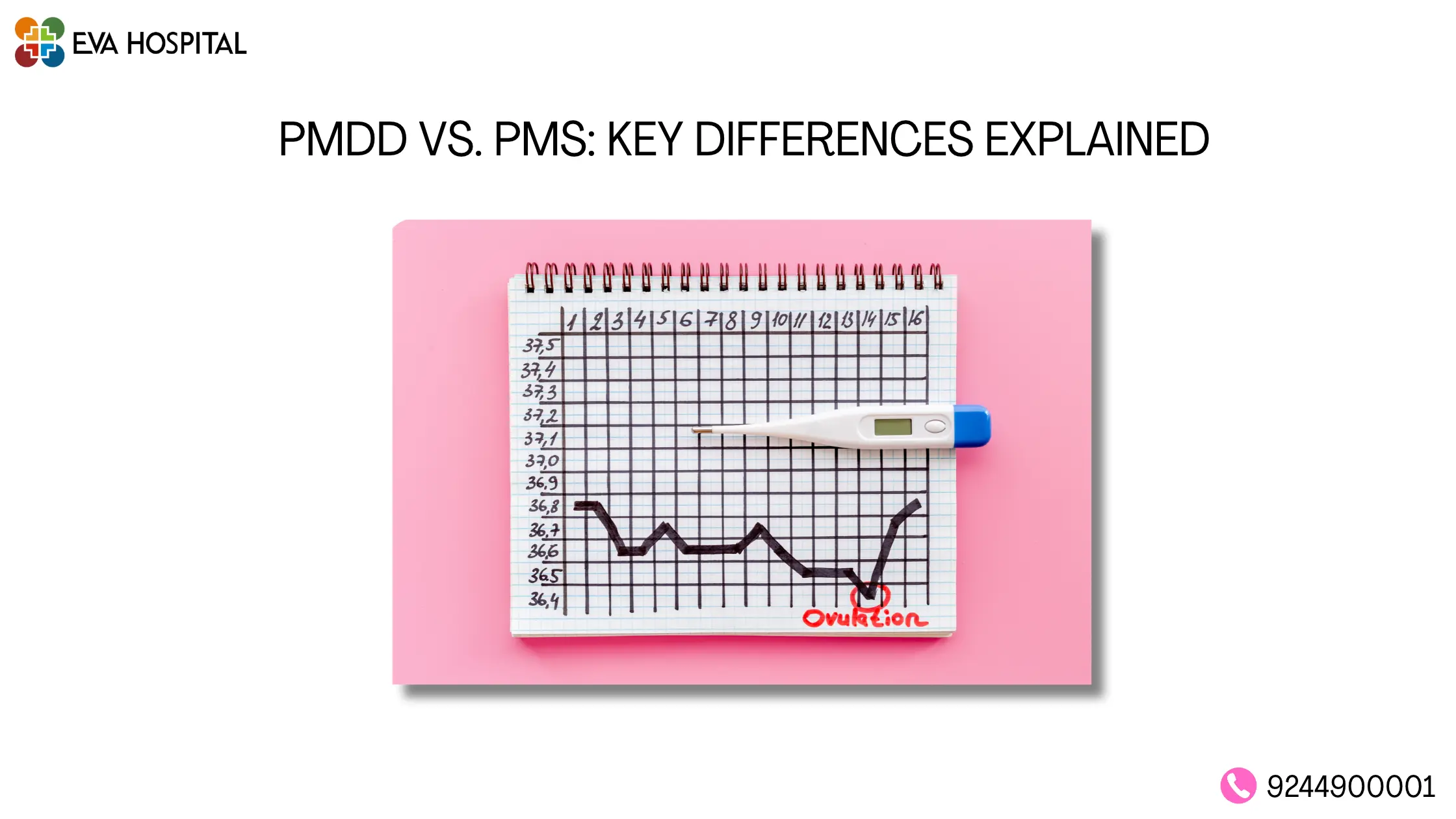
The doctor will usually have the person write down in a diary every day what they feel like. This must be done for at least 2 months.
The doctor will try to identify a pattern of symptoms. If you experience negative emotions primarily prior to your menstrual cycle and these negative emotions disappear once your cycle begins, then you might have PMS (premenstrual syndrome) or PMDD (premenstrual dysphoric disorder). On the other hand, if your negative emotions persist throughout the entire month, the cause is likely due to another factor. Your doctor can also assess you for issues such as an inadequate level of iron, or if you are suffering from a thyroid problem.
Only a registered doctor can tell what is really going on.
Things That May Help
Small habits can make a big difference with the small things that are causing you trouble. Everyone has their own way of doing things, so you may get varying results.
- Move your body. Walk or dance or try yoga.
- Eat healthy food like fruits and vegetables and dal.
- Drink enough water.
- Eat less salt and less caffeine.
- Sleep at the same time every night.
- Take slow deep breaths when you feel upset.
- Write in a feelings diary.
These tips are not a cure. They are gentle helpers.
How a Doctor Can Help
At times, simply having good habits will not suffice. For example, a physician may suggest that you seek out counseling/therapy and/or prescription medication. Each individual’s treatment plan should be decided upon by the physician based on their specific needs. Do not attempt to self-prescribe medications. Always consult with a healthcare professional prior to taking any medication.
When Should You See a Doctor?
Visit a doctor if:
- The feelings are too strong to handle
- The feelings stop you from going to school or work
- The same hard feelings come before every period
- Home tips are not helping
- You have thoughts of hurting yourself. Tell a trusted grown-up right away.
Two Myths
Myth: It is all in her head.
Fact: These changes are real. They come from how the body and brain react.
Myth: She is just being dramatic.
Fact: She may be having a very hard time. She needs kindness and not teasing.
Conclusion
It’s completely normal and quite common to experience some premenstrual symptoms. However, if those symptoms begin to interfere with your ability to function normally, it’s time to take notice. The primary distinction between PMDD (premenstrual dysphoric disorder) and PMS (premenstrual syndrome) is the intensity of the emotional response you’re experiencing, and the extent to which it affects your daily routine. Typically, symptoms associated with PMS are either mild or moderate. Symptoms of PMDD, however, can be much more severe and require medical attention. To better manage these issues, consider keeping a journal, maintaining a healthy lifestyle, and seeking guidance from a licensed healthcare provider as needed. No one should have to deal with this alone.
Disclaimer: This content is for general health education only. It is not a substitute for personal medical advice, diagnosis or treatment.
Read Also: Bloating During Ovulation: Is It Normal?