
Summary
One of the main causes of female infertility though silent is blocked fallopian tubes. A lot of women might fail to see the noticeable symptoms until they begin attempting to get pregnant. Understanding the Signs of blocked fallopian tubes can help in early diagnosis and timely treatment.
This paper dwells on issues of subtle warning signs, probable causes, testing options and treatment approaches in a conversational and easily understandable manner. Regardless of whether you are thinking about pregnancy or you want to be in the know, the recognition of these hidden clues can be a huge difference in your reproductive life.
Introduction
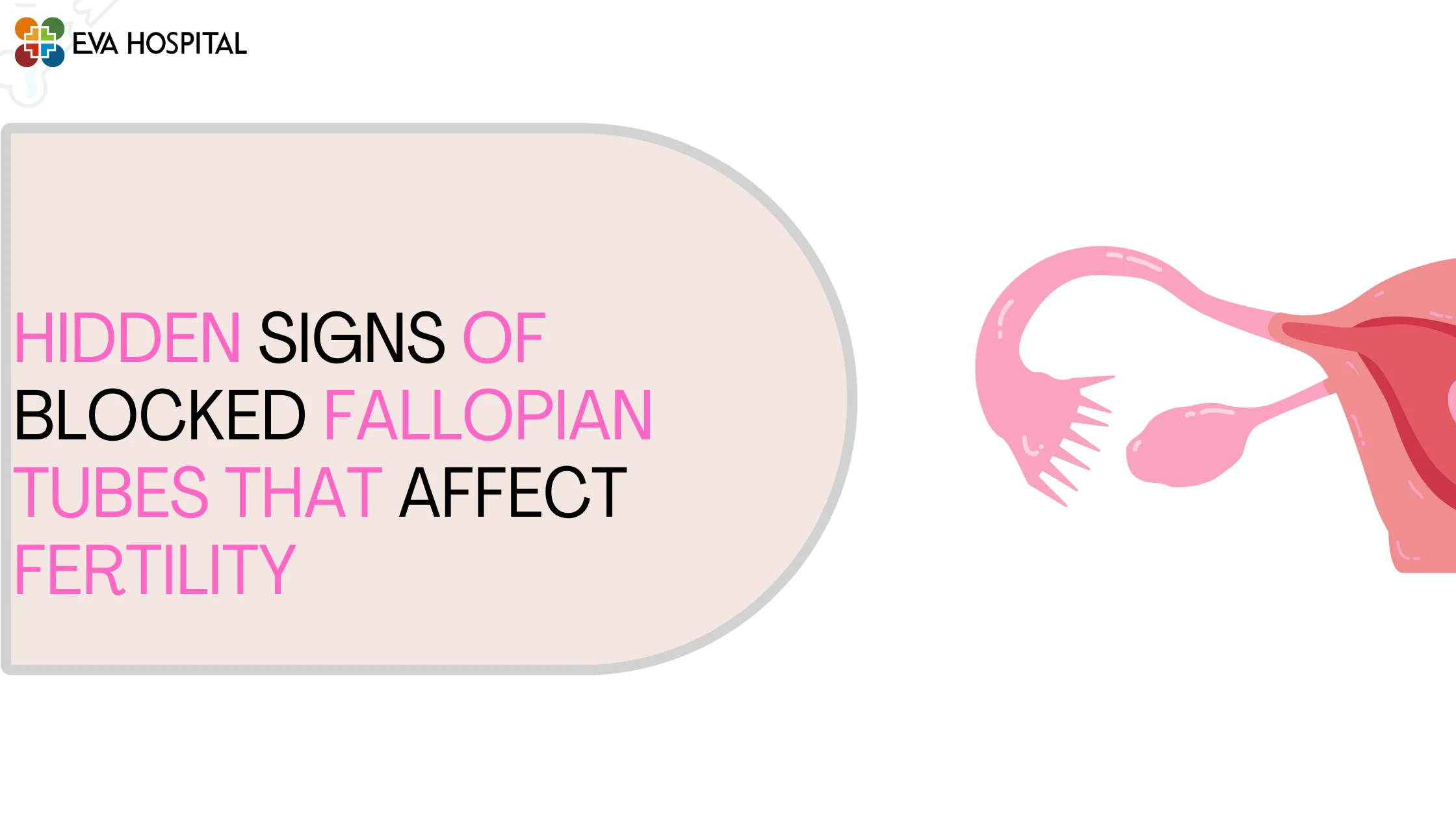
Working at the best gynaecologist in Ludhiana I Dr Shivani Bhutani can say based on my experience that Fallopian tubes are important as far as fertility is concerned. They are the route through which the sperm and the egg come to be fertilized. When there is a blockage of these tubes, then the chances of conception may reduce substantially.
The problem with this condition is that most women do not have any obvious symptoms. It may be perceived that you are perfectly healthy and still have difficulties in conception. And that is why awareness is so significant.
In this article, we will deconstruct all that you need to know, including the non-obvious warning signs, the testing and treatment, to be ready to make informed decisions about improving your reproductive health.
Signs of blocked fallopian tubes
It also has blocked fallopian tubes, the symptoms of which may not manifest themselves evidently, and it can be hard to identify them at an early stage. Nevertheless, even the body can provide some slight suggestions that something is not right. Such signs may range from some small discomfort to fertility-related difficulties.
These signs may make you seek medical attention before it is too late. Although not all symptoms will positively indicate a blockage, it is important to be aware of how your body patterns. The chances of successful treatment are higher with early diagnosis.
Let us have a closer look at the hidden signs.
Subtle Physical Indicators
Several women complain of mild pelvic pains that are intermittent. This pain may not be severe enough to cause concern, yet it may be associated with some problems within the fallopian tubes. Another faint indicator is pain during ovulation or intercourse.
Avoidable vaginal discharge, particularly when it has a dissimilar shade or smell, may as well be indicative of infection or inflammation. The outcomes of these infections are scarring, and this may cause obstruction of the tubes in the long run.
Fatigue or overall discomfort in the lower abdomen is another symptom that was not recognized. However, the idea of persistent discomfort might not be related, but it should not be disregarded.
Fertility-Related Signs
The most common one is the inability to conceive even though it is done frequently. After a year (or six months in case you are over 35), it is time to take a closer look.
Another severe symptom is the ectopic pregnancy. This happens when an egg embryo becomes implanted in a place other than the uterus usually the blocked fallopian tube. It needs urgent medical care.
Abnormal ovulation cycles or infertility of an unexplained cause may also indicate an obstruction. These symptoms emphasize the need for medical assessment in a timely manner.
What are the common signs of blocked fallopian tubes
The question that many women ask themselves is whether or not there exist definite symptoms that they should be on the lookout for. The fact is that the symptoms may be rather insidious and intersect with other reproductive disorders.
Other women complain of chronic pelvic pain, especially during their period of menstruation. Others might complain that there is some discomfort during intercourse or abnormal menstrual cycles. These symptoms can be disregarded or confused.
To some extent, some infections, such as pelvic inflammatory disease (PID) can lead to scarring of the tubes. The scarring may cause partial or complete obstruction without any visible effect.
Early identification of these patterns can be used to overcome complications and enhance fertility.
Pain and Discomfort Patterns
Pain is a symptom that is highly prevalent and misconstrued. It may manifest itself in the form of dull pains in the lower part of the abdomen or sharp pains during some actions.
Other women complain of more pain during ovulation and this might be an indication that the egg is not moving easily through a tube. Another symptom that one cannot overlook is pain during sex.
Taking some records of the time the pain is experienced can assist the doctor in determining whether the pain is associated with the fallopian tube or otherwise.
Changes in the Menstrual Cycle
Although the fallopian tube blockages do not have a direct impact on the hormones, they may be correlated with irregular cycles.
Other women report heavier or more painful menstrual cycles, particularly when the obstruction is due to such conditions as endometriosis. Others can have intercycles between spots.
A record of your cycle can be of valuable use in diagnosis.
Symptoms of blocked fallopian tubes
The symptoms of blocked fallopian tubes can vary depending on whether the blockage is partial or complete. Other women do not become aware of anything strange and others have some discomfort.
It is common, but its symptoms include pelvic pain particularly on one side, and inability to conceive. Infections may also cause unusual discharge or fever.
One should keep in mind that symptoms can never be used to make a diagnosis. Medical testing should be done in order to identify the precise cause.
Early diagnosis may be of great benefit to treatment and fertility.
Infection-Related Symptoms
Fallopian tube obstruction is caused principally by infections. The symptoms can consist of fever, abdominal pain in the lower part, and abnormal discharge.
STIs such as chlamydia and gonorrhea have the potential to harm the tubes if they are not treated.
The early management of infections can help to avoid chronic complications and infertility.
Silent Symptoms
The symptoms are not evident in most instances. This is the reason why routine check-ups are so significant particularly when you are intending to become pregnant.
Silent blockages may only be detected in the course of fertility testing.
It is possible to be proactive when it comes to reproductive health to detect these problems at the initial stage.
Can irregular periods be a sign of blocked fallopian tubes?
Irregular periods may be associated with hormonal imbalances; however, in a few cases, they may be a sign of underlying reproductive problems. Blocked fallopian tubes do not contribute directly to irregular cycles; however, underlying conditions might be related to them.
As an example, the tubes and menstrual cycle may be affected by endometriosis or pelvic infections. This interconnection may complicate diagnosis.
When you have irregular periods, pelvic pain or even fertility problems, it is worth talking to a doctor.
Effective treatment requires an understanding of the underlying cause.
Hormonal vs Structural Issues
Hormonal mismatch influences ovulation and cycle regularity whereas structural problems such as blocked tubes influence the transport of eggs.
At times, the two problems may coexist, and therefore, it may be difficult to identify the particular problem.
An in-depth analysis can be used to differentiate between the two.
When to Be Concerned
In case irregular periods are accompanied by pain, atypical discharge, or conceiving difficulties, then it is time to consult a doctor.
It can be treated early to avoid complications and enhance fertility outcomes.
Never disregard constant menstrual cycle changes.
When to test for fallopian tube blockage
Knowing when to test for fallopian tube blockage is crucial for early diagnosis. In case you have been continuously trying to conceive with no luck, testing can be suggested after a period.
Physicians generally recommend testing after one year of attempts (or half a year in women older than 35).
Earlier testing may be caused by other factors like a history of infections or pelvic surgery.
Early testing would assist in finding a problem and informing treatment choices.
Signs You Shouldn’t Ignore
Consistent pelvic pain, abnormal discharge and previous STIs are all red flags.
Ectopic pregnancy, in particular, is a condition that should be tested.
These indicators show that additional assessment is required.
Consulting a Specialist
Depending on your symptoms and medical history, a fertility specialist can refer you to the relevant tests.
They can propose to use imaging tests or procedures to confirm the presence of blockages.
Early consultation will help you to save time and have a better probability of conception.
Best diagnostic test to detect blocked fallopian tubes near me
Finding the Best diagnostic test to detect blocked fallopian tubes near me is often a priority for women facing fertility challenges. But dont wory connect with excerpts at a Eva Hospital in Ludhiana and end your all issues related to fallopian tubes.
The widespread methods are hysterosalpingography (HSG), laparoscopy, and ultrasound. There are pros and cons of each test.
Depending on your condition, your doctor will advise on the most appropriate one.
The appropriate diagnostic technique is the right choice that will guarantee a proper result and a successful treatment plan.
HSG Test Explained
HSG is among the most frequent ones. It is the use of a dye that is injected into the uterus, and the X-rays are taken to determine whether there are blockages.
Although it is more intrusive, it gives very precise results.
They can be sonohysterography and MRI scans.
Advanced Diagnostic Options
Laparoscopy is a procedure that is more detailed and the doctor is able to view the fallopian tubes directly.
While it’s more invasive, it provides highly accurate results.
Other options include sonohysterography and MRI scans.
What are the common symptoms indicating fallopian tube issues
Understanding what are the common symptoms indicating fallopian tube issues can help you take proactive steps toward better reproductive health.
Such symptoms can be pain in the pelvis, painful menstruation, and infertility.
In others, the infection or inflammation could lead to other symptoms such as fever or abnormal discharge.
Early identification of such symptoms can result in an early diagnosis and treatment.
Physical Symptoms Overview
- A common indicator is pain during ovulation or intercourse.
- Others also complain of lower back pain or stomachache.
- These symptoms can be moderately severe or frequent.
Fertility Challenges
The first obvious symptom is difficulty conceiving.
In case you have been trying long time and still have not succeeded, you can get tested.
Early intervention will enhance your fertility.
Which fertility clinics in India offer testing for blocked fallopian tubes?
If you’re wondering which fertility clinics in India offer testing for blocked fallopian tubes, you’ll be glad to know that Eva Hospital located in Ludhiana is the best.
Eva Hospital have a best fertility cetnre that is well-equipped for providing advanced services in terms of diagnosis. These are the clinics that offer such tests as HSG, laparoscopy, and ultrasound imaging. When selecting a trustworthy clinic, it is guaranteed to be accurately diagnosed and given a specific treatment.
Non-Surgical Treatments
In other situations, underlying conditions can be managed by the use of medications and lifestyle changes. Such treatments tend to be less invasive and cheaper. Nonetheless, they might not be effective in case of extreme blockage.
Surgical and Advanced Options
Surgery such as laparoscopy may be useful in the clearance and reestablishment of functions. Another alternative among women with severe damage is IVF. Most of the clinics provide funding as a means of accessibility to treatment. Ok folks now me Dr Shivani Bhutani is signing off will connect with you all in my next blog. Stay Tuned..
FAQ
1. Are there natural ways of treating blocked fallopian tubes?
The less severe ones can be treated by lifestyle modifications, although severe cases typically necessitate medical intervention.
2. Can one be pregnant with a blocked fallopian tube?
Yes, in case the other tube is healthy, it is possible to conceive naturally.
3. What is the duration of the diagnosis of blocked tubes?
The majority of tests can be done in a couple of days, depending on the course.
4. Do fallopian tubes feel painful when blocked?
Not always. A large number of women are symptom-free.
5. How successful is the treatment?
The recovery is determined by the severity of the blockage and the mode of treatment