Summary
Many people see cycling as an exercise that doesn’t require much effort, but for some, it causes long-lasting soreness. From bike fitting and muscle imbalances to overtraining, this guide covers all aspects of knee pain from cycling in detail. We will be discussing the different types of discomfort (anterior knee pain from cycling and medial knee pain from cycling) and what you can do about it. In the saddle for years to come is the result of understanding treatment and prevention of these problems, whether you’re a weekend warrior or a competitive athlete.
Introduction
I, Dr. Tanveer Bhutani, Orthopedic doctor in Ludhiana at Eva Hospital, have written this article to share information and help cyclists better understand, prevent, and manage knee pain effectively. According to me Nothing beats the open road or a fun ride down a twisty trail. For many of us, however, it is soon followed by a persistent knee pain that interferes with that “cyclist’s high”. It seems a bit ironic, doesn’t it? We prefer the bicycle to running because it is “easy” on the joints, but the repetitive nature of pedaling means that a very small misalignment can result in a serious injury that can occur over thousands of pedal strokes.
Having completed a ride and felt that your kneecaps were on fire, or feeling the first ten minutes of a ride climb and cursing the sharp pain in your knees and kneecaps, you are not alone! Cycling-related knee pain is a common complaint among cyclists. Fortunately, a lot of these problems are not permanent. You can find the solution to your problem by finding out what the cause of knee pain from cycling is, whether it’s your saddle height, your cleat position or just pushing the correct gear a little too heavy, you can resolve the issue and enjoy your ride again. Here, we’ll discuss the “why” and “how” behind knee pain and introduce you to some experts who can assist you if home remedies aren’t solving the issue.
What are the main causes of knee pain when cycling?
If your knee begins to cause you trouble, it is typically your body telling you that something is “off.” Most cycling-related knee pain can be categorized into 3 areas: equipment (bike fit), body mechanics (how your body moves), and training load (too much, too soon). Cycling is very repetitive and a saddle that is 5mm too low will put thousands of times extra stress on the knee by over-flexing it during each ride.
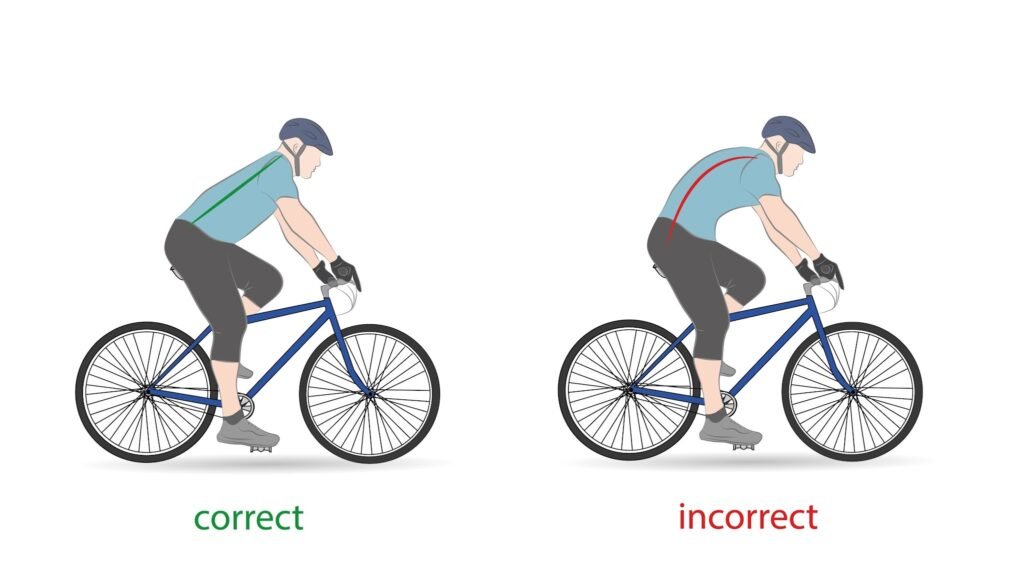
How bad bike fit affects performance
Too small of a bike is like a pair of shoes that are two sizes too small – you may be able to walk in them, but you will have to pay for it later. This is most commonly caused by saddle size. If your seat is too low, your knee stays in a deep stretch for a long time, which puts tremendous pressure on the patella. However, if it’s too high, your knee over-extends, putting the hamstrings and back of the knee at risk.
Sudden Intensity Spikes and Overtraining
It may be a perfect bike, but it’s too hard on the engine (you!). Your tendons may not be ready if you’ve recently increased the number of miles you run per week or you’ve been pushing through hills all weekend long with a high gear. This can cause overuse injuries such as tendinitis, which occurs when the tissue is constantly stretched without proper recovery.
Understanding anterior knee pain from cycling
If you’re experiencing a mild ache in the front of the knee or behind the kneecap, you’re probably suffering from anterior knee pain from cycling. This is the most common discomfort faced by the rider. It can be a kind of “pressure” that gradually increases as the ride goes on and can be really painful when standing to peddle or on a steep hill.
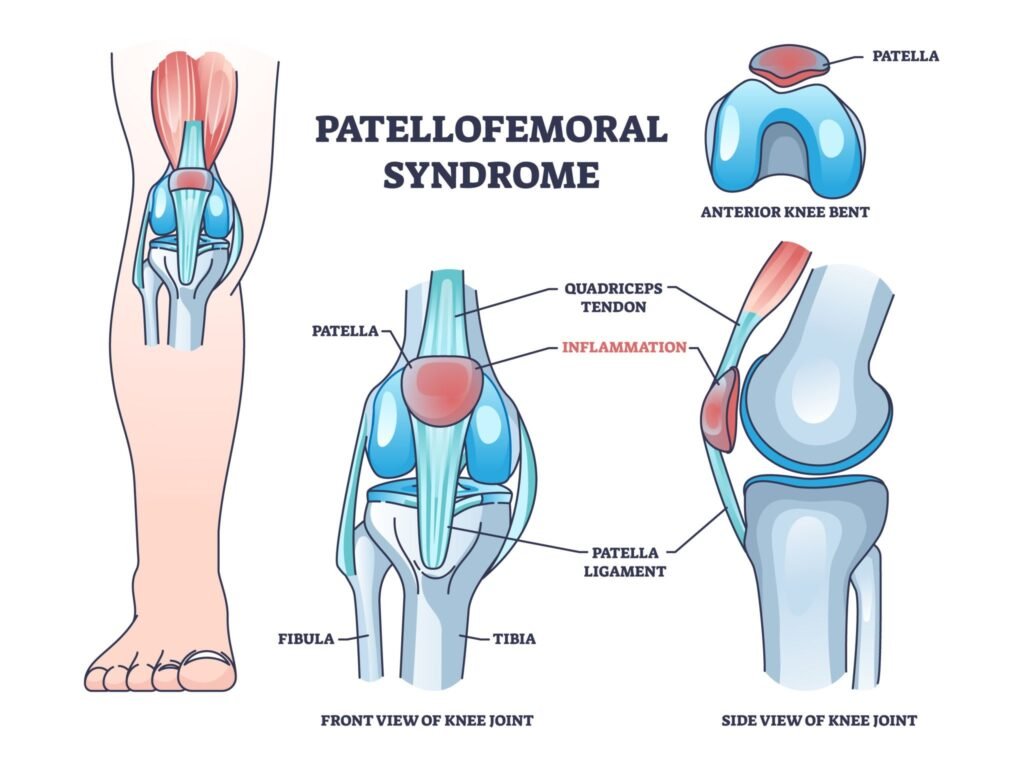
Patellofemoral Pain Syndrome (PFPS)
PFPS is commonly known as “Runner’s Knee” (or “Cyclist’s Knee”), but it is just as prevalent in cyclists as in runners, and it occurs when the kneecap does not glide smoothly in the groove. In cycling this is often caused by a saddle too far forward or too low down which forces the quadriceps to pull the kneecap hard against the femur with each stroke. The more robust the glutes are, the more likely the kneecap is to return to its correct position.
Patellar Tendinitis
This is when the tendon in front of the kneecap becomes inflamed and joins the shinbone. It usually happens when pedaling in a very low gear ratio (slow RPM) in a very low gear. In this riding position, a tremendous torque is applied to the front of the joint. This strain can be greatly reduced by switching to a “spinning” technique (80-90 RPM) on a lighter gear.
What is causing medial knee pain from cycling?
Medial knee pain from cycling is a pain on the inside of the knee. If the rubbing side of the knee is the inside of the knee, you have a medial problem. This is often a “tracking” issue, which occurs when your foot and knee don’t travel in a straight line upward, so that the joint twists slightly for each rotation.
The cleat needs to be aligned straight and the foot position correct
If you are wearing “clipless” shoes (those that fit into the pedals), every bit of your foot must fit into the pedal – and the position of your cleats matters as much as anything. When the cleats are adjusted so that the toes are too far out to the side, the knee may be forced to track inwards which can lead to the medial ligaments being stressed. A change in the foot angle (or more “float,” as they say) for your cleats can often answer this question while you sleep.
Weak Adductor Muscles
The inner thigh muscles (adductors) are important stabilizers of your leg during the downstroke, yet few people mention them. These muscles, if weak or tired, may cause inwards movement of the knee towards the top tube of the bike. This side-to-side motion puts stress and friction on the joint’s inner surfaces. Adding lateral lunges or “squeeze” movements on a foam roller in between your knees can help create the stability required.
How to treat your knee pain and get back on the road
Once the pain begins, knowing how to treat it is as important as stopping it. Don’t ignore it is the first thumb rule. A sharp pain will most likely lead to a longer recovery time if pushed through. The “RICE” method (Rest, Ice, Compression, Elevation) is a good place to begin with acute inflammation, but a long-term recovery plan will need a more systemic approach.
Active Recovery and Physical Therapy
After the initial swelling subsides, rest may sometimes be harmful. Easy spinning on a level road may help clear synovial fluid from the joint, promoting healing. A physical therapist can also help you find out if there are any weak muscle groups. They may prescribe ‘eccentric’ exercises that involve the lengthening phase of a muscle action, to aid in the repair of damaged tendons.
Anti-Inflammatory Strategies and Gear Tweaks
There are some over-the-counter anti-inflammatories that may help in the short term, however, it is important to consider your gear as well. Those who are susceptible to knee problems may want to opt for shorter crank arms. A shorter crank decreases how far your knee travels through its range of motion, so it doesn’t have to bend as far at the top of the stroke. This is a minor mechanical adjustment that could be a big deal for those with delicate joints.
Cycling knee pain specialist doctors in my city
However, no matter how many bike fits and stretches are performed worldwide, the pain may still persist. This is where it’s important to seek advice from a professional with a knowledge of sports biomechanics. For sporting injuries, it is recommended that you consult with Dr Tanveer Bhutani ortho doctor ludhiana at Eva Hospital who is an expert at that.
Why should you seek out a specialist’s assistance?
Dr. Tanveer Bhutani is a specialist who can give a diagnostic clarity that a standard GP may not be able to give. With state-of-the-art imaging and gait analysis, they can find out whether the pain is mechanical or if there is something wrong with your meniscus, such as tear, or if there is an early-stage osteoarthritis. In the world of cycling in Punjab, a center like Eva Hospital, renowned for its robotic joint replacement and sports medicine services, means cutting-edge care that meets the demands of an active lifestyle.
Specialized treatments at Eva Hospital
Dr. Bhutani’s orthopedic background enables him to offer a variety of options, from arthroscopy to some of the latest minimally invasive techniques, such as the use of PRP (Platelet-Rich Plasma) injections. These treatments are aimed at accelerating tendon and ligament healing and making you a quicker rider than the same treatments by conventional methods. If you reside in Ludhiana and you have knee pain that’s hindering your riding, a consultation here is next logical step.
Long-Term Prevention Strategies
To avoid knee pain during cycling, it is an ongoing process of listening to your body. Your needs will change as you mature and/or your riding style changes (from flat roads to riding in mountain terrain). A ‘fit for life’ attitude is necessary.
The Importance of a Professional Bike Fit
A pro bike fit is not optional, it’s essential if you are serious about cycling. With laser and sensors, a professional will measure your joint angles when you pedal while under load. They’re able to see what the average person can’t, like a slight hip tilt, a foot arch collapse that’s causing your knee to track poorly. It’s the best investment you can make for the longevity of your sport.
Fortifying Your “Support System”
Your knees are only the hinges—use your hips and glutes. Quadriceps are usually over-developed while glutes are under-developed in most cyclists. This is the recipe for knee pain. Two days of off-bike strength training, such as squats, deadlifts and planks, build that “chassis” that provides a foundation to help prevent the repetitive stress on your joints when pedaling.
FAQ
In fact, cycling can be a great activity for those with arthritis as it is a low impact activity. It keeps the joint lubricated and also enhances the muscles that support it, but without the pounding effect of running. The main tip is to make certain the bicycle is adjusted properly so there will be no unnecessary strain.
This is commonly due to the mild tendinitis or inflammation which “warms up” during exercise. Once stopped, the tissue cools down and starts to swell, causing stiffness and pain. It’s a red flag to evaluate your bike fit and consider decreasing activity for a week.
Yes for the majority. Allow a foot to find its natural rotation in pedal stroke with “float”. Fixed cleats (zero float) require your leg to move in a (presumably) straight line, and even if the line is only 1 degree off your leg’s natural line, it can result in lateral or medial knee pain.
A re-fit is a good idea if you purchase new shoes, new saddle, or if there has been a major increase in fitness or flexibility. As you get older, your “optimal” position can change as your hamstrings become tighter or your core strength changes.
A sleeve can help provide warmth and a sense of stability, but a rigid brace is typically not advised for riding unless directed by a doctor, such as Dr. Tanveer Bhutani. A brace can adversely affect pedaling mechanics and at times may conceal a mechanical issue (such as shifting your seat) that requires attention.
Conclusion
Knee pain doesn’t have to be a “tax” you pay for being a cyclist. By understanding the triggers—whether it’s anterior knee pain from cycling caused by a low saddle or medial knee pain from cycling caused by poor cleat alignment—you can take control of your recovery. Remember to increase your mileage gradually, focus on a high cadence, and don’t be afraid to seek professional help from an orthopedic specialist if the pain doesn’t subside. With the right setup and a bit of patience, you’ll be back to chasing sunsets and personal bests in no time. Happy riding!