
Summary
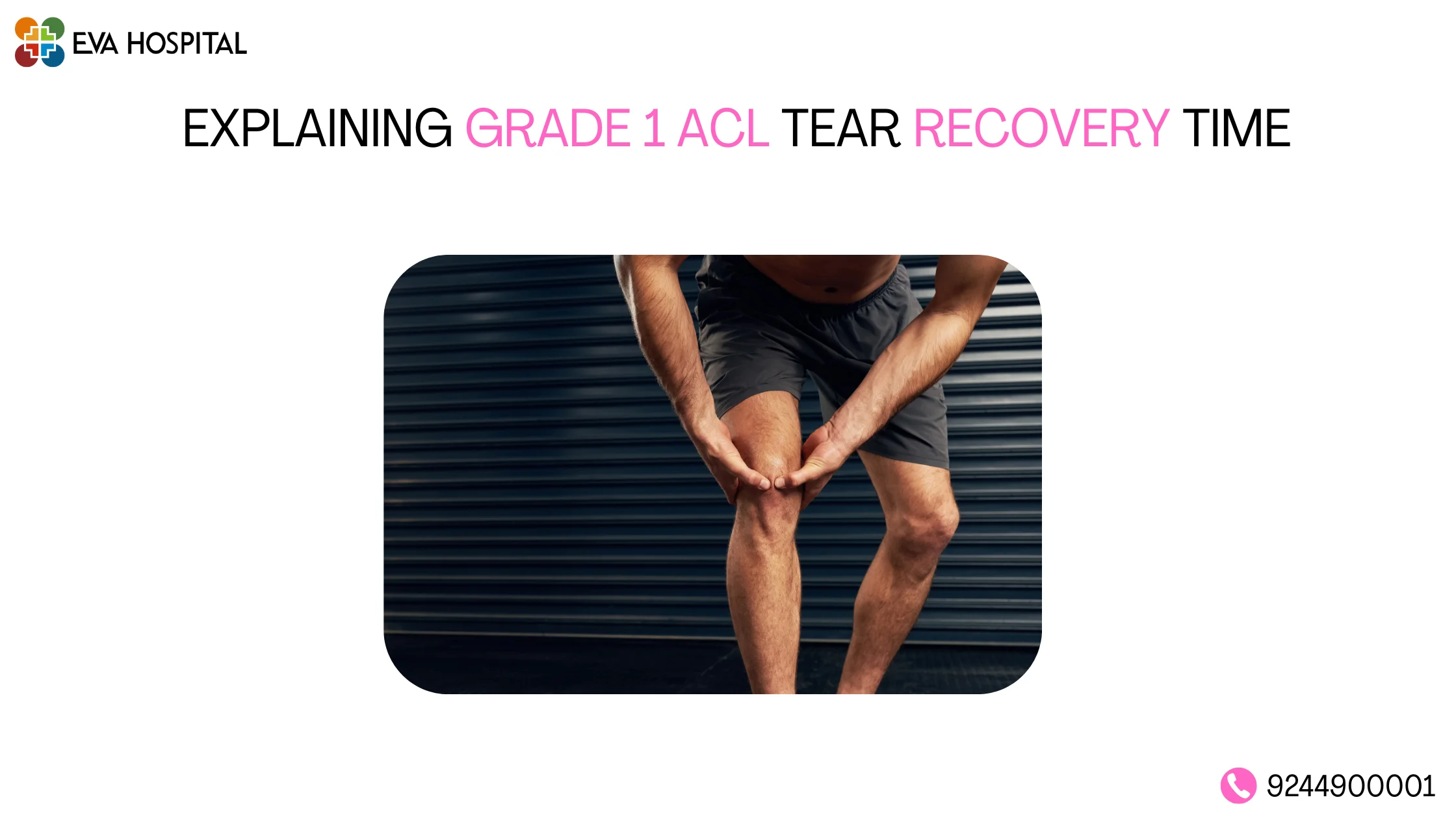
Grade 1 ACL tear is the least severe kind of anterior cruciate ligament tear, which involves no more than partial stretching of the ligament and does not entail much knee instability. Though it is not as serious as the higher grades of tears, it will still need proper treatment, organized healing and time to heal completely. In this article, we will discuss what a Grade 1 ACL tear is, the approximate length of recovery, what the treatment should look like, whether surgery is required, and how to return to sports or normal activities safely. We will also provide answers to common questions about mild ACL injuries and inform you about what to expect during the healing process.
Introduction
Me Dr Tanveer Bhutani, orthopedic doctor Ludhiana working at the Eva Hospital will share about Grade 1 ACL tear with all our readers. As per experience with various patients I can state that knee injuries are an irritating experience, especially when you are active and athletic, or just used to the normal functioning of your life. ACL is very important in stabilizing the knee joint. Even a bit hurt can impair the ability to move freely and be sure of it.
How long will it take to recover is the most widespread question of people immediately after a mild diagnosis. Understanding the grade 1 acl tear recovery time is important so you can plan your rest, rehabilitation, and return to activity safely. This guide will take you step by step through all you need to know in an easy-to-understand and conversational manner to ensure that you are informed and sure about the healing process.
What Is a Grade 1 ACL Tear?
In the classification of ACL injuries, a grading system is applied by the doctors:
- Grade 1: Mild ligament distension.
- Grade 2: Partial tear
- Grade 3: Complete tear
So, what is a grade 1 acl tear? It is the mildest type of ACL injury. The ligament fibers are strained a little and yet, they do not tear. The knee joint is usually stable and has no significant diminution of functionality.
How It Happens
Grade 1 ACL tear normally happens because of:
- Sudden twisting movements
- Quick directional changes
- Minor sports collisions
- Awkward landings
It occurs in most sports including soccer, basketball, skiing and football but it might also occur when one is performing a simple activity provided the knee is subjected to unpredicted load.
What Makes It Different From More Severe Tears
In contrast to more serious injuries:
- There is no complete rupture
- The knee is relatively stable.
- There is pain and swelling which is normally manageable.
Surgery is rarely needed
Early diagnosis and subsequent management are the key in avoiding exacerbation of injury.
Grade 1 ACL Tear Symptoms
Recognizing grade 1 acl tear symptoms early helps prevent further damage. Even though it is a minor injury, it does not leave without any observable effects.
Common Physical Symptoms
- Mild to moderate knee pain
- Slight swelling
- Tenderness along the joint
- Minor stiffness
- Minor pain on walking or bending.
Majority of the population is still able to support weight on the knee though it can be painful.
Functional Limitations
You might notice:
- There is a little instability in pivoting.
- Reduced range of motion
- Delay in sports actions.
Pain on ascending the stairs.
As opposed to the terrible tears, there is normally no pop and instantaneous fall of the knee..
Grade 1 ACL Tear Treatment
The good news? Grade 1 acl tear treatment is usually conservative and highly effective.
- Initial Care (First 48–72 Hours)
- Doctors normally prescribe R.I.C.E approach:
- Rest: Do not exercise too vigorously.
- Ice: Reduce swelling
- Compression: Knee support.
- Raising: Reduce inflammation.
The over-the-counter anti-inflammatory medication can also be recommended.
Rehabilitation and Physical Therapy
Our treatments for orthopedic in Ludhiana like Physical therapy starts after the first swelling subsides helping patient to recover early. This is essential to tighten muscles around the knee and regain normalcy.
Common rehabilitation programs involve:
- Quadriceps strengthening
- Hamstring strengthening
- Balance training
Restrained range-of-motion exercises.
The majority of the individuals heal on their own without any needles.
Grade 1 ACL Tear Recovery Time
Now let’s talk about what most people really want to know: grade 1 acl tear recovery time.
Overall, recovery is a process that requires 2-6 weeks based on:
- Age
- Overall health
- Activity level
- Commitment to rehab
Intensity of lengthening of the ligament.
In the case of athletes, it might take even 68 weeks before full recovery is achieved in terms of both strength and stability.
Week-by-Week Breakdown
Week 1–2:
Swelling decreases. Gentle movement begins. Suffering gets much better.
Week 3–4:
Power training improves. Pain Range of motion restores to near normal.
Week 5–6:
Functional training starts. Light jogging or sport specific activity can resume.
Therapy consistency is usually the key to maintaining recovery in the short term.
Does Grade 1 ACL Require Surgery?
This is one of the biggest concerns patients have: does grade 1 acl require surgery?
There are virtually no situations when the surgery is required. Ligament is not torn, it is just stretched and therefore can be cured by rest and rehabilitation.
When Surgery Should be considered.
- Surgery can be considered in case:
- The injury worsens
- Instability persists
The patient is a high level athlete who requires the best stability.
Other knee damages (meniscus damage, etc.) also exist.
Non-surgical treatment is, however, standard in the case of a simple Grade 1 injury
Does a Grade 1 ACL Tear Need Surgery If Pain Persists?
Another common concern is: does a grade 1 acl tear need surgery if symptoms don’t improve?
- Persistent pain in the majority of cases implies:
- Rehabilitation was not done appropriately.
- The knee was strained prematurely.
- The secondary issue can be present.
Physicians tend to prescribe additional imaging (such as MRI) prior to surgery. However genuine Grade 1 injuries hardly ever need a reconstruction.
The emphasis is on strength training, stability training, and progressive recovery of the activity..
How Long Until You Can Return to Sports?
Returning to sports depends on:
- Pain-free movement
- Full range of motion
- Restored strength (at least 90% compared to the uninjured leg)
- Doctor or physical therapist clearance
Recreational Athletes
Most recreational athletes return within 4–6 weeks.
Competitive Athletes
High-performance athletes may need closer to 6–8 weeks to ensure optimal performance and reduce re-injury risk.
The biggest mistake people make? Rushing back too soon.
What Factors Affect Recovery Speed?
Not everyone heals at the same pace. Several factors influence how quickly you recover:
Age
Younger individuals often heal faster due to better tissue regeneration.
Overall Health
Good nutrition, sleep, and hydration play major roles in ligament healing.
Compliance With Rehab
People who consistently follow therapy exercises tend to recover much faster.
Activity Level
Athletes may regain strength faster—but also risk re-injury if they push too hard.
Can a Grade 1 ACL Tear Get Worse?
Yes, it can.
If you:
- Ignore pain
- Continue intense sports
- Skip rehabilitation
- Avoid strengthening exercises
The stretched ligament can become further damaged, potentially progressing to a Grade 2 or even Grade 3 tear.
That’s why proper care is critical—even for mild injuries.
Tips to Speed Up Recovery Safely
While you can’t magically heal overnight, you can optimize recovery.
1. Prioritize Physical Therapy
Guided exercises ensure safe strengthening without overloading the ligament.
2. Focus on Nutrition
Protein supports tissue repair. Anti-inflammatory foods (like leafy greens and omega-3s) help reduce swelling.
3. Get Enough Sleep
Ligaments repair during rest. Aim for 7–9 hours nightly.
4. Avoid Early Pivoting
Twisting movements stress the ACL. Reintroduce them only when cleared.
When Should You See a Doctor Again?
Follow up with your healthcare provider if you notice:
- Persistent swelling after 3–4 weeks
- Increasing instability
- Locking or catching in the knee
- Sharp pain during light activity
Early reassessment prevents complications.
FAQ
It is a mild form of stretching injury on the ACL in which the ligament is not torn and the knee does not become unstable.
The duration of recovery takes place during 2-6 weeks based on rehabilitation and general health.
Surgery is never required in nearly all events. The traditional therapy is effective.
Widespread No, the majority of people can walk, but with slight discomfort and stiffness.
Even athletes do not usually need surgery to recover although rehab can be more organized and prolonged.
The symptoms are mild swelling, a small degree of instability, pain, and a restricted range of movement.
May include rest, ice, compression, raising followed by structured physical therapy and strength exercises.
Final Thoughts
Grade 1 ACL tear might not sound that threatening, yet it is the least severe type of ACL injury and the recovery prognosis is great. Most individuals are back to normal within weeks with the right care. The trick lies in being patient, doing the rehabilitation consistently, and paying attention to your body.
Realistic expectations of the time required to heal would assist in avoiding frustration and prevent disappointments. With proper management, this injury does not necessarily need to be a chronic problem- and you can be sure to get back to doing what you enjoy.
Gain More Knowledge: ACL Surgery Recovery Stages