- +91-9244900001
- 40, Pakhowal Rd, New Lajpat Nagar, Model Gram, Ludhiana, Punjab 141001
- 24*7 Emergency
- NABH Accredited
- ECHS Empanelled

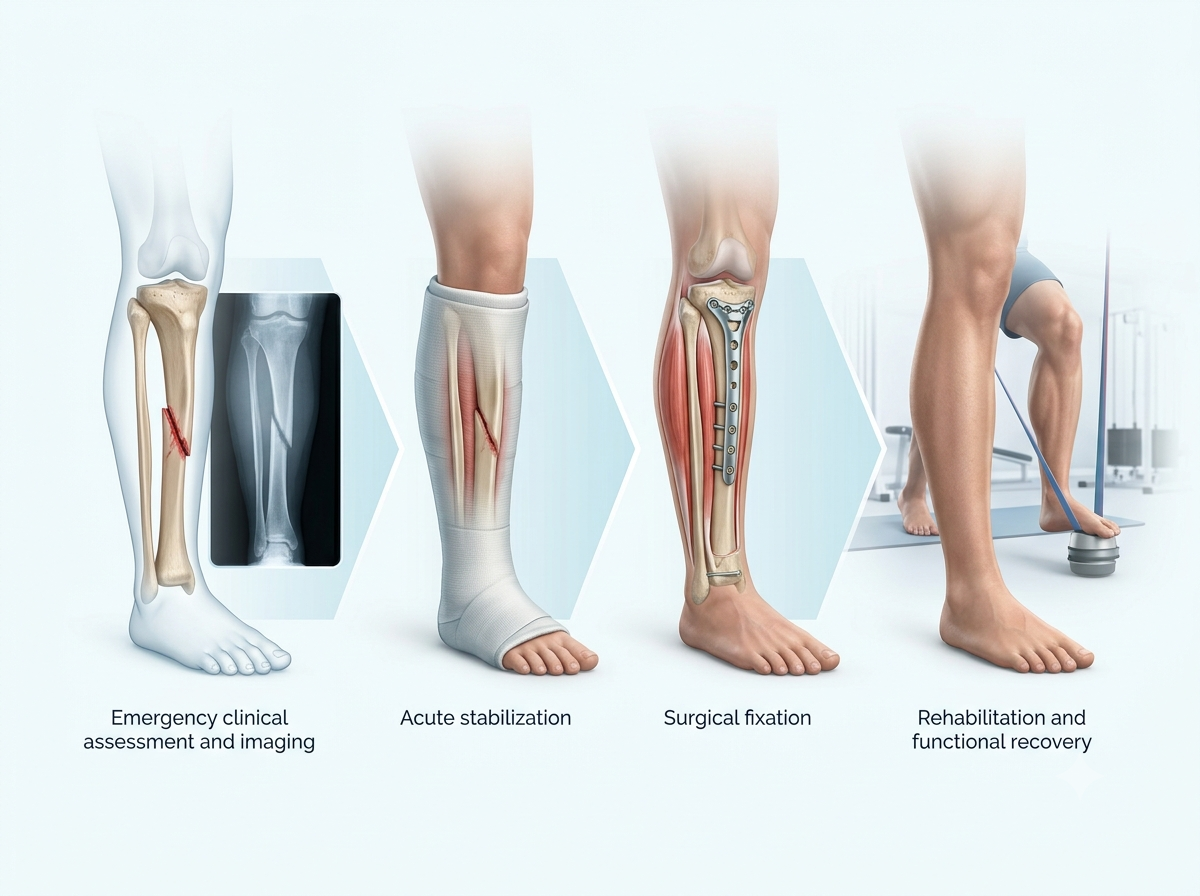
Trauma care is rarely just about “fixing a broken bone.” It starts the moment a patient arrives — with a rapid assessment of the whole limb, not just the fracture visible on the X-ray — and continues through to the point where a patient has regained functional use of the injured limb.
At Eva Hospital, this means the same team manages emergency assessment, the decision between casting and surgery, the fixation itself when required, and the structured rehabilitation that follows — rather than a patient being passed between disconnected stages of care.
This continuity matters most in trauma, where early decisions — how a fracture is reduced, whether soft tissue is given time to settle before fixation, how a joint surface is reconstructed — have a lasting effect on the final result.
Neurovascular Assessment
X-rays
CT (Where Required)
Temporary Splintage / Reduction
Decision: Cast or Surgery
Your surgeon

No. Many fractures heal well with a cast, brace or splint and monitored X-rays. Surgery is considered when the fracture is significantly displaced, unstable, involves a joint surface, is open, or is unlikely to heal well with non-operative treatment alone.
The decision is based on the fracture pattern, whether it involves a joint, the degree of displacement, associated soft-tissue or neurovascular injury, the patient’s age and health, and their functional demands — not a fixed rule for every fracture.
ORIF (open reduction and internal fixation) uses a plate and screws to hold the fracture, commonly for fractures near joints. Intramedullary nailing passes a rod through the centre of the bone and is typically used for shaft fractures of long bones like the femur and tibia.
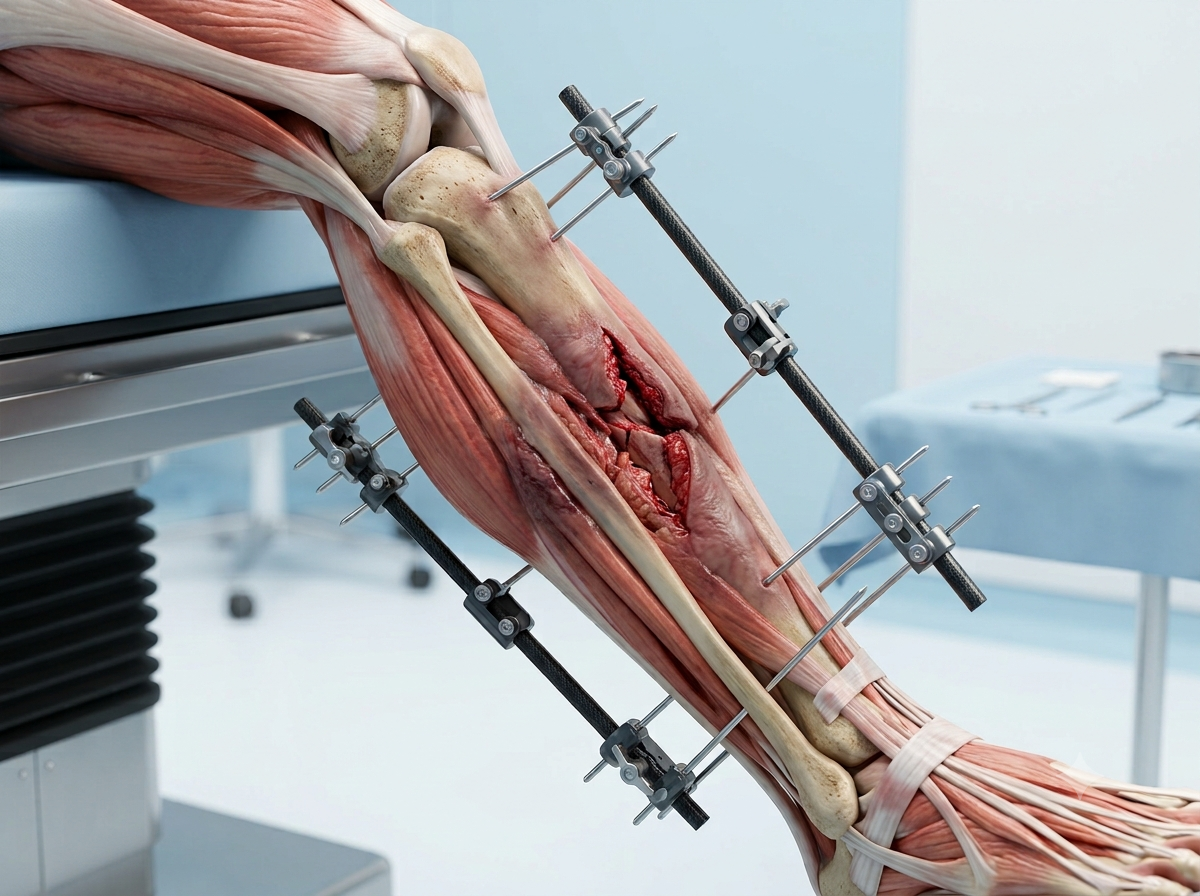
An open fracture, where the bone breaks through the skin, carries a significantly higher risk of infection and requires urgent wound assessment, antibiotics, surgical debridement, and fracture stabilisation, often as an emergency.
A surgical emergency where increasing pressure within a muscle compartment cuts off blood supply to the limb. Warning signs include pain that is disproportionate to the injury or worsening despite pain relief, and require immediate assessment.
A fracture that has failed to heal within the expected timeframe. Treatment may involve revision fixation, bone grafting, or other measures to stimulate and support healing.
A malunion is a fracture that has healed in a deformed or misaligned position. It can often be corrected with a planned surgical procedure (osteotomy) to restore alignment and improve function.
Early surgery and early mobilisation in elderly hip fracture patients are strongly associated with better outcomes and fewer complications, which is why these fractures are prioritised rather than treated as routine trauma.
Consult our specialists for accurate diagnosis and effective treatment solutions.
