
Summary
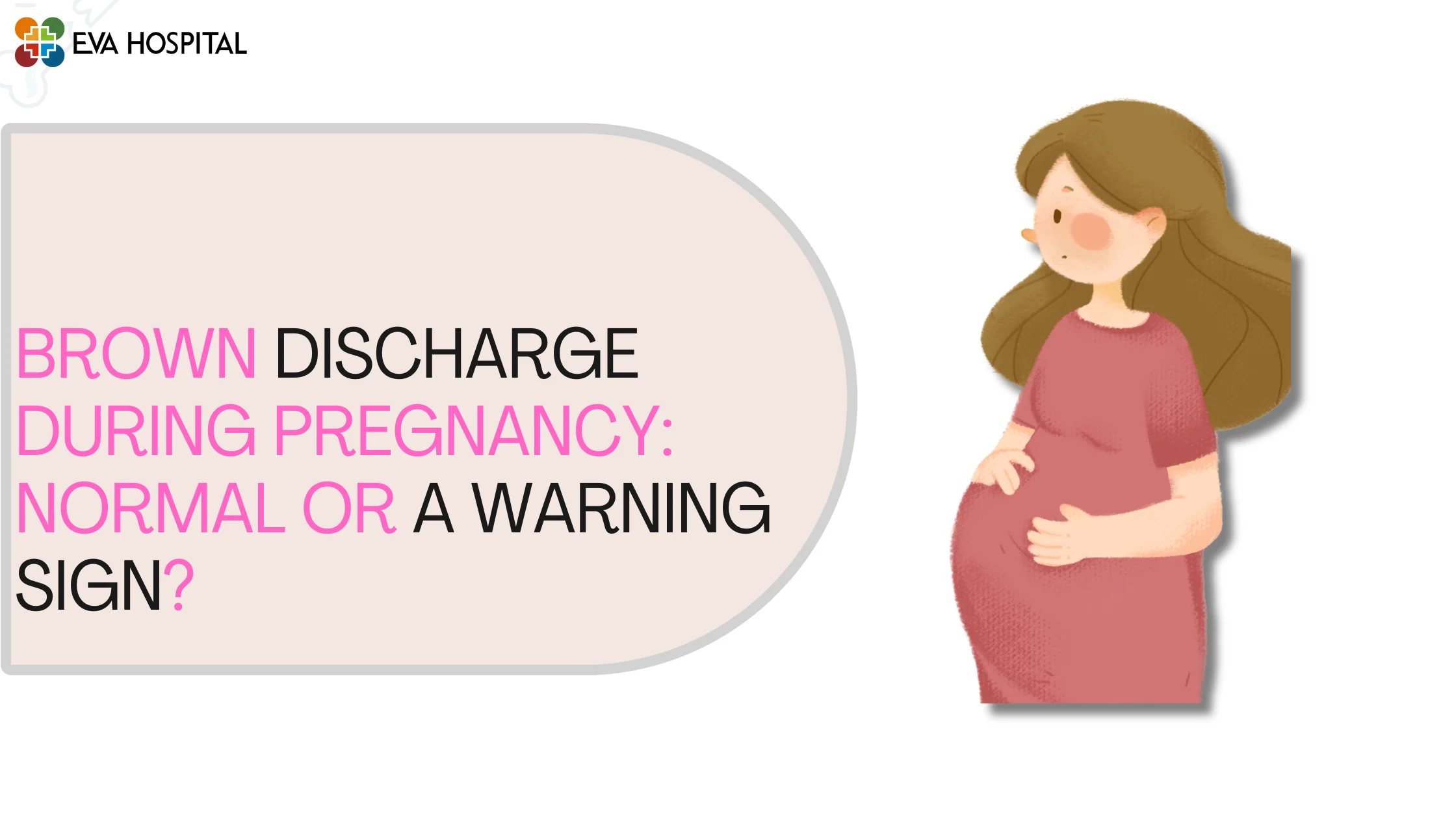
During pregnancy, it may be a race to your heart when you notice that there is something unusual in your underwear and brown discharge is one of those things that every pregnant woman will panic about at some time of her life. The good news? It can be totally harmless. However, it is not always that way, and this is precisely why you should be able to decipher what your body is attempting to tell you. This article simplifies the causes, warning signs, what to look for and when to pick up the phone and call your doctor; in plain, honest language.
Introduction
Hi there I Dr Shivani Bhutani working as gynae Ludhiana at Eva Hospital usually educated about various issues related to IVF, and pregnancy. And according to me Pregnancy makes one hypersensitive to all the changes in the body. Unexpectedly ordinary things, such as feeling fatigued or sore in your back, become important. And so when you see brown discharge, it is quite natural to be a little frightened.
The point is though that brown discharge is not necessarily a red flag. Most of the time, it is old blood, that your body is just getting rid of, and is not a threat to you or your baby. However, in certain cases, it may be the symptom of something requiring medical treatment to be taken care of, hence the need to differentiate.
You may be in your first trimester or second or about to give birth, but this guide will take you through everything you need to know about brown discharge, what causes brown discharge, when it is alright to relax, and when you must be on the phone with your OB or midwife immediately.
What Is Brown Discharge During Pregnancy?
Brown Discharge During Pregnancy is a type of vaginal discharge that is brown or brownish in color, which occurs during pregnancy. It is simply old blood – when blood is slower going out of the body it becomes oxidized and becomes brown instead of remaining the bright red of fresh blood. Imagine it as the one made on a fresh cut and the one made on an old bruise. The change in color is only the blood growing old, which is not a definite indication of a bleeding process.
When you are pregnant, your cervix is more sensitive and vascular (has more blood vessels). This implies that even slight friction such as during intercourse, a pelvic examination or even intense physical activity may lead to some slight bleeding that will eventually present itself as brown discharge a day or two later. During pregnancy, your hormone levels are also getting out of control which can sometimes cause light spotting or discharge.
The discharge texture, quantity and time are all important when it comes to determining whether it is something to be concerned about. A small brown mark on your underwear is quite one thing, but it is quite another when it is a heavy flow that runs through a pad.
What Does Brown Discharge Actually Look Like?
The brown can vary in lightness to a tan or pinkish-brown, to a darker brown, nearly coffee-colored. It could be a tiny spot on your underclothes or on your toilet paper or could be a combination of your normal milky white pregnancy fluid and streaky and discoloured. The consistency is generally thin to a light sticky – not clumpy or cottage cheese-like (that would be more indicative of a yeast infection).
The quantity is also different. There are women who only experience slight streak and those who experience a more prominent discharge. The less heavy and the less there is, the less probably it is on the side of something serious, you see. Nevertheless, do not use the amount of small as an excuse to disregard it entirely, but it always depends on the situation.
How Is Brown Discharge Different from Normal Pregnancy Discharge?
Normal leukorrhea at discharge of pregnancy is usually thin, white or slightly off-white, non-scented or scented. It swells during pregnancy due to the elevated levels of estrogen and addition of blood flow towards the vagina. Brown discharge on the other hand has old blood. This is what makes it different aesthetically. When something appears distinctly darker: brown, reddish-brown, or even dark pink, it has blood in it, and although that does not necessarily mean that something is wrong, it does indicate that your body is trying to communicate something that you should notice.
Is Brown Discharge Normal During Pregnancy?
This is most likely the query you entered into Google at 2 AM, so we should answer it appropriately: is brown discharge normal during pregnancy? Yes, yes, it can be normal in most cases. But it is actually normal relative to time of occurrence, quantity of the normal, and whether or not other symptoms (in this case, none) accompany it. A single, little brown discharge following intercourse is quite different than the continuous, dark brown discharge which is heavy, and accompanied by cramping.
The point is not to think the best or the worst without seeing the whole picture. Your organism is changing a gigantic lot, and even a little old blood making its escape is not necessarily an emergency. That being said, no discharge, brown or otherwise, should be totally avoided during pregnancy without at least bringing it to the attention of your healthcare provider.
When Brown Discharge Is Completely Normal
A number of completely harmless causes of brown discharge presentation during pregnancy exist. One of the most frequent ones is implantation bleeding- this occurs during very early pregnancy when the fertilized egg attaches to the uterine wall and it may lead to light spotting which may later manifest as brown discharge. A little brown-tinged discharge can follow a slight amount of cervical irritation after s*xual intercourse in the hours that follow. Likewise, a Pap smear or regular pelvic exam at your OB visit can lead to mild spotting which turns brown before you get home.
Another typical perpetrator is sub-chorionic hematomas, small reservoirs of blood that accumulate between the placenta and the uterine wall. They are frightening yet usually checked and go away by themselves. And during the very late months of pregnancy, there may be a discharge of mucus plugs which may be brownish because it contains old blood at the cervix.
When You Should Take It More Seriously
Though brown discharge can be harmless, there are instances when it can be an indication of something that requires immediate medical care. When the discharge is voluminous (soaks through a pad), bright red and not brown, and the discharge is accompanied by cramping, pain in the lower back or tissue being passed, then that is a red flag that must not be overlooked. Bleeding may occur ectopic pregnancy, miscarriage, placenta previa, placental abruption and may be brown or red, in any case it must be evaluated immediately.
Diseases such as bacterial vaginosis or s*xually transmitted diseases may also lead to discolored discharge during pregnancy and must be treated promptly to preserve the mother and her baby. Go by your hunch, you know, when something is wrong call your doctor.
What Causes Dark Brown Discharge During Pregnancy?
Dark brown discharge during pregnancy often has a different nature of the lighter brown spotting in pregnancy. The darker color tends to indicate that the blood has been longer sitting before leaving the body – indicating a slow bleed or old bleed somewhere in the reproductive system. Although it may still be innocent, it is better to know the potential causes of this to be aware of what you may be handling.
The reasons of dark brown discharge differ according to the trimester you are in. The risks and triggers of early pregnancy are different than those of the second or third trimester, and time is of the essence when physicians are attempting to unravel the mystery.
Causes in the First Trimester
Brown discharge is most frequently reported during the first trimester – and the reasons are usually not alarming. A leading cause is the implantation bleeding (that typically occurs between weeks 6-12 of the embryo settling in). Another – sub-chorionic hemorrhage this can often be detected by ultrasound. The changing hormones, especially around when your period should have been, may also lead to a so-called breakthrough bleed which looks like a brown discharge.
The period of maximum risk of miscarriage is however during the first trimester as well. When the dark brown discharge is excessive or cramping occurs or tissue is passing, then it is important to have a medical examination immediately. The dark discharge may also be associated with an ectopic pregnancy, in which an embryo implants itself out of the uterus and is a medical emergency. Any leak during the first trimester which worries you is a call to the doctor, period.
Causes in the Second and Third Trimester
During the second and third trimesters, the causes of dark brown discharge change slightly. Cervical polyps – benign cervical growths are small and harmless; they may bleed leading to dark discharge particularly following s*x or pelvic examination. Major causes that are more severe and do not appear at an earlier stage of pregnancy include placenta previa (when the placenta partially or completely covers the cervix) and placental abruption (when the placenta detaches itself to the uterine wall).
Brown discharge may also be a symptom as you are nearing your due date of having your cervix start to dilate and efface, which is a perfectly normal aspect of the labor preparation process. One of the initial indications that labor is at hand is often the mucus plug that may be tinged in brown or pink blood. During late pregnancy, any unusual discharge should be communicated to your provider particularly when accompanied by decreased fetal movements.
When Should You Call Your Doctor?
Look, no one desires to be that patient who calls his/her OB at every little thing. However, in the case of pregnancy it is really safer to be safe than sorry and most providers would feel a lot better having you on the phone with a probably nothing call than sitting at home worrying or not attending to something important.
Then when do you want to call? The following are the scenarios that justify a call on the phone – or in other scenarios an ER visit.
Signs That Need Immediate Attention
See your doctor immediately or visit the emergency room, when you have any of the following in combination with brown discharge: heavy bleeding, that soaks a pad, bright red blood at any stage of pregnancy, severe abdominal pain or cramping, fever, dizziness or fainting, pain in the shoulder or neck (which may be a sign of internal bleeding caused by an ectopic pregnancy), or an observable reduction in the movements of the baby. All these symptoms may be an indication of a severe complication that requires urgent evaluation.
Certain things alone should be a call: brown discharge that recurs and returns, or any brown discharge with a foul or unusual odor, or brown discharge which begins before 37 weeks and is accompanied by any of the symptoms of preterm labor, which include: pelvis pressure, backache or contractions.
Questions to Ask Your Doctor
When you call or pay a visit, you should be ready. The questions that your doctor will be interested in answering are: When did the discharge begin? Of what quantity (spotting vs. heavier)? What a color it is–light brown, dark brown, pinkish? Is there any odor? Have you had s*x recently or a pelvic examination? Have you any cramping, pain or contractions? Did you notice any difference in the movements of your baby?
Being prepared with answers to these questions will enable your provider to evaluate the situation much quicker and provide a more effective direction. There is nothing to be ashamed of, or to be ashamed of, with your doctor.
Which Hospitals in India Specialise in Pregnancy Complications Like Brown Discharge?
When in India and experiencing alarming discharge in pregnancy, having an idea of where to seek professional attention may indeed help. India boasts of some of the best maternity and obstetric centres that are well equipped to handle all types of pregnancy complications, big and small, emergencies.
A quick right diagnosis can be achieved by having an ultrasound, blood tests or a pelvic exam to give answers and a sense of relief. The following hospitals are highly known in dealing with high-risk pregnancies and obstetric care.
Top Government Hospitals for Pregnancy Complications
To people looking at government healthcare, one of the best in the country in handling complex pregnancy cases is AIIMS (All India Institute of Medical Sciences) in New Delhi. The hospitals such as Safdarjung Hospital in Delhi, King Edward Memorial (KEM) Hospital in Mumbai and the Institute of Obstetrics and Gynaecology in Chennai are well staffed and equipped to deal with pregnancy complications such as abnormal discharge, bleeding, and high-risk pregnancies. Another centre that has a fairly good reputation is the PGIMER in Chandigarh with its maternity care unit.
Private Hospitals and Maternity Centres
Fortis La Femme (delivering services in Delhi, Bangalore, and other cities) is more focused on the health and maternity of women, specifically, on the private side. High-risk pregnancy units have been dedicated in Apollo Hospitals in big cities such as Hyderabad, Chennai, and Delhi. Manipal Hospitals, Cloudnine (with a number of branches in India and specialising in women and children only), and Motherhood Hospitals are all good options when it comes to expert antenatal care. Lilavati Hospital and the Breach Candy Hospital are the familiar names of the women of Mumbai regarding obstetric care.
How to Manage Brown Discharge at Home
In case you have already talked to your doctor and he has assured you that there is nothing to worry about your brown discharge then there are some few things you can do at home to be comfortable and keep a check on things. To control it, does not mean to treat it with medicine, but primarily to give heed and take good care of oneself.
The most significant aspect is that you need to notice the discharge its color, quantity, and any other symptoms and report any changes to your healthcare provider immediately.
Simple Things You Can Do
A panty liner (not a tampon, which also introduces bacteria) can allow you to keep track of how much and what color the discharge is all day long. It is only reasonable to stay well hydrated, give your body time to rest when it calls, and temporarily avoiding s*x as suggested by your provider. Never apply any scented soaps, douches or feminine hygiene sprays to the vagina, this will interfere with the natural pH levels of the vagina and only make the situation worse.
Record in a simple journal: date, color, amount, any symptoms. This information will actually be a great help during your subsequent prenatal visit or when you have to make a call to your doctor to update him or her.
When Home Remedies Aren’t Enough
Home remedy will not help serious causes of brown discharge. No rest or herbal tea will mend whatever it is, should the cause be sub-chorionic hematoma, placenta previa, infection, or anything else that needs medical attention. As long as the discharge is getting worse, changing to a bright red color or you start to experience pain, fever or other new symptoms, then you are to cease attempting to treat it at home and seek medical attention.
Google diagnosis should not be used during pregnancy. Your comfort is important, but it will be more important when it comes to your safety and the safety of your baby.
Frequently Asked Questions (FAQ)
Q: Does a small brown discharge at 6 weeks pregnant, mean anything?
Yes, light brown spotting at 6 weeks is very typical and is usually due to implantation or mild cervical irritation. But when it is heavy or associated with pain, then call your doctor immediately.
Q: Is brown discharge a symptom of miscarriage?
It may be, especially when it is followed by cramping, excessive bleeding or tissue loss. Brown discharge is not always an indication of miscarriage. Check it out to be sure.
Q: Do I need to come to the ER because of brown discharge during pregnancy?
Not necessarily – but yes when the discharge is profuse, bright red, or accompanied by extreme pain, fever, dizziness, or lack of movement in the baby. To call your OB or midwife is a good place to start, to get lighter brown spotting with no other symptoms.
Q: What is dark brown discharge during the third trimester?
Dark brown discharge may occur in late pregnancy, and this may mark the beginning of the mucus plug coming out, or this may be the cervical changes as the body gears up to the labor process. It may also be an indicator of something to be considered, but do not rule it out – tell your provider the next time you see him, or earlier, if it is severe or is accompanied by other symptoms.
Q: Is it possible to have brown discharge due to an infection in pregnancy?
Yes. Abnormal discharge can be caused by bacterial vaginosis and certain s*xually transmitted infections and can be brownish or have a strange hue or smell. Such infections must be addressed early on in pregnancy to prevent complications.
Q: Does brown discharge mean that labor is near?
Sometimes, yes. During the third trimester, your cervix is starting to prepare to labor, and in late third trimester, brown or pinkish discharge may indicate that the mucus plug is loosening. Provided this occurs prior to 37 weeks, get in touch with your doctor.