
Shoulder Replacement Surgery in Ludhiana
Anatomical and reverse shoulder replacement for severe shoulder pain and stiffness, planned after clinical evaluation at Eva Hospital, Ludhiana.
Overview
Shoulder Replacement for Severe Pain and Loss of Function
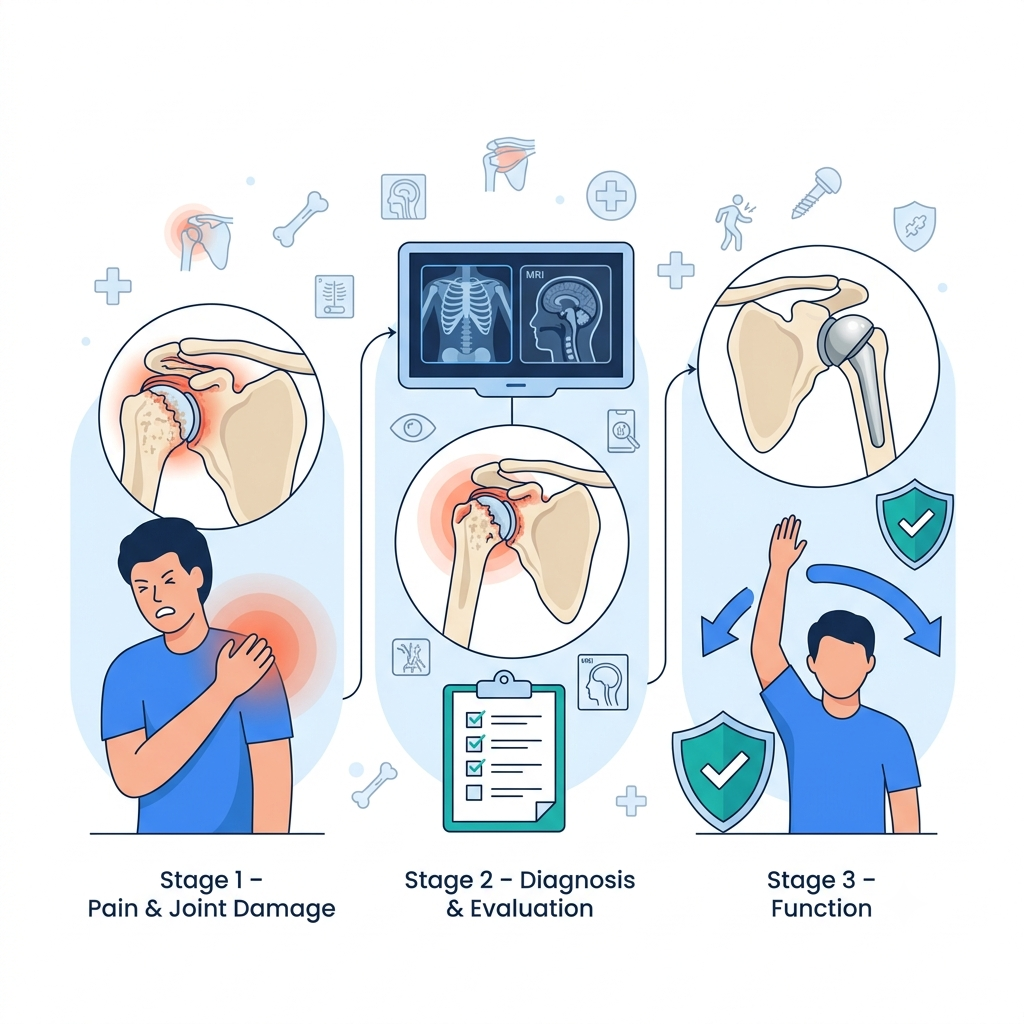
Shoulder replacement surgery may be considered when advanced arthritis, a major rotator-cuff-related problem, a complex fracture or another form of irreversible joint damage causes persistent pain, stiffness and loss of arm function.
At Eva Hospital, the treating surgeon evaluates the cause of the shoulder problem, the condition of the rotator cuff, bone quality, X-rays and other investigations before recommending treatment. Shoulder replacement is not required for every painful shoulder — many patients can be treated with medication, physiotherapy, injections, arthroscopy or other joint-preserving procedures.
When the joint is severely damaged and other appropriate treatments are no longer providing adequate relief, shoulder replacement aims to reduce pain and improve movement of the arm. Results vary from patient to patient.
Recognizing the Signs
When May Shoulder Replacement Be Recommended?
- Severe shoulder pain affecting sleep and routine activities
- Advanced glenohumeral osteoarthritis
- Cuff tear arthropathy
- Post-traumatic arthritis
- Failed previous shoulder surgery or replacement
- Persistent symptoms despite medication, activity modification, physiotherapy or injections
- Inflammatory arthritis with joint destruction
- Avascular necrosis with collapse of the humeral head
- Selected severe proximal humerus fractures
- Major loss of motion and function
Not Every Shoulder
Do All Painful Shoulders Require Replacement?
Conditions Often Treated Without Replacement
- Frozen shoulder
- Early arthritis
- Subacromial impingement
- Many rotator cuff tears — see Rotator Cuff Tear Treatment
- Recurrent dislocation or instability
- Labral injuries
- Calcific tendinitis and bursitis
- Sports injuries
Conditions More Likely to Require Replacement
- End-stage glenohumeral arthritis
- Cuff tear arthropathy
- Irreparable cuff deficiency with pseudoparalysis
- Humeral-head collapse
- Complex fractures unsuitable for reconstruction — see Fractures and Trauma Treatment
- Painful failed previous replacement
Procedures
Types of Shoulder Replacement
The appropriate procedure is selected after examining the rotator cuff, glenoid bone, humeral bone, deformity, fracture pattern and the patient’s functional needs.
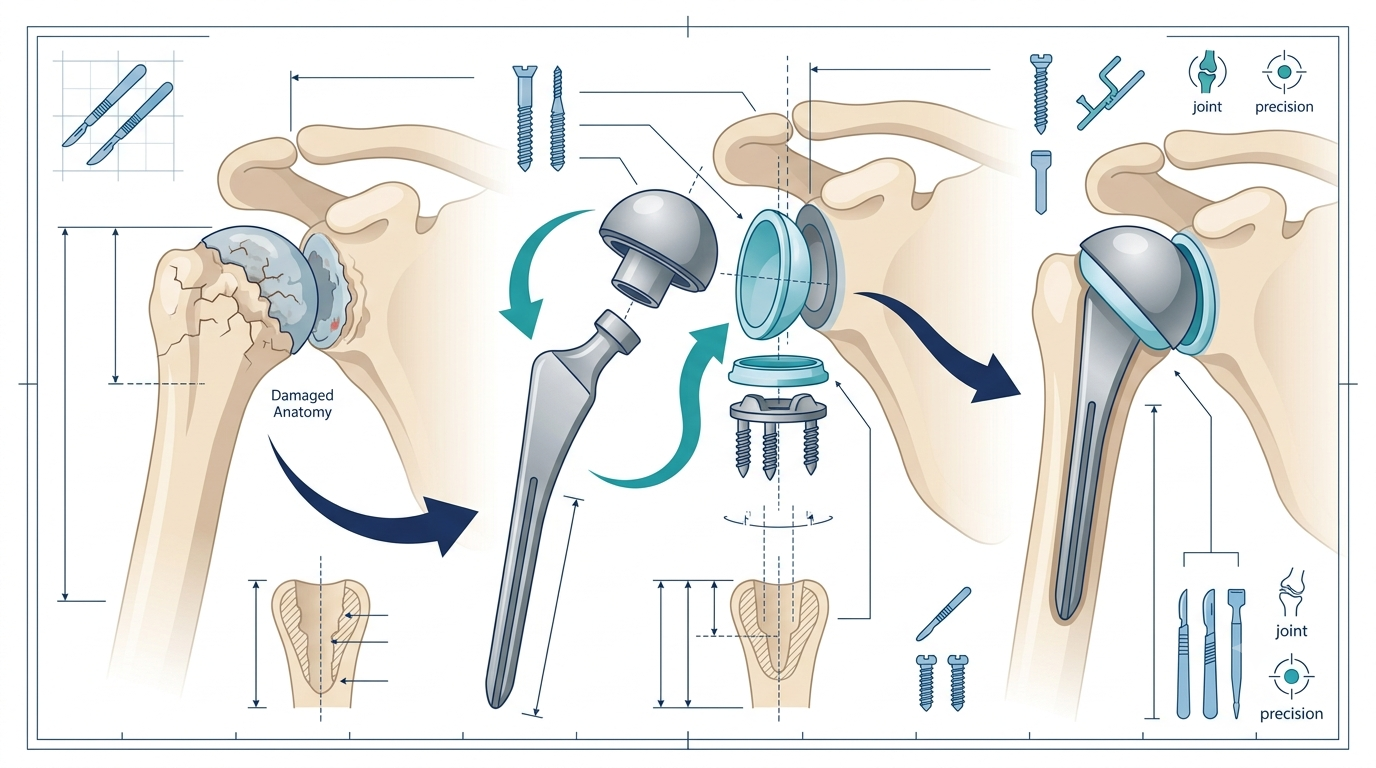
Anatomical Total Shoulder Replacement
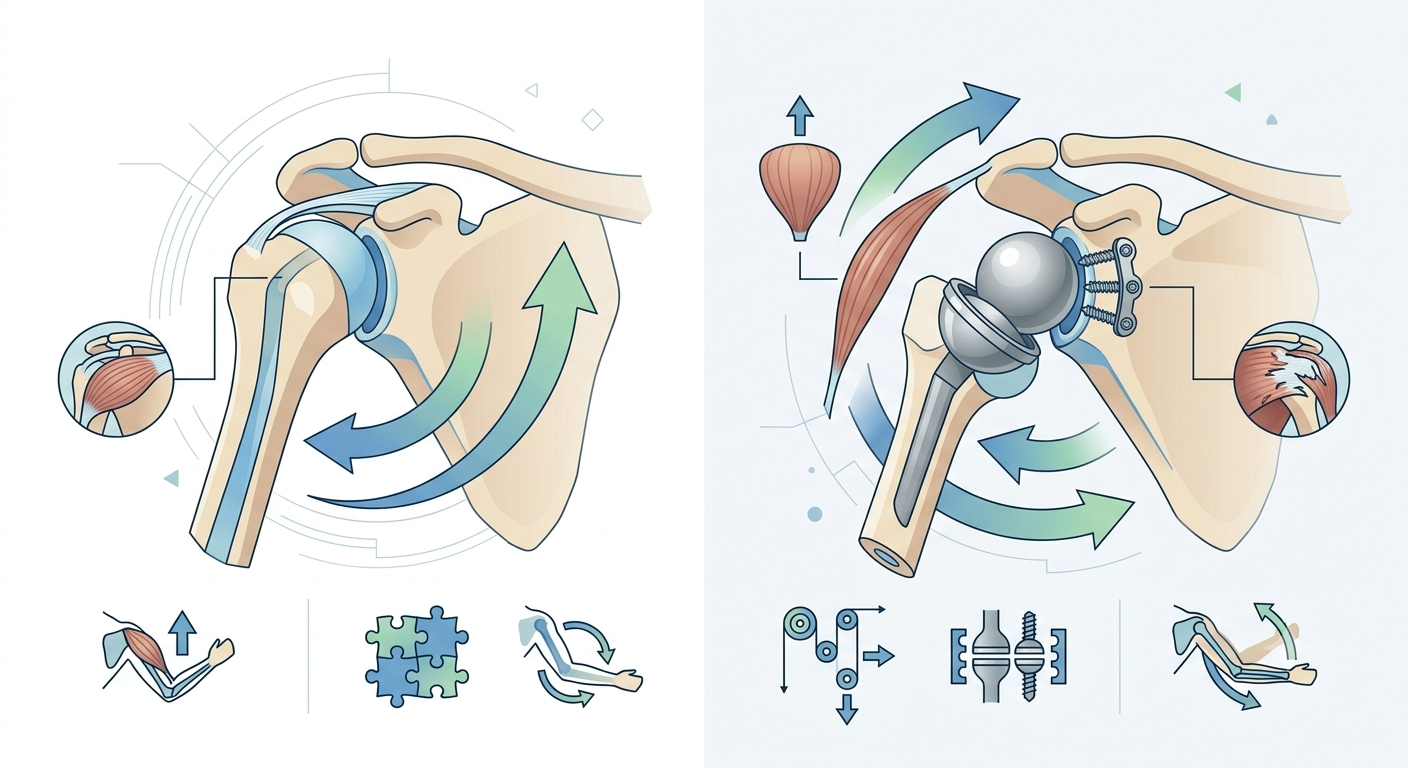
Reverse Shoulder Replacement
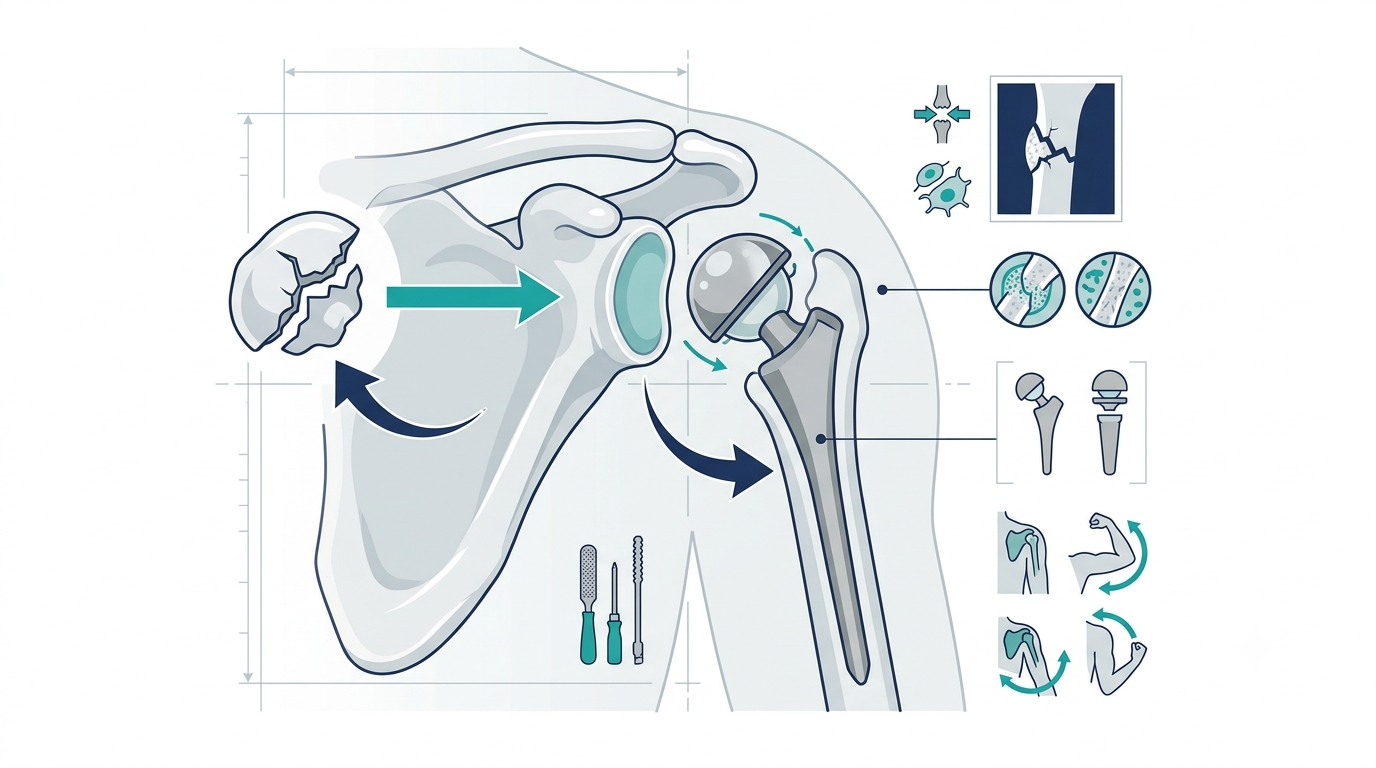
Partial Shoulder Replacement (Hemiarthroplasty)
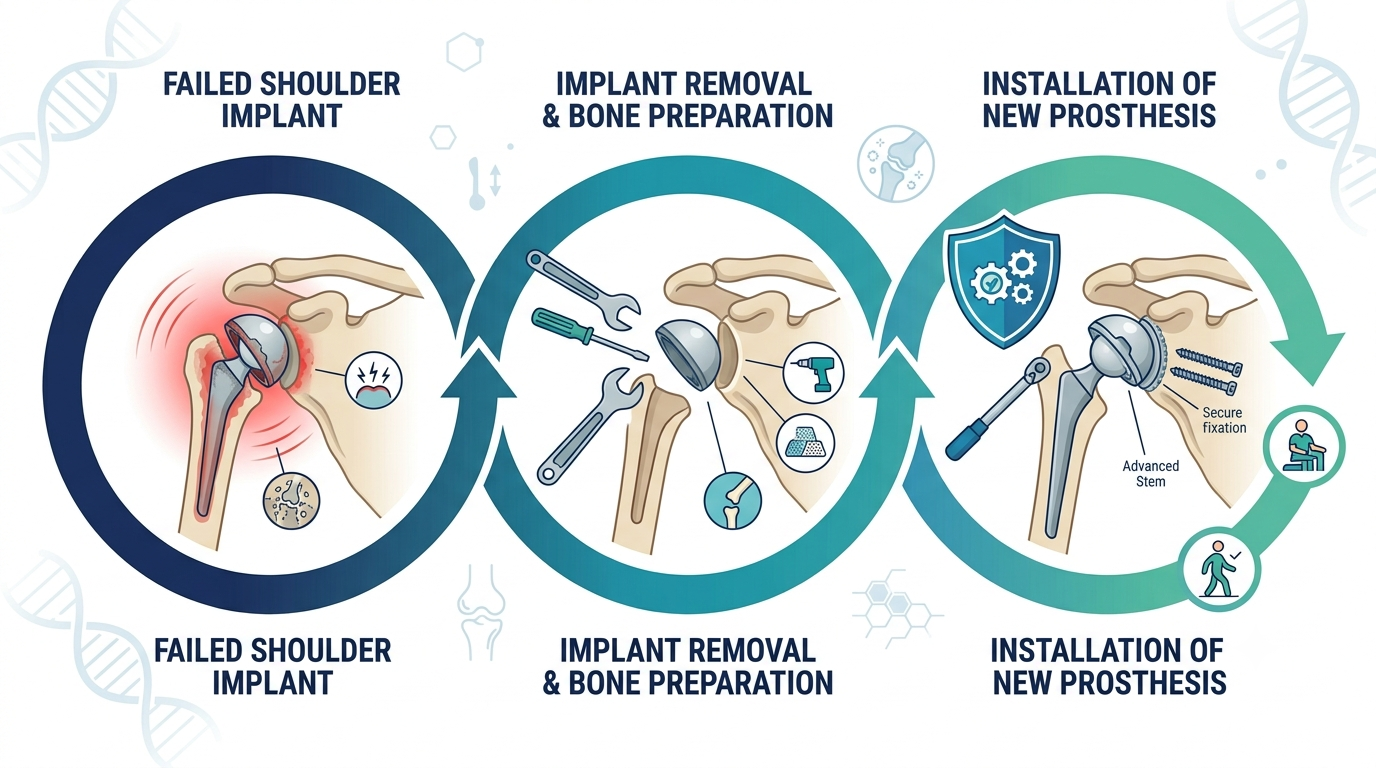
Revision Shoulder Replacement
Disclaimer: Above Images are AI-generated for illustrative purposes only.
Assessment Process
Evaluation Before Shoulder Replacement
- Symptom history and night pain
- Examination of active and passive motion
- Instability testing
- Shoulder X-rays
- MRI or ultrasound when rotator-cuff integrity needs evaluation
- Previous injuries and operations
- Rotator-cuff strength and deltoid function
- Neck and neurological examination when relevant
- CT scan for bone loss, deformity or implant planning
- Blood tests and medical fitness before surgery
Non-Surgical Options
Treatment Options Before Replacement
- Activity modification
- Physiotherapy
- Image-guided or appropriately selected injections
- Arthroscopic procedures in selected non-arthritic or less advanced conditions
- Anti-inflammatory or pain medication where medically suitable
- Exercises to preserve mobility and strength
- Management of inflammatory arthritis
Our Doctor
Details of registered medical practitioners at Eva Hospital, Ludhiana, provided for patient information.
Dr. Tanveer Singh Bhutani
Consultant Orthopaedic Surgeon
- Qualifications
- MBBS, MS (Orthopaedics), M.Ch (Orthopaedics) (UK)
- Department
- Orthopaedics
- Registration Status
- Registered
- Registration No. (NMR/SMR)
- 40132
- Registered With
- Punjab Medical Council
- Availability
-
10:00 AM to 2:00 PM
4:00 PM to 8:00 PM
Registration can be verified on the NMC website.
The Operation
What Happens During Shoulder Replacement Surgery?
- Anaesthesia is administered
- An incision is made to reach the shoulder joint
- Damaged bone and cartilage are prepared
- The selected humeral and, where applicable, glenoid components are inserted
- Implant position, stability and movement are assessed
- The tissues and wound are closed
- The arm is supported in a sling
- The hip is reduced and checked for stability
After Surgery
Recovery After Shoulder Replacement
Immediately After Surgery
- Pain control
- Sling support
- Hand, wrist and elbow movement
- Wound monitoring
- Assisted shoulder exercises as advised
- Discharge according to medical condition and mobility
First Few Weeks
- Sling use according to the procedure performed
- Wound review
- Gradual passive or assisted movement
- No unsupported lifting
- Sleeping and dressing guidance
- Physiotherapy according to the surgeon's protocol
Later Rehabilitation
- Gradual progression to active movement
- Strengthening only when healing allows
- Return to functional daily activities
- Periodic review and X-rays where indicated
Realistic Expectations
What Can Shoulder Replacement Achieve?
The main aims are reduction in pain, improved sleep, better ability to dress, eat and perform self-care, improved functional range of movement, and greater independence in daily activities.
Often Possible After Clearance
- Walking
- Stationary cycling
- Light gym exercises
- Swimming in selected patients
- Golf or similar recreational activity depending on recovery
- Routine household and professional activities
Usually Discouraged or Restricted
- Repetitive heavy overhead lifting
- Forceful contact activity
- High-impact loading
- Lifting very heavy weights with the operated arm
Risks
Risks and Possible Complications
- Infection
- Stiffness
- Fracture
- Implant loosening or wear
- Rotator-cuff or subscapularis failure in relevant procedures
- Persistent pain or incomplete functional recovery
- Possible need for revision surgery
- Bleeding or haematoma
- Instability or dislocation
- Nerve or blood-vessel injury
- Component malposition
- Acromial or scapular spine stress fracture after reverse replacement
- Blood clots and anaesthesia-related complications
The individual risk profile depends on age, general health, bone quality, diagnosis, previous surgery and the type of replacement. The treating surgeon discusses the expected benefits, limitations and relevant risks before surgery.
Getting Ready
Preparing for Shoulder Replacement
- Medical assessment
- Review of anticoagulants and other medicines
- Smoking cessation
- Preparing loose, front-opening clothing
- Understanding sling and exercise instructions
- Diabetes and blood-pressure optimisation
- Dental or active infection review when relevant
- Arranging support at home
- Preoperative anaesthetic assessment
- Planning sleeping arrangements
Can It Be Avoided
Can Shoulder Replacement Be Avoided?
Some causes of shoulder degeneration cannot be completely prevented. Early diagnosis and appropriate treatment of injuries, rotator-cuff tears, instability, inflammatory arthritis and fractures may help preserve function in selected patients. However, once irreversible joint destruction is advanced, exercise or medication cannot restore the lost cartilage. Treatment is then directed toward controlling symptoms and choosing the most appropriate surgical or nonsurgical option.
Facilities and Services
Individual Clinical Evaluation
Anatomical and Reverse Replacement Planning
Integrated Imaging and Preoperative Assessment
Structured Surgical & Rehabilitation Pathway
NABH-Accredited Hospital
ECHS-Empanelled Facility
Frequently Asked Questions
The decision is based on symptoms, examination, imaging, rotator-cuff function and failure of appropriate nonsurgical treatment — not on an X-ray alone.
Anatomical replacement recreates the shoulder’s normal ball-and-socket orientation and generally requires a functioning rotator cuff. Reverse replacement switches the ball and socket, relying more on the deltoid muscle, and is used when the rotator cuff is severely deficient or damaged.
Yes. Many tears are treated nonsurgically or with repair. Replacement is generally reserved for advanced cuff tear arthropathy, irreparable cuff deficiency with major dysfunction, or other selected situations.
It may be considered for severe symptomatic arthritis when other treatment is inadequate, based on individual evaluation.
Postoperative pain is expected but managed with a multimodal pain-control plan, and it generally improves as healing progresses.
This depends on the implant type, soft-tissue repair, bone quality and the surgeon’s protocol. There is no single duration that applies to every patient.
Often early, but the programme differs between anatomical, reverse and fracture-related procedures and is prescribed individually.
Only after coming out of the sling, regaining safe control of the arm, and receiving medical clearance. There is no guaranteed date.
Light strengthening may be introduced gradually once healing allows, but repetitive heavy overhead lifting is generally discouraged.
Implants are designed for long-term use, but longevity varies according to age, activity, bone quality, implant type and other individual factors.
Clinical examination, shoulder X-rays, and CT, MRI or laboratory tests as indicated by the individual case.
Selected painful, loose, unstable, infected or failed replacements can be revised, but revision surgery is more complex than a first-time procedure.
Consult at Eva Hospital
Persistent shoulder pain does not automatically mean replacement is required. A clinical evaluation can help establish the cause, assess the rotator cuff and joint, and determine whether physiotherapy, injections, arthroscopy or shoulder replacement is appropriate.